


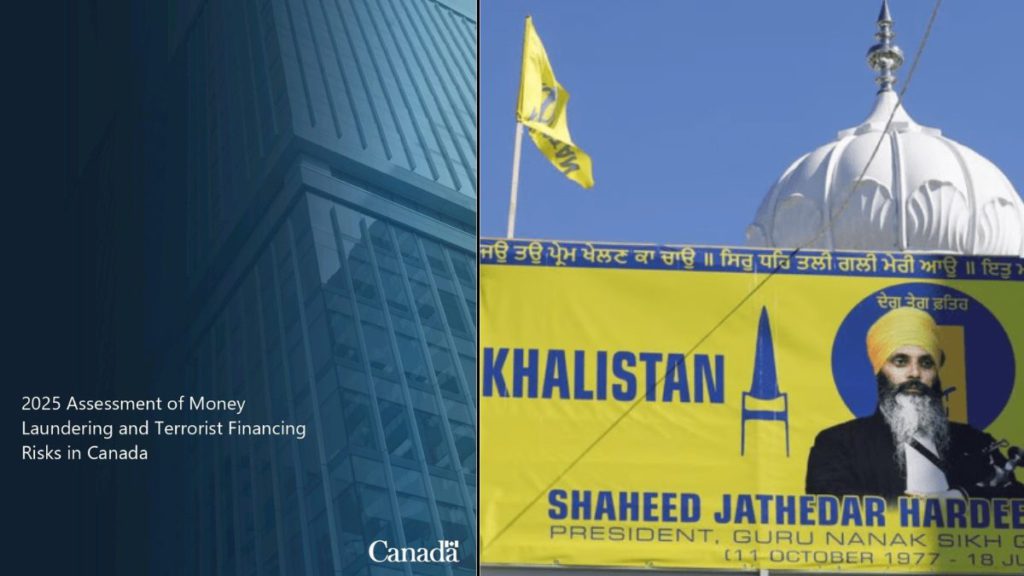
Canada’s 2025 Assessment of Money Laundering and Terrorist Financing Risks has identified Khalistani extremist groups as significant threats to national security, marking a pivotal moment in the country’s counterterrorism strategy.
The report highlights that these groups continue to operate from within Canada, raising funds, spreading propaganda, and planning violent acts targeting India.
“Khalistani extremist groups supporting violent means to establish an independent state within Punjab, India are suspected of raising funds in a number of countries, including Canada. These groups previously had an extensive fundraising network in Canada but now appear to consist of smaller pockets of individuals with allegiance to the cause but seemingly no particular affiliation to a specific group.”
This acknowledgment follows years of concerns raised by India about the activities of Khalistani elements on Canadian soil.
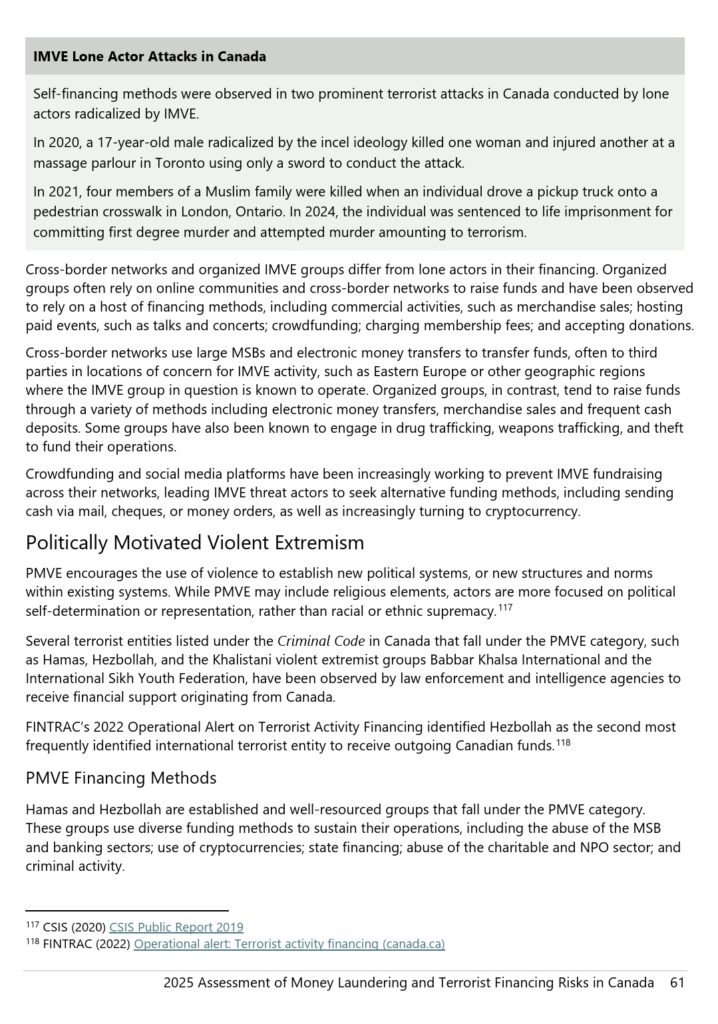
The assessment reveals that Khalistani groups, such as Babbar Khalsa International and the International Sikh Youth Federation, are active in fundraising and promoting their separatist agenda. While their activities are primarily focused on India, the report underscores the potential implications for Canadian national security.
“Khalistani violent extremist groups have also been known to use networks to solicit donations from diaspora communities to raise and move funds, including through NPOs. Despite these observations, it is estimated that revenue generation through NPO abuse represents a relatively small percentage of operational budgets of terrorist groups overall.”

In response to these findings, Canada is enhancing its Anti-Money Laundering and Anti-Terrorist Financing (AML/ATF) Regime, which involves over 13 federal departments and agencies, as well as provincial and municipal counterparts. The regime collaborates with more than 38,000 Canadian businesses to prevent, detect, and disrupt financial crimes.
The report also highlights the abuse of non-profit and charitable activities as a prominent financing method used by terrorist groups, including Khalistani extremists. While revenue generation through non-profit abuse represents a relatively small percentage of operational budgets of terrorist groups overall, it remains a concern for Canadian authorities.
This development is expected to influence Canada’s approach to counterterrorism and its international relations, particularly with India, as both nations address the challenges posed by politically motivated violent extremism.
Support our Journalism
No-nonsense journalism. No paywalls. Whether you’re in Australia, the UK, Canada, the USA, or India, you can support The Australia Today by taking a paid subscription via Patreon or donating via PayPal — and help keep honest, fearless journalism alive.

