

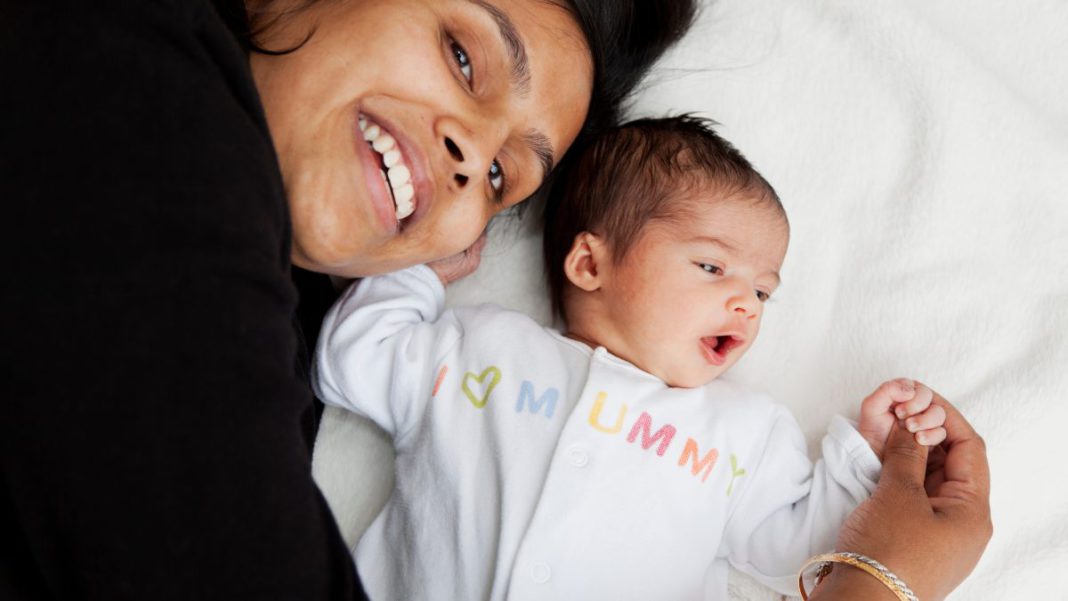
The Albanese Government is under renewed pressure to reinstate the baby bonus scheme as Australia grapples with its lowest fertility rate in decades.
Former Prime Minister John Howard has led calls for the return of the payment, first introduced in 2004 under his leadership and then-Treasurer Peter Costello. The policy initially provided a $3,000 lump sum to new parents, later rising to $5,000, and was widely credited with boosting birth rates, peaking at 301,617 babies in 2011—surpassing even the post-war baby boom.
Costello famously urged Australians to “have one for mum, one for dad and one for the country.” Now, Howard warns that the current fertility crisis demands similar intervention.
“Later governments should never have watered down these policies,” Howard said.
“Their restoration or equivalent measures are needed to address the quite disturbing and depressed level in the current fertility rate.”
The Coalition has thrown its weight behind the proposal, but Nationals leader David Littleproud says a $3,000 payment won’t cut it in today’s economy.
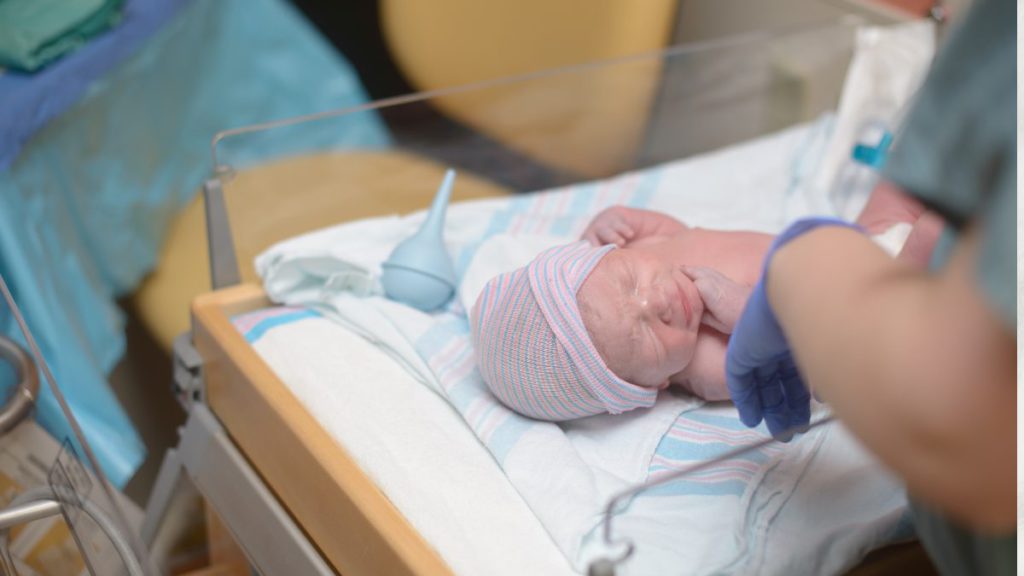
“I don’t think a baby bonus is going to spur anybody on who just simply cannot financially afford to have a baby,” Littleproud told Today.
“Housing, inflation, and wages have changed the equation dramatically.”
According to the Australian Bureau of Statistics (ABS), just 286,998 births were registered in 2023—a 17-year low—bringing the total fertility rate (TFR) to 1.50 babies per woman. In comparison, the TFR in 1993 was 1.86. The figure has continued its downward slide in 2024, with experts warning it could drop further to 1.45 by 2030 if cost-of-living pressures are not addressed.
The ABS reports that the highest fertility rates in 2023 were seen in Western Australia (1.57), New South Wales and the Northern Territory (both 1.55), while the Australian Capital Territory recorded the lowest rate at 1.31. Only Tasmania saw an increase in births.
Fertility among Aboriginal and Torres Strait Islander mothers remains above the national average, with a rate of 2.17 babies per woman in 2023—accounting for 8.6 per cent of all registered births.
The decline in national fertility is being fuelled by younger Australians postponing parenthood, with the average age of first-time mothers now 31.9 years. The most significant drops have occurred among women aged 15 to 24, while birth rates among women aged 40 to 44 have nearly doubled over the past three decades.
Amanda Davies, professor of demography at the University of Western Australia, attributes much of the decline to financial insecurity and the housing crisis.
“There’s a feeling they need to have secure housing before starting a family, and that extreme housing crisis that’s being faced in all parts of Australia is [related] to that declining fertility rate,”
Davies told The Guardian.
Recent data also shows that regional and outer-suburban Australians are more likely to have children compared to their inner-city counterparts, with cities like Melbourne and Sydney seeing sharp falls in birth rates—Melbourne hitting a low of 1.4 births per woman in 2024, compared to 1.71 a decade earlier.
Perth stands out as an exception among capital cities, recording a stabilising fertility rate in 2024, aided by relative housing affordability and a stronger local economy.
Experts warn that without targeted policies addressing affordability, secure housing, and parental support, Australia risks facing long-term demographic and economic challenges due to a shrinking working-age population.
Support our Journalism
No-nonsense journalism. No paywalls. Whether you’re in Australia, the UK, Canada, the USA, or India, you can support The Australia Today by taking a paid subscription via Patreon or donating via PayPal — and help keep honest, fearless journalism alive.
