


Millions of families caring for loved ones with dementia are facing a quiet crisis, with many struggling in isolation and without adequate support.
Across the Asia-Pacific and within Australia’s multicultural communities, carers — most of them women — often shoulder the responsibility with little access to formal aged care services or trained professionals. The toll can be severe, leading to anxiety, depression and financial hardship.
Now, an Australian-led initiative is aiming to change that.
Prof. Tuan Anh Nguyen, a research professor at Swinburne University of Technology and the National Ageing Research Institute, has helped develop a culturally tailored digital platform designed to reduce stress, isolation and caregiving burden among dementia carers.
The new program, known as iSupport Digital (iSupport-D), builds on nearly a decade of research focused on improving dementia care for culturally and linguistically diverse (CALD) families and low- and middle-income countries.
Professor Nguyen said, “Carers want information that feels familiar, not foreign, delivered in ways that are easy to understand and use in their daily caregiving. e-DiVA showed us how powerful culturally grounded digital tools can be, and that when we co-design programs with communities, carers are more likely to engage and benefit.”
“These families are doing the hardest job with the least support. We need to meet them where they are, in their language, culture and community, providing practical tools and guidance that truly make a difference.”
The program follows the success of e-DiVA — Empowering Dementia Carers with an iSupport Virtual Assistant — which adapted the World Health Organization’s iSupport program for diverse communities.
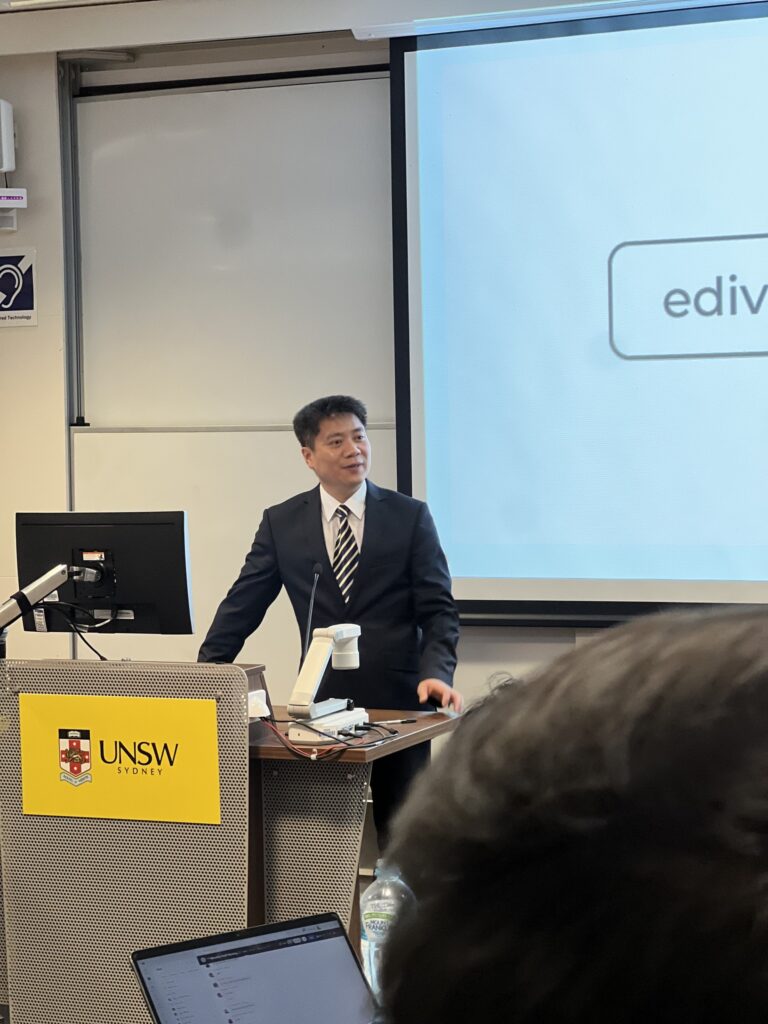
Backed by $2.5 million in funding from the National Health and Medical Research Council and an e-ASIA grant, the project was rolled out in Indonesia, New Zealand, Vietnam and multicultural communities across Australia.
The platform included voice search, short instructional videos, online learning modules and service directories tailored to local languages and cultural contexts.
Early pilot trials reported strong engagement, with recruitment and retention rates as high as 94 per cent and 90 per cent in Australia, and 100 per cent and 95 per cent in Indonesia. Researchers also recorded encouraging reductions in caregiving burden, particularly among new carers.
In 2026, Prof. Nguyen will lead the national rollout of iSupport-D through a $3 million grant from the Medical Research Future Fund.
A large randomised controlled trial will assess the program’s clinical impact, cost-effectiveness and real-world implementation, with the goal of embedding a fully integrated dementia support system across Australia.
Prof. Nguyen said, “iSupport-D is the next generation.”
“We’re turning a successful prototype into something ready to meet carers where they are — in their language, culture and community.”
The expanded platform will feature personalised web-based training, culturally tailored videos, a mobile app with offline access, SMS coaching, online support groups, a dementia service finder and an empathetic chatbot. It will be available in Arabic, Italian, Mandarin, Cantonese, Vietnamese and English, alongside a companion version for CALD aged care workers.
Support our Journalism
No-nonsense journalism. No paywalls. Whether you’re in Australia, the UK, Canada, the USA, or India, you can support The Australia Today by taking a paid subscription via Patreon or donating via PayPal — and help keep honest, fearless journalism alive.
