

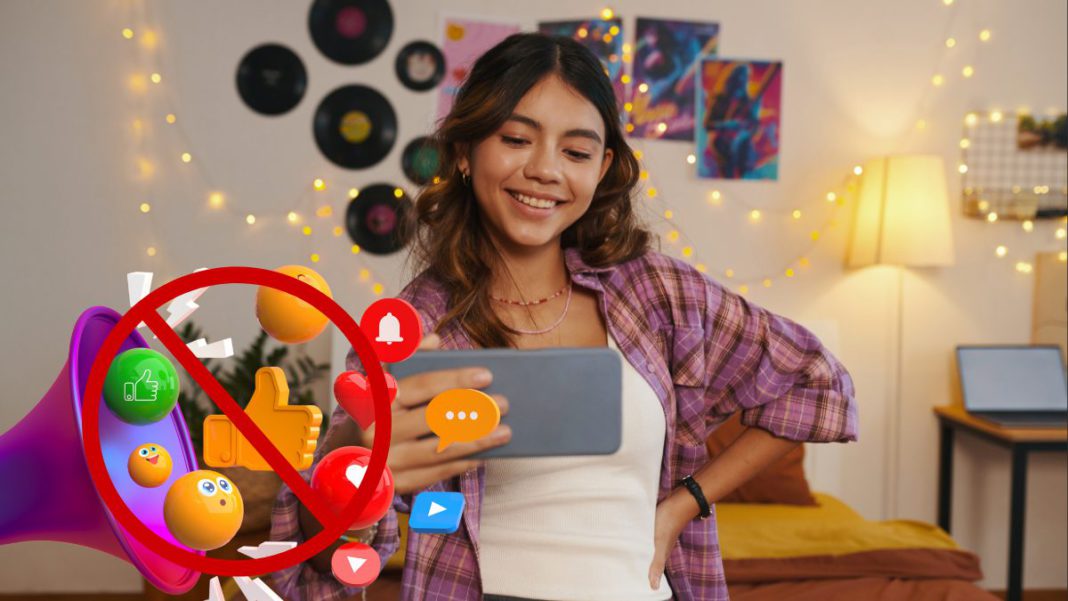
Prime Minister Anthony Albanese says Australia is “taking back control” by introducing world-first laws restricting children’s access to social media — a move he insists will save lives and protect young people from bullying, mental-health harm and online pressure.
Speaking to 7News, the Prime Minister said the reform was driven “from the grassroots”, shaped by grieving parents who told him they were blind sided by the extent of their children’s online distress.
“They’re heartbroken,” he said.
“For many, they simply weren’t aware of what their child was going through. When a child is in their room today, parents often don’t know what’s happening online — and that’s a real change from when we were young.”
Albanese said the ban would empower parents to set clear boundaries and reduce the social pressure that compels children to be constantly online. “What this will do is protect children and allow them to be children, give parents the authority to speak with their children and say, well, this is the law. We need to comply with it,” he said.
“It’s really common sense.”
He urged families to start talking openly with their kids about the new rules, acknowledging there would be “some pushback” but insisting community support was overwhelming. “And parents overwhelmingly have said to me that they really welcome this leadership and that they’ve been concerned. It is from parents as well as from some children that this reform,” he said.
Citing schools that have already removed or banned mobile phones from classrooms, Albanese said the benefits were “clear”: better academic outcomes, less stress, improved communication, and stronger friendships as children re-engage face-to-face.
The Prime Minister also dismissed concerns that determined teens would seek out darker corners of the internet, saying the move needed to be understood the same way as under-18 restrictions on alcohol.
“And we do accept that there will be non-perfection here, but we expect compliance. This is the law.”
Albanese said foreign leaders had shown strong interest in Australia’s approach at recent global summits, with countries including Denmark, New Zealand, Malaysia and South Africa moving in a similar direction.
“It sure is, and this is world-leading, but the world is following Australia,” he said.
“Countries are looking at this because this is a universal problem and it has having an effect on a child in France, in Denmark, in Malaysia, in Australia and New Zealand the same.”
While some US political figures have criticised the move as censorship, Albanese said Australia was acting in its own national interest. “What we say is that we’re a sovereign nation and we have made this decision as a country, and it has overwhelming support,” he said.
Describing the reform as an “honour”, he said Australians should be proud of taking decisive action. “The great thing, if we allow kids to be kids and get out there on the sporting fields, which is what we want to see happen and get out there engaging with each other, is that they’ll get those social skills that you only get from this face-to-face discussion is better than us texting each other,” he said.
“This is us taking back control.”
Support our Journalism
No-nonsense journalism. No paywalls. Whether you’re in Australia, the UK, Canada, the USA, or India, you can support The Australia Today by taking a paid subscription via Patreon or donating via PayPal — and help keep honest, fearless journalism alive.
