


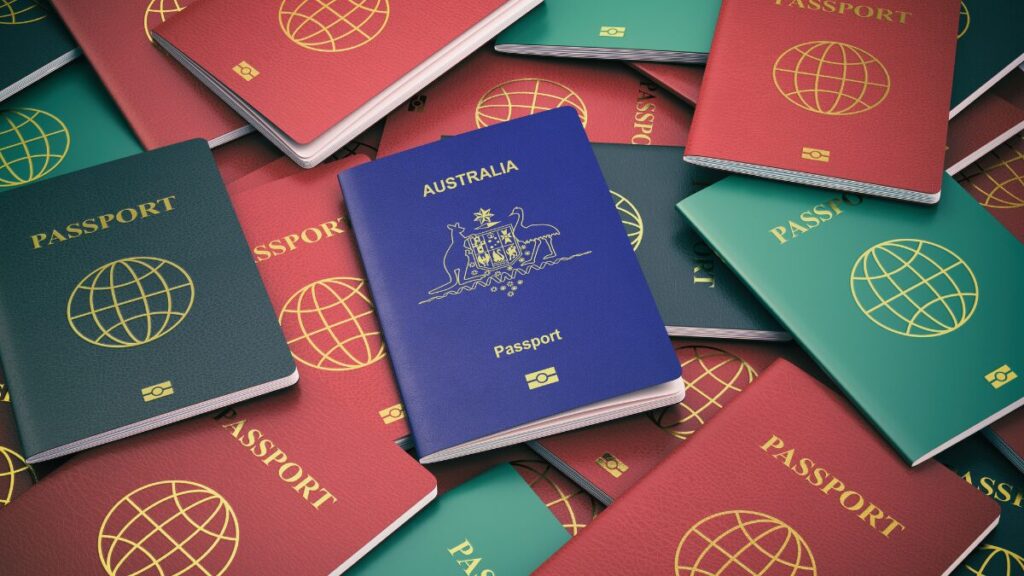
Australia has maintained its position among the world’s most mobile nations, ranking seventh on the 2026 Henley Passport Index with visa-free or visa-on-arrival access to 182 destinations, as new data reveals a widening global divide between countries with high travel freedom and those increasingly left behind. India, by contrast, is ranked 80th, underscoring the persistent inequality in global mobility despite surging international travel.
Now marking 20 years since its launch, the Henley Passport Index — compiled by Henley & Partners using exclusive Timatic data from the International Air Transport Association — ranks 199 passports according to how many destinations holders can enter without a prior visa. While a growing cluster of countries now sit near the top with broadly similar access, those at the bottom are becoming more isolated, driving the mobility gap to its widest point yet.
At the top of the rankings, Singapore has retained its position as the world’s most powerful passport, granting visa-free access to 192 destinations. At the other end of the spectrum, Afghanistan remains last, with access to just 24 destinations.
The resulting gap of 168 destinations starkly illustrates how uneven global mobility has become — a sharp increase from 2006, when the difference between the then top-ranked US passport and Afghanistan stood at 118 destinations.
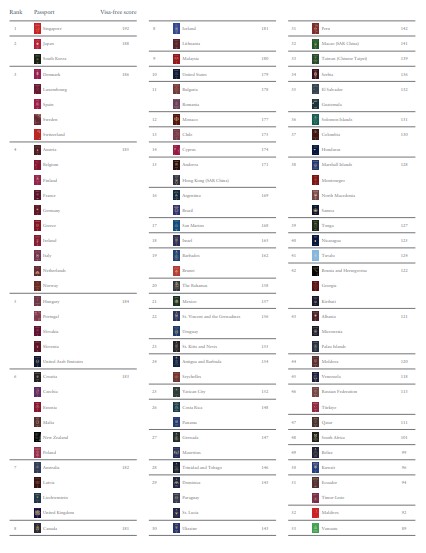
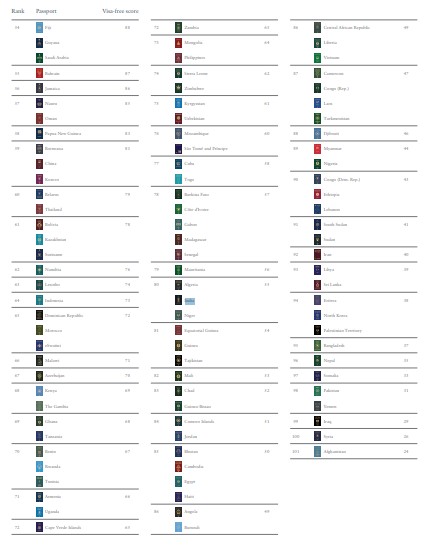
Australia continues to perform strongly, sharing seventh place with the United Kingdom, Latvia and Liechtenstein, and remaining ahead of Canada, Malaysia and the United States. India’s ranking at 80th places it well below much of Asia and Europe, highlighting how passport strength remains closely tied to economic power, diplomatic reach and political stability.
Christian H. Kaelin, chairman of Henley & Partners and creator of the index, said that although global mobility has expanded significantly over the past two decades, the benefits have not been shared evenly. He said passport privilege now plays a decisive role in shaping opportunity, security and economic participation, with rising average access masking the reality that mobility advantages are increasingly concentrated in the world’s most economically powerful and politically stable nations.
The findings come as international travel demand continues to accelerate. IATA forecasts airlines will carry more than 5.2 billion passengers globally in 2026. Willie Walsh said a record number of people are expected to travel this year, generating clear economic and social benefits, but warned that many nationalities are discovering that a passport alone is no longer enough to cross borders as governments tighten entry requirements.
Asia and Europe continue to dominate the top of the rankings, with Japan and South Korea tied for second place and large groups of European countries filling the next tiers. The United Arab Emirates stands out as the strongest long-term performer, having climbed 57 places since 2006 after adding 149 visa-free destinations through sustained diplomatic engagement and visa liberalisation.
The index also points to a relative decline for traditional passport heavyweights. Although the United States has re-entered the top 10 after briefly dropping out in late 2025, both the US and the UK recorded their steepest year-on-year losses in visa-free access last year. Over two decades, the US has fallen from fourth to 10th place, while the UK has slipped from third to seventh, a shift analysts say reflects deeper geopolitical recalibration rather than technical changes to visa rules.
The report highlights growing contrasts between outbound mobility and inbound openness. While US passport holders can travel visa-free to 179 destinations, only 46 nationalities can enter the United States without a visa, placing it 78th on the Henley Openness Index. China, meanwhile, has rapidly expanded visa-free entry and now allows access to 77 nationalities, signalling a strategic turn towards openness as a tool of diplomacy and economic engagement.
Together, the results paint a clear picture of a world in which global travel is booming, but access is becoming more uneven. For countries like Australia, strong diplomatic networks continue to deliver high mobility, while nations such as India remain constrained. Two decades on, the Henley Passport Index suggests the power of a passport matters more than ever — and the gap between the most and least mobile populations is still growing.
Support our Journalism
No-nonsense journalism. No paywalls. Whether you’re in Australia, the UK, Canada, the USA, or India, you can support The Australia Today by taking a paid subscription via Patreon or donating via PayPal — and help keep honest, fearless journalism alive.

