

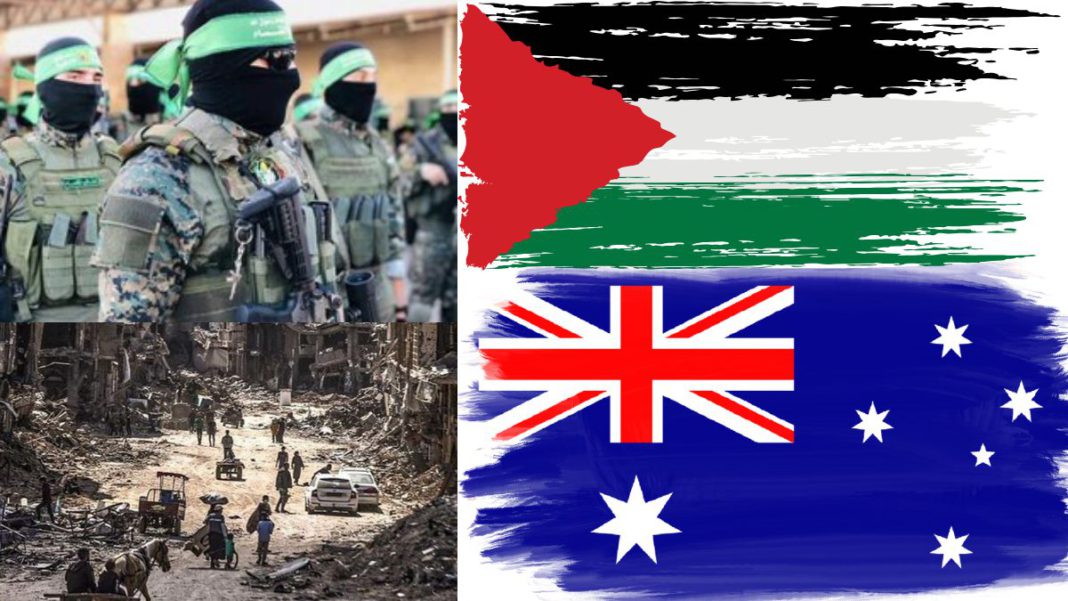
Australia has formally recognised the independent and sovereign State of Palestine, marking a historic shift in its foreign policy. The announcement was made on 21 September 2025 by Foreign Minister Penny Wong. The government said the move reflects its belief that a secure Israel and a viable Palestinian state are essential for lasting peace in the region.
Australia’s recognition was coordinated with the United Kingdom and Canada. It comes amid ongoing conflict in Gaza, triggered by the brutal Hamas-led terrorist attacks of October 2023. The statement emphasised that any path forward must include the release of all hostages still held since the October 2023 attacks, alongside an immediate and sustained ceasefire and unhindered humanitarian aid.
Recognition is conditional on reforms by the Palestinian Authority. Canberra’s statement specified that the Palestinian leadership must recognise Israel’s right to exist, commit to democratic governance, improve financial transparency, reform education, and ensure Hamas plays no role in government. Australia will now refer to the State of Palestine in all official documents and is considering future diplomatic steps, including the possible establishment of embassies once the conditions are met.
The move has generated sharp reactions. Israel condemned the decision as counterproductive and argued that Palestine does not yet meet the criteria for statehood, such as defined borders and a fully functioning government.
Within Australia, opposition politicians warned that recognition during ongoing conflict could embolden extremists or complicate security cooperation. Analysts also caution that without follow-through on governance and human rights reforms, recognition risks remaining symbolic rather than transformative.
Supporters argue the decision strengthens global efforts toward a two-state solution and signals a more independent Australian foreign policy, less tethered to traditional alignments. Diplomats believe it could increase pressure on all parties to return to negotiations and might encourage other nations to take similar steps. Critics counter that the path to peace remains uncertain and that recognition alone cannot resolve core disputes over borders, refugees, and the status of Jerusalem.
Support our Journalism
No-nonsense journalism. No paywalls. Whether you’re in Australia, the UK, Canada, the USA, or India, you can support The Australia Today by taking a paid subscription via Patreon or donating via PayPal — and help keep honest, fearless journalism alive.
