

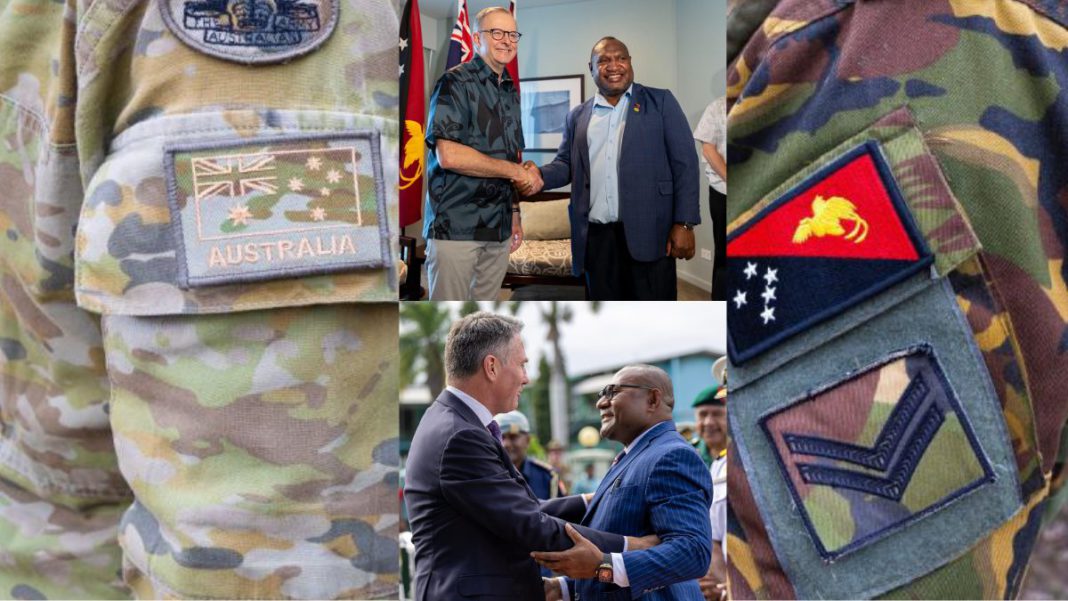
Prime Minister Anthony Albanese will travel to Port Moresby from 15 to 17 September to mark Papua New Guinea’s 50th anniversary of independence — a milestone moment that will also see the two nations sign a historic defence treaty.
Fifty years ago this week, Papua New Guinea became independent from Australia. Once separate territories under Australian administration, Papua and New Guinea were merged in 1971, before independence was declared in 1975.
In a statement Albanese said Australia was proud to join in the Golden Jubilee celebrations, describing PNG as “not only one of our closest neighbours but also the truest of friends.”
“Our unique relationship has been forged by shared history, mutual respect and ongoing collaboration.”
Australia’s partnership with PNG spans health, security, education, infrastructure, development, gender equality, sport and agriculture.
During his visit, Albanese will hold talks with PNG Prime Minister James Marape, joined by Deputy Prime Minister and Defence Minister Richard Marles and Pacific Island Affairs Minister Pat Conroy.
In addition to commemorations, Albanese and Marape are expected to sign a major security pact that will see the Australian Defence Force (ADF) and Papua New Guinea Defence Force (PNGDF) become “totally integrated” — going beyond interoperability to shared recruitment, equipment and operations.
PNG’s Defence Minister Billy Joseph told the ABC the treaty would be a “mutual defence” agreement containing a clause similar to NATO’s Article Four, requiring consultation if either country’s sovereignty is threatened.
The deal will also allow the ADF to recruit PNG citizens and, in return, the PNGDF to recruit Australians. A briefing document suggests Papua New Guineans who serve in the ADF may have a pathway to Australian citizenship.
Defence Minister Marles, who began treaty negotiations with his PNG counterpart earlier this year, confirmed on ABC’s Insiders that PNG recruits would be paid equally to Australians.
“This is something we would be doing hand in glove with PNG as we walk down this path.”
The agreement follows the opening of an upgraded naval base on Manus Island in August, signalling increased cooperation, including reciprocal access to each other’s facilities.
Dr Joseph said the pact, expected to be approved by PNG’s cabinet this week, enjoys broad parliamentary support and represents a “really big strategic step” for both nations.
Last week, as part of the Golden Jubilee celebrations, more than 15,000 people gathered in Port Moresby for a static aircraft show hosted by the PNGDF Air Transport Wing.
The event showcased both PNG and Australian aircraft, including the PNGDF’s PAC 750 and the RAAF’s C-130J Hercules, C-27J Spartan and KA350 King Air.
Chief of Air Force Air Marshal Stephen Chappell said he was honoured to take part in the milestone: “I’m excited to be able to visit Papua New Guinea on such a momentous occasion for their country and I’m proud to see so many RAAF personnel and assets supporting the events of PNGDF Week.”
“We deeply appreciate being invited to participate and share in such a significant national milestone.”
He added that it was a privilege to see ADF personnel working seamlessly with PNGDF, New Zealand Defence Force and other partners under Joint Taskforce 50.
Since independence in 1975, Australia and PNG have maintained close defence ties through joint training, exercises and infrastructure investment — but the new treaty marks the most ambitious step yet in their shared security future.
Support our Journalism
No-nonsense journalism. No paywalls. Whether you’re in Australia, the UK, Canada, the USA, or India, you can support The Australia Today by taking a paid subscription via Patreon or donating via PayPal — and help keep honest, fearless journalism alive.
