

Australia and New Zealand have signalled a renewed push to deepen their defence and foreign policy partnership, warning that a more volatile global landscape demands closer coordination between the two long-standing allies.
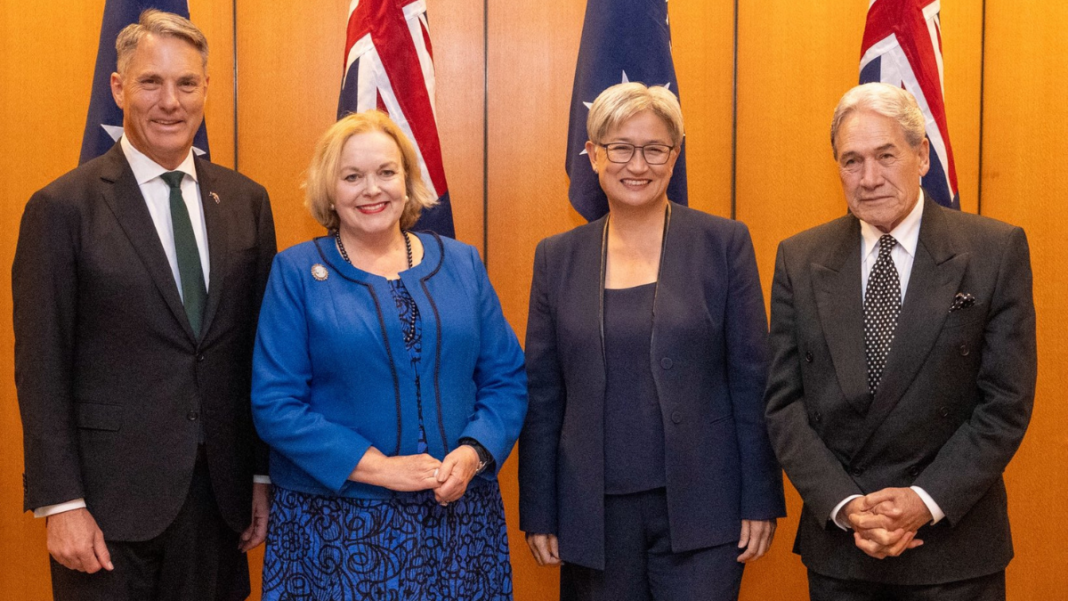
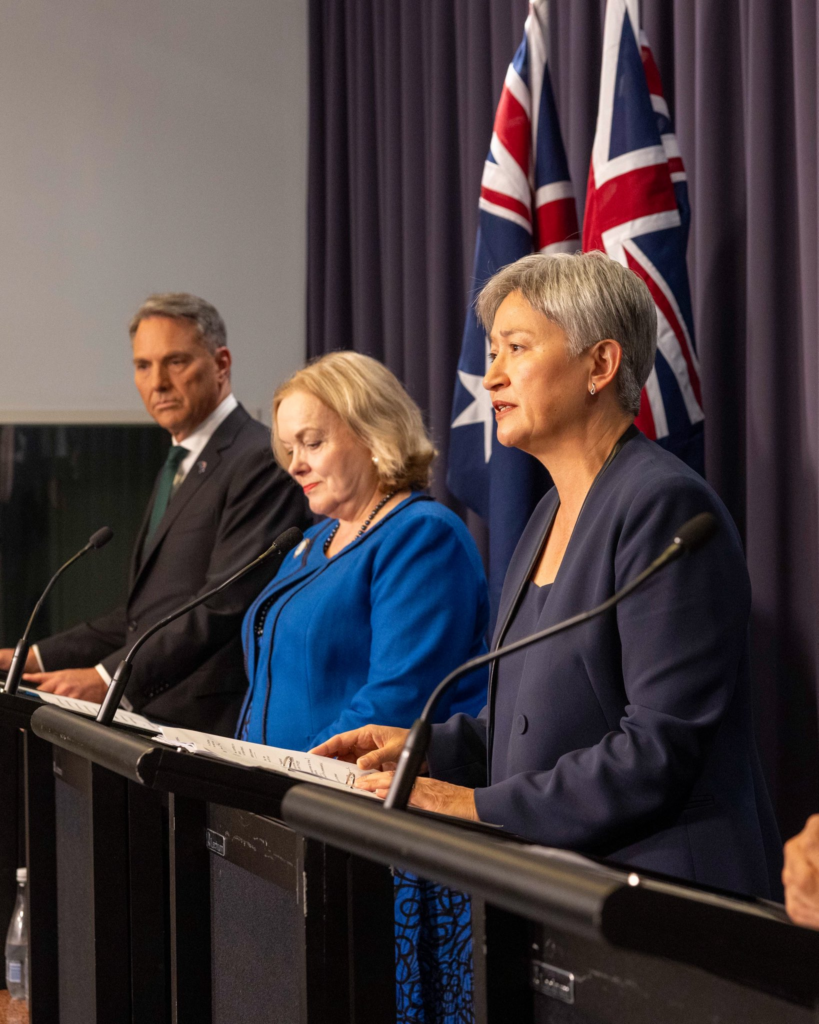
At the latest round of high-level “2+2” talks in Canberra on 17 March, senior ministers from both countries framed the trans-Tasman relationship as increasingly critical amid intensifying strategic competition and regional uncertainty.
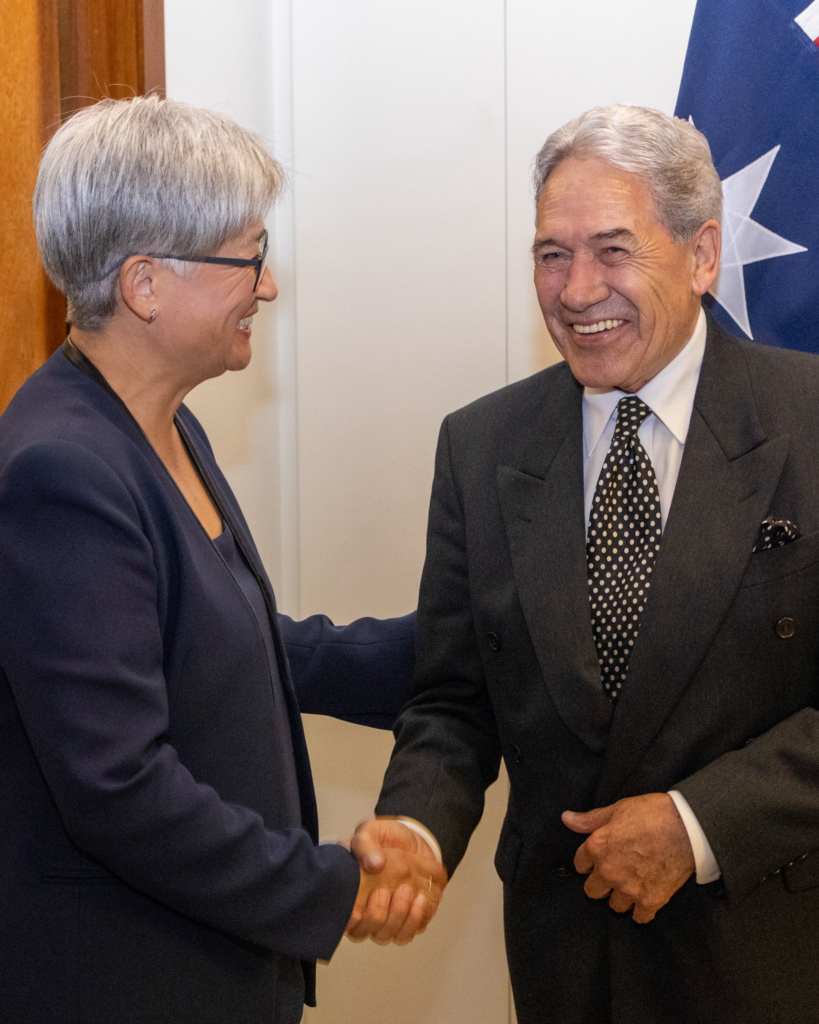
Australia’s Deputy Prime Minister and Defence Minister Richard Marles and Foreign Minister Penny Wong hosted their New Zealand counterparts, Defence Minister Judith Collins and Foreign Minister Winston Peters, for the third Australia–New Zealand Foreign and Defence Ministerial Consultations.
The talks unfolded against a backdrop of shared grief following the recent deadly attack at Bondi, with Australian ministers acknowledging New Zealand’s support and reaffirming a joint commitment to combat antisemitism.
But the focus quickly shifted to broader geopolitical concerns. Both sides warned that shifting global dynamics — from rising great-power rivalry to regional instability — were testing their shared interests, prompting a renewed emphasis on collective security.
At the centre of discussions was the enduring alliance between the two nations, underpinned by the ANZUS Treaty, which marks its 75th anniversary this year. Ministers described the pact as a cornerstone of stability in the Indo-Pacific and pledged to strengthen military interoperability, joint operations and defence industry collaboration over the coming decade.
A newly released defence vision, dubbed “Anzac 2035”, outlines plans for the two countries to operate more seamlessly as a combined force, improving readiness to respond to shared threats.
The Pacific remained a major priority, with both governments stressing that the region’s security and prosperity are closely intertwined with their own. Ministers reaffirmed support for Pacific-led institutions, particularly the Pacific Islands Forum, and committed to backing upcoming leaders’ meetings in Palau and New Zealand.
Climate change was again identified as the most pressing threat facing Pacific nations, with Australia and New Zealand pledging to amplify Pacific voices on the global stage and improve access to climate finance ahead of key international negotiations.
At the same time, both countries flagged growing concerns over transnational crime in the region, including drug trafficking routes through Pacific waters, and agreed to step up coordinated responses.
Beyond the Pacific, ministers addressed a range of global flashpoints. They condemned Russia’s ongoing invasion of Ukraine. They called for an end to hostilities, expressed concern about escalating tensions in the Middle East, and urged restraint, dialogue, and adherence to international law.
China’s actions in the South China Sea and East China Sea were also raised, with both countries warning against unsafe military conduct and reaffirming that disputes must be resolved peacefully under international law. They reiterated support for stability across the Taiwan Strait and opposed unilateral moves to alter the status quo.
Human rights issues featured prominently, including concerns about conditions in Xinjiang, Tibet and Hong Kong, as well as the ongoing crisis in Myanmar, where both nations called for an end to violence and a return to inclusive dialogue.
The ministers also reaffirmed their commitment to multilateral institutions, including the United Nations, and flagged future ambitions for seats on the UN Security Council.
Economic security and resilient supply chains were highlighted as another shared priority, with both sides stressing the importance of open trade in maintaining regional prosperity.
As the talks concluded, both countries underscored that their partnership — spanning defence, diplomacy and regional engagement — would remain central to navigating an increasingly uncertain world.
New Zealand is set to host the next round of consultations in 2027, continuing a dialogue both sides now see as essential to safeguarding stability across the Indo-Pacific and beyond.
Support our Journalism
No-nonsense journalism. No paywalls. Whether you’re in Australia, the UK, Canada, the USA, or India, you can support The Australia Today by taking a paid subscription via Patreon or donating via PayPal — and help keep honest, fearless journalism alive.
