

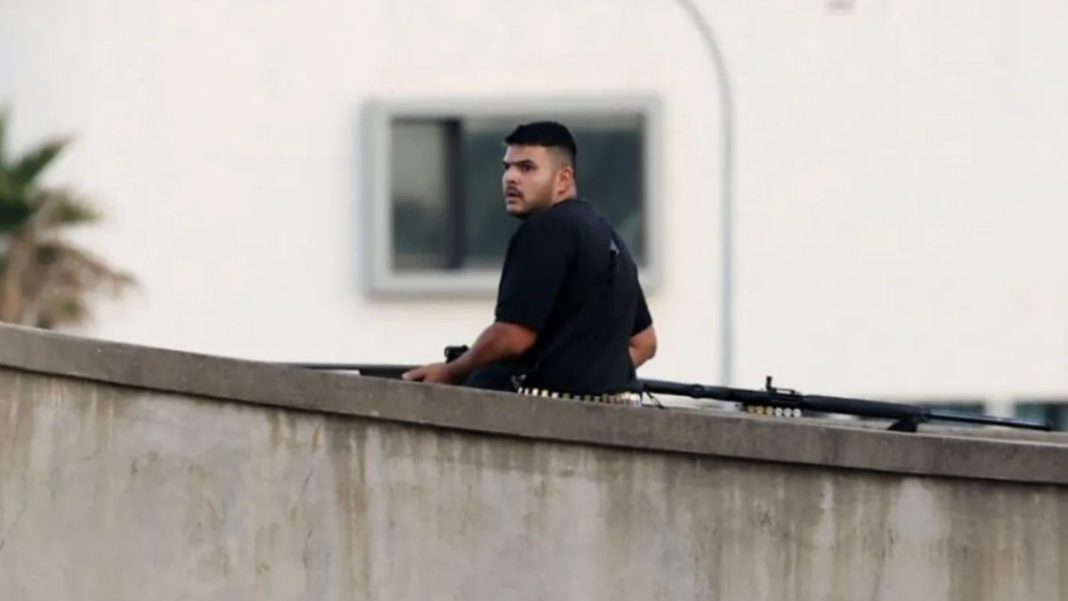
Australia’s domestic intelligence agency, ASIO, had previously examined Bondi gunman Naveed Akram over his links to a Sydney-based Islamic State (IS) terror cell, it has emerged, raising fresh questions about how security agencies assess and manage potential threats.
Akram, 24, and his father, 50-year-old Sajid Akram, killed at least 15 people and injured dozens more when they opened fire on the “Chanukah by the Sea” celebration at Bondi Beach on Sunday evening. The mass shooting, targeting a Jewish community event on the first night of Hanukkah, has been described as one of the deadliest terrorist incidents in modern Australian history.
Previous ASIO interest
Security sources told the ABC that the Australian Security Intelligence Organisation (ASIO) took an interest in Naveed Akram about six years ago because of his close association with a group of Sydney men who were later convicted of Islamic State-related offences. The assessment followed the July 2019 arrest of IS supporter Isaak El-Matari, who was jailed for plotting attacks in Australia and for attempting to establish himself as the group’s “Australian commander”.
El-Matari was part of a small IS network in Sydney that has since been broken up through a series of counter-terrorism operations. Investigators now believe Akram was closely connected to several members of that circle, prompting ASIO to review his activities at the time.
However, officials say he was ultimately assessed as not posing an “immediate threat”, meaning he was not subject to ongoing intensive monitoring.
ASIO Director-General Mike Burgess confirmed on Sunday that one of the Bondi attackers had been known to the agency, but declined to identify which of the two men.
He said,
“One of these individuals was known to us, but not in an immediate-threat perspective, so we need to look into what happened here.”
The Joint Counter Terrorism Team (JCTT) — which brings together ASIO, NSW Police, the Australian Federal Police and the NSW Crime Commission — is now examining how Akram’s case was handled and whether any warning signs were missed.
Alleged Islamic State allegiance
Investigators believe the father and son pledged allegiance to the Islamic State before the attack. An IS flag was reportedly found in their car near Bondi Beach, according to a senior JCTT official quoted by the ABC.
Authorities have already classified the Bondi massacre as a terrorist incident motivated by violent antisemitism. Worshippers and families had gathered near Campbell Parade for the Hanukkah celebration when the gunmen opened fire, sending crowds fleeing for cover as police rushed to the scene.
One gunman, Sajid Akram, was shot dead by police at the scene; the second, Naveed Akram, was taken into custody after being wounded. Police later reported recovering a suspected improvised explosive device from a vehicle linked to one of the attackers.
How prior terror links are assessed
Revelations that Akram was examined by ASIO years before the attack are likely to intensify scrutiny of how agencies assess individuals with ideological ties but no clear operational plans.
Counter-terrorism experts say it is common for agencies to briefly investigate people who appear on the periphery of extremist networks, but resource constraints and legal thresholds mean only those judged to pose an imminent threat are subject to sustained surveillance or disruption operations.
Mr Burgess has previously warned that Australia faces a “crowded threat environment”, with ASIO monitoring both Islamist and far-right extremists as well as individuals radicalised largely online. In recent annual threat assessments, he has emphasised that many persons of interest never progress beyond rhetoric — but that a small number can escalate quickly, sometimes without clear warning.
The Bondi case will now test whether those systems need further overhaul, particularly in relation to individuals with earlier connections to disrupted terror cells.
Ongoing JCTT investigation
The Joint Counter Terrorism Team is continuing to piece together the attackers’ movements, communications and online activity in the lead-up to the shooting. Detectives are examining digital devices, social media accounts and financial records in an effort to map any support network and determine whether others were aware of the plot.
Authorities have not announced any additional arrests. They say there is no evidence of an ongoing active threat, but a highly visible police presence remains in Jewish community precincts and major public places.
NSW Police and ASIO have both confirmed they are reviewing what information was held on the gunmen before the attack and how it was shared between agencies. Any formal lessons-learned process is expected to take months and could include oversight by the Independent National Security Legislation Monitor or parliamentary committees.
National shock and demands for answers
The Bondi attack has sparked grief and anger across Australia and overseas. Community vigils have been held in Sydney and other cities, while synagogues and Jewish organisations have reported heightened anxiety and calls for stronger security support.
Prime Minister Anthony Albanese has condemned the shooting as a “targeted attack on Jewish Australians” and vowed that the country “will not be divided by hate or violence”. He has pledged full transparency about what intelligence agencies knew and how the attackers were able to strike.
For now, ASIO and the JCTT face two urgent tasks: fully dismantling any remaining support structures around the Bondi gunmen, and explaining to a shocked public how a man once linked to an Islamic State cell could return to the radar only after lives were lost.
Support our Journalism
No-nonsense journalism. No paywalls. Whether you’re in Australia, the UK, Canada, the USA, or India, you can support The Australia Today by taking a paid subscription via Patreon or donating via PayPal — and help keep honest, fearless journalism alive.
