
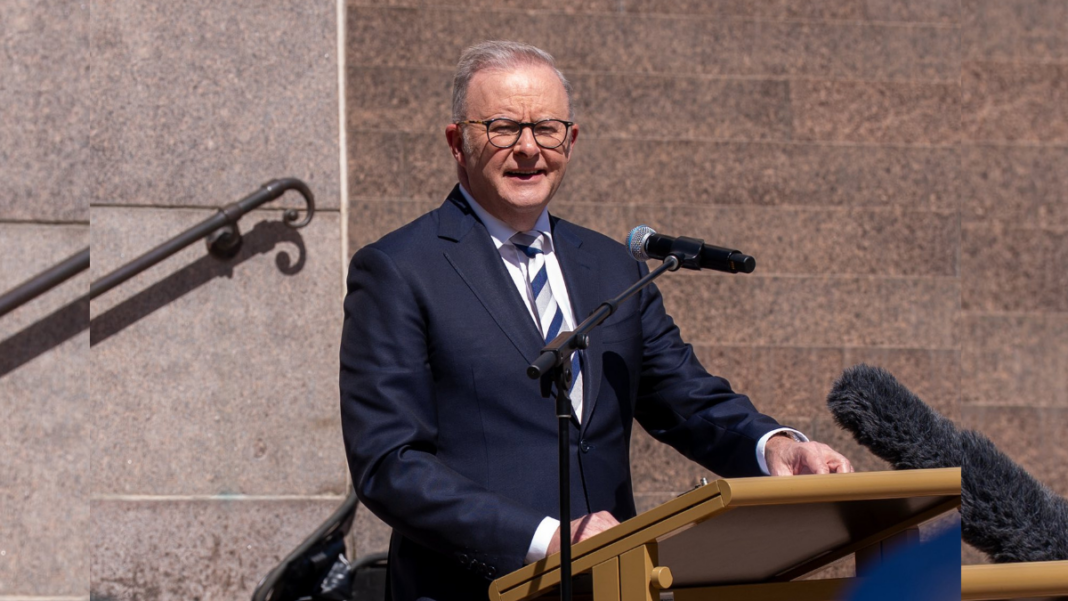
Prime Minister Anthony Albanese delivered a blunt response to the fatal police shooting of fugitive Dezi Freeman, saying he had “no sympathy” for the man accused of murdering two Victorian officers, while also defending the government’s handling of a worsening fuel crisis driven by global conflict.
Speaking with ABC Radio, Albanese described his reaction to Freeman’s death in stark terms: “Good, in a word,” he said, pointing to the killing of Detective Senior Constable Neal Thompson and Senior Constable Vadim De Waart-Hottart as acts that left a lasting emotional impact.
The Prime Minister recalled attending both funerals in Melbourne, describing scenes of grief among officers and families. He emphasised the daily risks faced by police, framing the incident as a reminder of their sacrifice. While pressed on whether any loss of life could be justified, Albanese maintained that Freeman had made his own choices, including resisting arrest and embracing an extremist “sovereign citizen” ideology that authorities have warned poses a broader security risk.
Albanese also confirmed close coordination between federal and state agencies, including the Australian Federal Police and intelligence bodies, as investigations continue into whether Freeman had assistance while evading capture.
Turning to the escalating fuel crisis, Albanese acknowledged the strain on households, describing it as the “biggest spike in petrol and diesel prices in history,” driven by the ongoing war in the Middle East. While conceding that government measures—such as a fuel excise cut—would not fully offset rising costs, he insisted they would provide some relief.
“We’re not immune from global price shocks,” he said, noting that the longer the conflict continues, the greater the economic impact.
Despite growing public concern, the Prime Minister stopped short of outlining a clear trigger for fuel rationing, instead stressing that the government’s priority is to maintain supply. He pointed to a four-stage national plan agreed by Cabinet, currently at stage two, where supply remains stable despite disruptions to some shipments.
“We’ve decided to try and keep supply going,” Albanese said, resisting calls for greater transparency about when stricter measures might be introduced.
The government has already taken steps, including releasing 20 per cent of fuel reserves and underwriting additional imports, as well as strengthening supply arrangements with regional partners.
The interview also highlighted the real-world impact of rising fuel prices, including workers forced to ration petrol spending between pay cycles. Albanese acknowledged these pressures, suggesting that employers and communities may need to step up informally to support those most affected.
He pointed to behavioural shifts, including increased use of public transport and working from home, as Australians adapt to higher costs.
Rejecting claims that government support could fuel inflation, Albanese argued that reducing fuel prices would instead ease cost pressures rather than inject excess demand into the economy.
On the broader geopolitical context, Albanese defended concerns about Iran’s nuclear ambitions and regional influence, while stopping short of endorsing regime change imposed from outside.
“My job is to deal with things as they are,” he said, adding that any political transformation in Iran must ultimately come from its own people.
Support our Journalism
No-nonsense journalism. No paywalls. Whether you’re in Australia, the UK, Canada, the USA, or India, you can support The Australia Today by taking a paid subscription via Patreon or donating via PayPal — and help keep honest, fearless journalism alive.
