

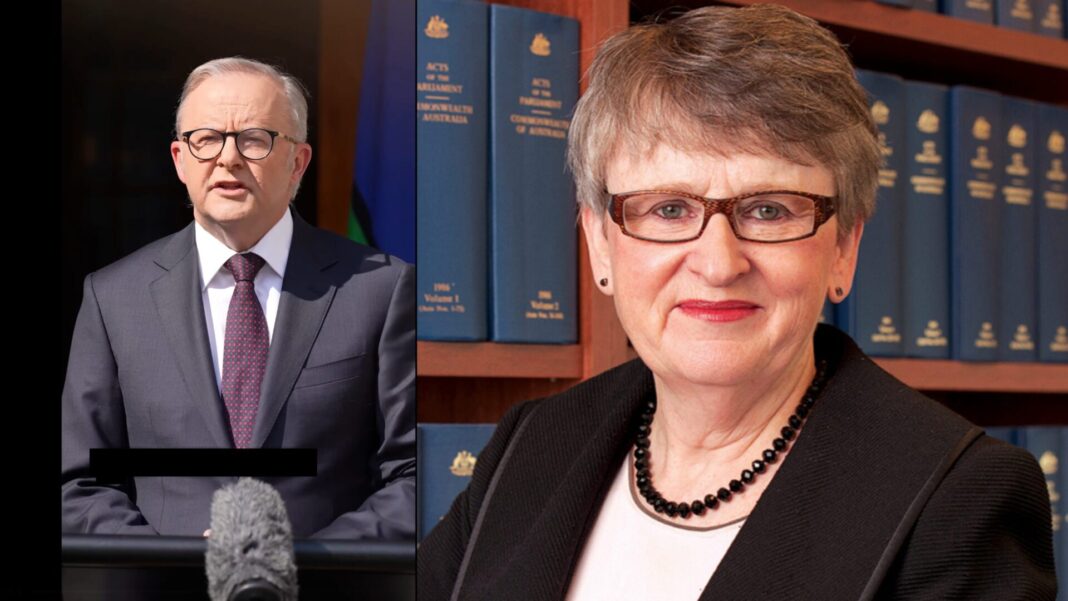
Prime Minister Anthony Albanese has announced a national royal commission into antisemitism and social cohesion, appointing former High Court justice Virginia Bell to lead an inquiry that will examine both the circumstances surrounding the Bondi terror attack and the wider rise in antisemitism across Australia.
The commission is due to deliver its final report to the government by 14 December 2026, the first anniversary of the attack, with an interim report expected in April.
The move replaces a previously announced New South Wales royal commission, with the NSW government now expected to participate in and support the federal process. A separate Commonwealth review into the performance of federal law enforcement and intelligence agencies, commissioned in the wake of the Bondi attack, will be folded into the broader royal commission.
A commission with a national scope
In announcing the inquiry, Albanese framed the royal commission as a response to the Bondi Beach attack on 14 December 2025, which authorities have described as an antisemitic terrorist act aimed at Jewish Australians and inspired by Islamic State ideology.
According to the Prime Minister’s statement at Parliament House, the commission’s remit will cover the nature and prevalence of antisemitism in Australian society and institutions, the drivers of hatred and radicalisation, and the adequacy of government and agency responses before and after the attack.
The Attorney-General’s department said the inquiry will also look at opportunities to strengthen “social cohesion”, a term that governments have increasingly used to describe community resilience and trust across diverse groups, particularly at times of heightened tension and polarisation.
Why Virginia Bell was chosen
Virginia Bell, who served as a justice of the High Court from 2009 until 2021, has led previous high-profile inquiries, including the 2022 inquiry into Scott Morrison’s secret ministerial appointments. The government has cited her experience in handling sensitive matters and complex evidence as a key reason for her appointment.
Her appointment is also intended to help manage a central complication for any inquiry running alongside criminal justice processes: the royal commission is expected to gather evidence and test institutional decisions without prejudicing ongoing investigations or court proceedings arising from the Bondi case.
Folding in the security and intelligence review
Days after the Bondi attack, the Commonwealth commissioned an independent review led by Dennis Richardson AC into what relevant federal agencies knew about the alleged offenders before the attack, how information was shared between agencies and across jurisdictions, and whether additional measures could have prevented the incident.
That review was initially pitched as a targeted, “short, sharp” examination of Commonwealth capabilities. By absorbing it into the royal commission, the government is signalling that the national inquiry will have a wider brief and stronger coercive powers, including the ability to compel testimony and documents.
The pressure that built after Bondi
Albanese’s decision follows sustained pressure from victims’ families, Jewish community organisations, crossbench and Coalition MPs, and sections of Labor’s own caucus, after the government initially resisted calls for a royal commission.
The political argument for a single national inquiry sharpened once NSW flagged its own royal commission: critics warned parallel processes risked duplication, jurisdictional gaps, and a fragmented picture of how threats were tracked and responded to across state and federal lines.
Background: a documented surge in antisemitic incidents
While the Bondi attack was the catalyst for the royal commission, the inquiry is also being launched against a backdrop of repeated warnings about antisemitism in Australia since October 2023.
The Executive Council of Australian Jewry (ECAJ) has reported antisemitic incidents at historically high levels, with recent reporting pointing to a sharp lift compared with pre-October 2023 baselines and a pattern that has included harassment, threats, property damage and attacks on community institutions.
Government initiatives in this area have already been underway. Albanese appointed Jillian Segal AO as Australia’s Special Envoy to Combat Antisemitism in July 2024, and her plan and recommendations were publicly released in 2025 as part of a broader policy push aimed at prevention, education and better coordination.
The royal commission is expected to scrutinise whether those efforts were sufficient, how institutions responded as tensions rose, and what further steps are needed to deter hate crimes and reduce risks of ideologically motivated violence.
What happens next
The government has not yet published the full operational details of hearings, witness lists or reporting arrangements, but the formal terms of reference indicate a commission designed to run on a tight timetable, producing an interim report in April and final recommendations by mid-December.
States and territories have been asked to take part, reflecting the reality that antisemitism, community safety, policing, intelligence and social cohesion cut across every level of government.
For communities affected by the attack and by rising antisemitism, the commission now becomes the central national forum for answers: not only on how a mass casualty attack unfolded at a public event, but on whether Australia’s institutions are prepared to identify, disrupt and deter hate-driven extremism before it turns violent.
Support our Journalism
No-nonsense journalism. No paywalls. Whether you’re in Australia, the UK, Canada, the USA, or India, you can support The Australia Today by taking a paid subscription via Patreon or donating via PayPal — and help keep honest, fearless journalism alive.
