

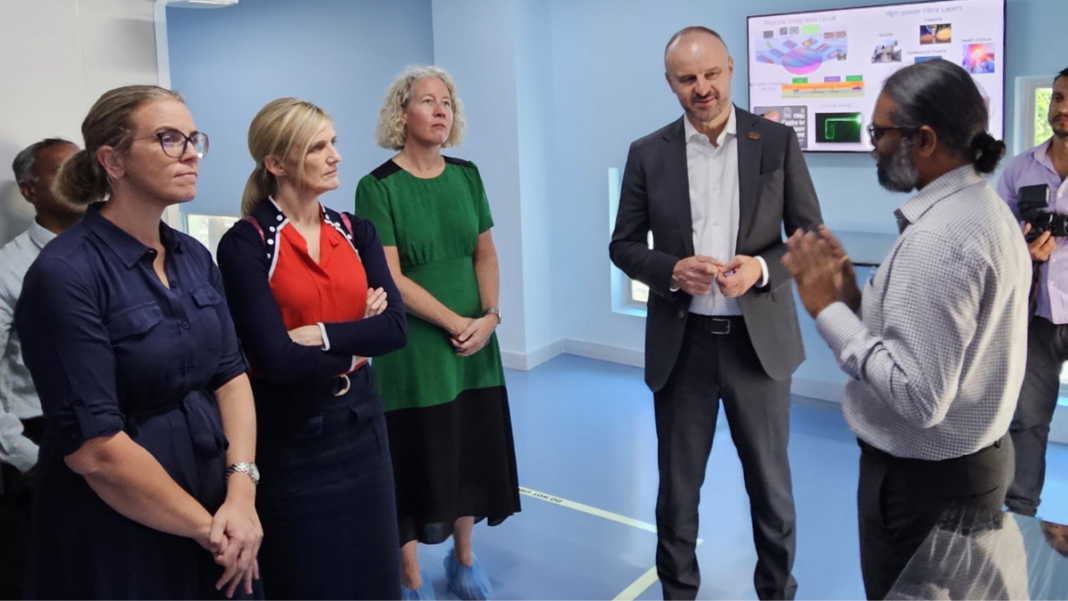
Andrew Barr has declared India a “priority partner” for the Australian Capital Territory, outlining plans to significantly expand cooperation in education, tourism, sport and long-term investment during an official trade mission to the country.
In an interview with ANI, Barr said India is Canberra’s largest diaspora community and one of the world’s fastest-growing major economies, making it central to the Territory’s global engagement strategy.
“India is a priority partner for Canberra – our largest diaspora community – and one of the world’s largest and fastest growing economies.”
He added that the mission placed strong emphasis on promoting the ACT’s two biggest export sectors: international education and tourism.
Describing Canberra as Australia’s “knowledge capital”, Barr highlighted the city’s concentration of universities, research institutions and policymakers within a single urban centre. The ACT enrols more than 60,000 tertiary students each year, including over 20,000 international students, with India the second-largest source country. More than 2,500 Indian students undertook tertiary studies in the ACT last year alone.
Barr said the next phase of engagement would move beyond student recruitment to deeper collaboration in joint research, innovation partnerships, skills development and dual programs.
The trade mission – supported by the Australian Government through the Department of Foreign Affairs and Trade, Austrade and Tourism Australia – aligned with the Australia-India Economic Cooperation and Trade Agreement (ECTA). It included meetings with government agencies, higher education leaders, education agents and tourism industry representatives across India.
Barr was joined by senior representatives from ACT tertiary institutions, VisitCanberra and the CEO of Cricket ACT, with discussions also covering sporting links and business events.
Addressing concerns around Australia’s student visa risk assessment framework, Barr noted that visa settings are determined by the federal government but stressed that Indian students remain highly valued.
“Integrity in the system matters, but so does accessibility. Canberra’s message to Indian students is that you are welcome here, and your contribution to our city is recognised, respected and highly valued.”
Tourism was another key pillar of the visit. The ACT’s visitor economy reached AUD 3.1 billion in the year to September 2025. India is currently Canberra’s fifth-largest international visitor market, with about 15,000 visitors in the same period – representing 7 per cent of total international arrivals.
Barr said the Territory aims to double Indian arrivals to 30,000 annually. That would equate to roughly 600 visitors a week – enough to support the equivalent of two international flights weekly.
A central objective is strengthening the case for the return of direct services by Singapore Airlines to Canberra. The airline operates flights to Singapore from major Indian cities including Delhi, Mumbai, Bengaluru, Chennai and Hyderabad, offering potential feeder routes for future Singapore-Canberra connections.
Barr said growth from India, combined with rising visitor numbers from the United Kingdom, Europe, China and ASEAN nations, would be critical to restoring direct international services.
In 2026, the ACT Government will work closely with Tourism Australia, VisitCanberra, Canberra Airport and industry partners to pursue these targets.
Beyond education and tourism, Barr promoted Canberra’s economic strengths in research and development, public administration, cybersecurity, healthcare and clean energy – sectors he said closely align with India’s development priorities.
He also pointed to the Territory’s long-term economic stability, citing three decades of consecutive growth, low unemployment and major city-shaping infrastructure projects including light rail expansion, health and education precincts and digital capability upgrades.
“India is not just a market for us – it is a long-term partner,” Barr said.
“This mission is about building on that partnership so that Indian students, visitors and investors continue to see Canberra as a place where they can study, visit, invest and build a future.”
Support our Journalism
No-nonsense journalism. No paywalls. Whether you’re in Australia, the UK, Canada, the USA, or India, you can support The Australia Today by taking a paid subscription via Patreon or donating via PayPal — and help keep honest, fearless journalism alive.
