

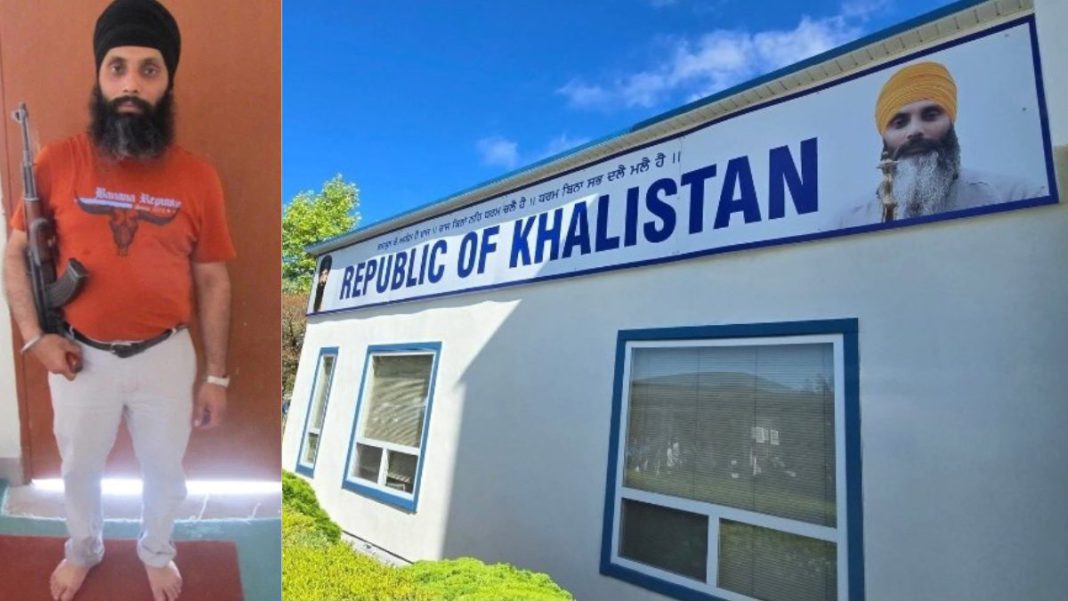
In a provocative move likely to derail improving ties between India and Canada, a so-called “Embassy of the Republic of Khalistan” has been established on the premises of the Guru Nanak Sikh Gurdwara in Surrey, British Columbia—once headed by slain Khalistani separatist Hardeep Singh Nijjar.
The symbolic “embassy,” with banners and signs promoting the Khalistan cause, openly supports Nijjar and coincides with renewed efforts by banned extremist group Sikhs for Justice (SFJ) to conduct another “referendum.”
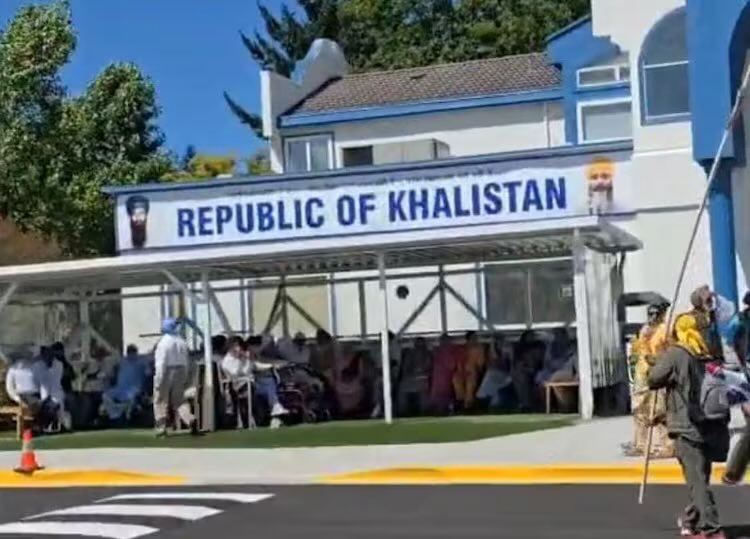
Photos of the new Khalistan outpost on social media show signage proclaiming it an official embassy of the fictitious state.
The building that houses the “embassy” reportedly received C$150,000 in recent taxpayer-funded grants from the British Columbia government for accessibility upgrades—drawing sharp criticism from local Indo-Canadian leaders and observers.
Indian National Congress MP Gurjeet Singh Aujla has urged the Indian government to raise the issue with Canadian authorities.
“There is a lot of freedom of speech there. Our government should raise this issue with the Canadian government.”
It is reported that the Indian authorities are closely monitoring the development, viewing it as a fresh provocation and yet another example of Ottawa’s failure to crack down on pro-Khalistan extremism operating with impunity in Canada.
Ruchi Wali, a prominent Indian-origin community leader, questioned the legality of the “Republic of Khalistan” declaration under Canadian law, calling it “a direct challenge to national sovereignty and unity.”
Radio India Ltd. owner Maninder Gill has written to Premier David Eby and Prime Minister Mark Carney, urging action against the use of a government-funded charity building to promote a separatist agenda.
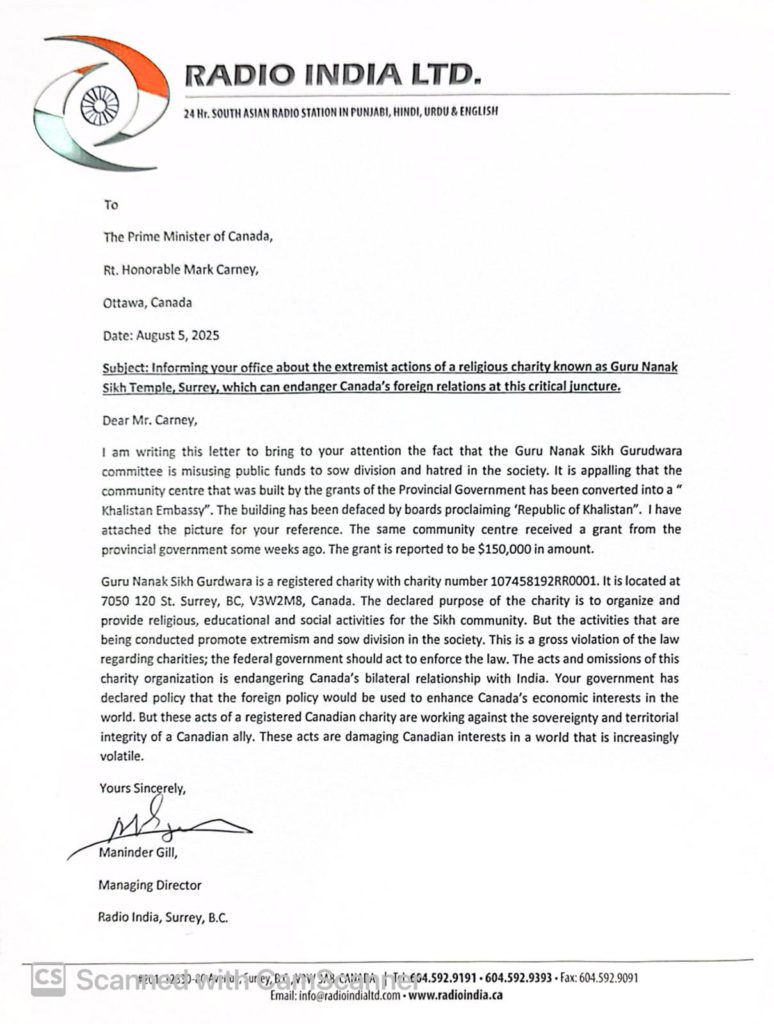
Speaking to CNN-News18 on the letter, Gill emphasised that the building was a government funded charity building, meant not just for Sikhs, but for people from around the world. He questioned why a building that is run on government’s charity was being used for terrorism. He also added that he was hopeful of getting a response from the Carney administration even though he had written several letters to previous governments flagging extremist activities in the building.
The outrage isn’t limited to the Indian diaspora. Canadian journalist Daniel Bordman sarcastically remarked,
“It’s perfect that the ‘Republic of Khalistan’s’ mascot is a supporter of suicide bombings and blowing airplanes out of the sky.”
Dallas Brodie, interim leader of the OneBC party, has condemned the display of the so-called “Khalistan embassy” sign at a taxpayer-funded gurdwara in Surrey, calling it a threat to British Columbia’s unity.
“This “Khalistan Republic” nonsense and groups promoting Hamas terrorism is a deliberate attempt to divide people in British Columbia and prevent us from unifying on real values.”
Significantly, Canada’s own intelligence agency has begun acknowledging the threat. In June, the Canadian Security Intelligence Service (CSIS) identified Canada-based Khalistani Extremists (CBKEs) as a persistent source of politically motivated violent extremism. The CSIS warned of CBKEs continued involvement in financing and plotting violence abroad. This marked the first time Canadian authorities officially linked the Khalistan movement with extremism.
Support our Journalism
No-nonsense journalism. No paywalls. Whether you’re in Australia, the UK, Canada, the USA, or India, you can support The Australia Today by taking a paid subscription via Patreon or donating via PayPal — and help keep honest, fearless journalism alive.
