

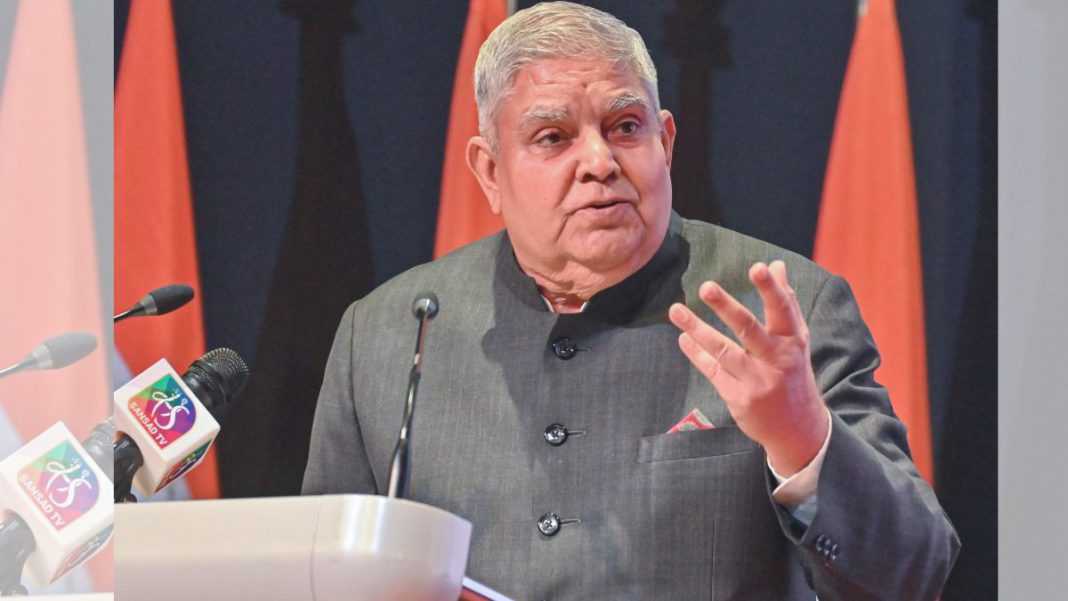
In a surprise move that has sent ripples through India’s political landscape, Vice President Jagdeep Dhankhar resigned today, citing health reasons, just as Parliament’s Monsoon Session got underway.
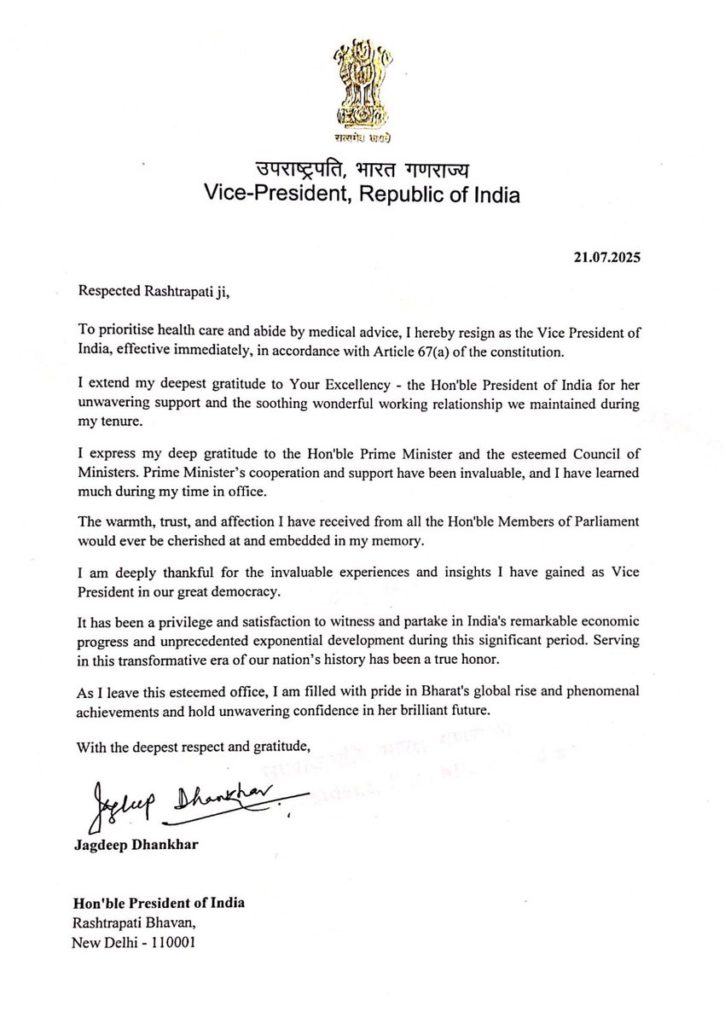
Mr Dhankhar, 74, submitted his resignation under Article 67(a) of the Indian Constitution, asking President Droupadi Murmu to accept it with immediate effect.
“To prioritise health care and abide by medical advice, I hereby resign as Vice President of India, effective immediately,”
Mr Dhankhar wrote in his letter to the President.
The timing – on the very first day of the Monsoon Session and ahead of a key Business Advisory Committee meeting Mr Dhankhar himself had convened – has raised eyebrows in New Delhi. Opposition parties, led by the Congress, have called for greater transparency, suggesting that there may be more behind the sudden departure than mere medical advice.
“While we all wish Mr Dhankhar a full recovery, this announcement comes at a highly inconvenient moment,” said Congress MP Jairam Ramesh.
“He was due to preside over significant discussions on judicial reforms tomorrow. We need clarity on whether health concerns were the sole driver of this decision.”
Communist Party of India MP Sandosh Kumar echoed the sentiment, describing the resignation as “unexpected” and voicing doubts that it would be accepted at face value without further explanation.
By contrast, senior advocate and former Union minister Kapil Sibal urged his colleagues to respect Mr Dhankhar’s reasons and avoid speculation.
“He has clearly stated health grounds. We should accept his decision and move on,”
Mr Sibal said, paying tribute to Mr Dhankhar’s reputation for impartiality in the Rajya Sabha, India’s upper house of Parliament.
Quick Facts:
- Tenure: Mr Dhankhar took office as Vice President in August 2022.
- Role: As Chair of the Rajya Sabha, he has overseen debates on key national issues, including economic reform and pandemic response.
- Successor Timeline: India’s Constitution requires a Vice Presidential election within six months of a vacancy.
With the resignation now in the hands of President Murmu, attention turns to the ruling Bharatiya Janata Party (BJP) and its allies to nominate a new candidate. The unexpected development is likely to dominate headlines in both New Delhi and Canberra, where observers are watching India’s political stability amid its pivotal role on the global stage.
What’s next?
- Parliamentary Agenda: The Monsoon Session continues, but Mr Dhankhar’s absence will be felt at this week’s committee meetings.
- Vice Presidential Election: A replacement must be elected by the Electoral College, comprising both houses of Parliament, within six months.
- Political Fallout: Opposition figures will press for answers, while the government will seek to maintain momentum on its legislative priorities.
For now, India—and indeed many in Australia’s diplomatic and business communities—will be waiting for official confirmation of Mr Dhankhar’s health status and any further announcements from Rashtrapati Bhavan (the President’s residence) regarding the succession.
Support our Journalism
No-nonsense journalism. No paywalls. Whether you’re in Australia, the UK, Canada, the USA, or India, you can support The Australia Today by taking a paid subscription via Patreon or donating via PayPal — and help keep honest, fearless journalism alive.
Military hardware
