

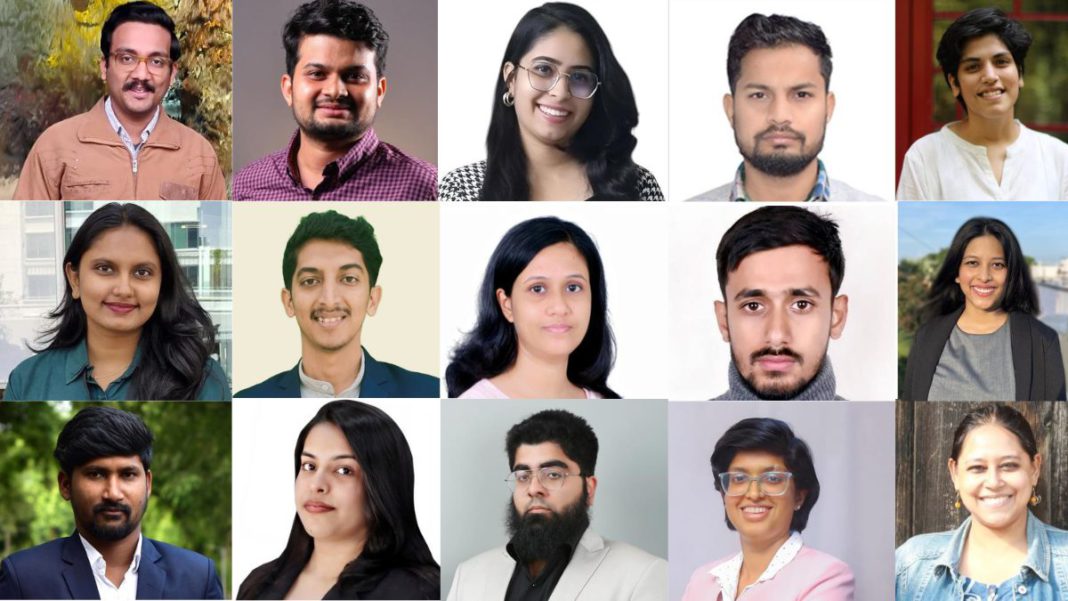
Foreign Minister Senator Penny Wong today announced the recipients of the 2024–25 Maitri Fellowships and Scholarships, supporting Australia-India collaboration across technology, business, education, and culture.
The latest round includes 13 Maitri Scholarships and three Fellowships, with a strong focus on innovation in clean energy, digital governance, quantum computing, and sustainable development.
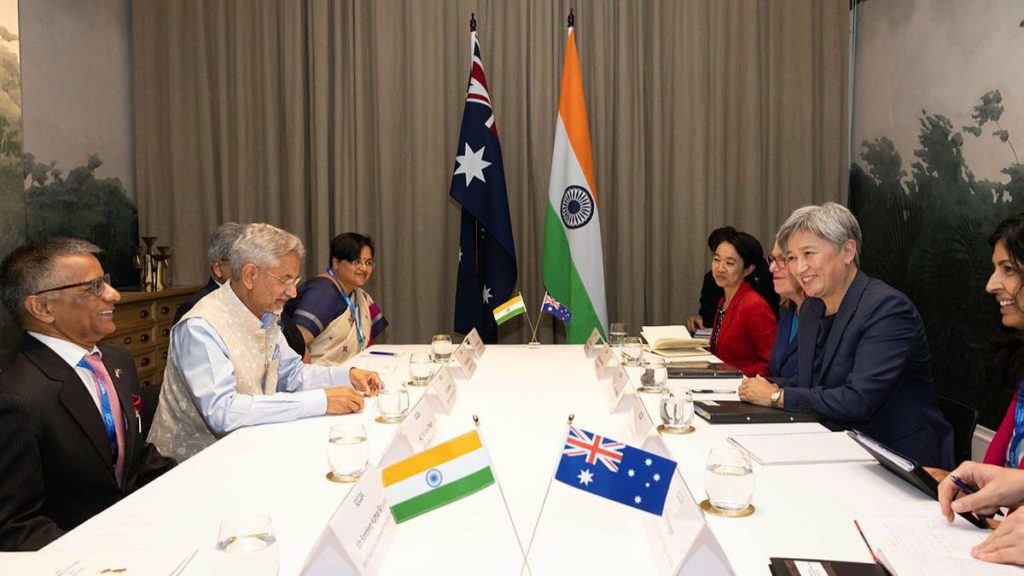
“Australia and India’s relationship is closer and more important than ever,” Senator Wong said in a statement.
“We are deepening cooperation across priority sectors that are vital to both nations’ futures, including in defence, trade, education, and technology.”
Among this year’s standout scholarship recipients are:
- Mahi Singh (University of Newcastle), whose project develops solar-powered desalination systems and renewable-powered water infrastructure for underserved coastal communities.
- Abhishek Sawaika (University of Melbourne), advancing distributed quantum computing and machine learning software systems.
- Bilal Alam (Murdoch University), designing an innovative EV battery charging system that enables real-time consumption of renewable energy.
- Keshav Raghav Hegde (Curtin University), developing a waste-free dry fractionation process to convert lupins into high-value food ingredients, reducing environmental impact.
- Lakshmi Raja (Australian National University), using solid-state nanopore sensors and machine learning to develop a diagnostic tool for early detection of Alzheimer’s Disease.
- Krishna Kanta Pandey (University of Newcastle), creating sustainable biofertiliser by combining nano-biochar and beneficial bacteria to improve soil health and reduce chemical use.
- Bhawana Gehlot (Victoria University), producing hydrogen from wastewater through photo-electrochemical water splitting while enhancing efficiency and treating waste.
- Mohammed Ansari (University of Melbourne), building machine learning models to create digital twins of buildings for large-scale energy efficiency improvements.
- Himani Meshram (University of Melbourne), developing a technoeconomic framework to help transition heavy industries in Australia and India towards net-zero emissions.
- Hetansha Boricha (University of Sydney), exploring metal-organic frameworks for direct air capture technologies to enhance CO₂ removal efficiency under various environmental conditions.
- Bharadwaj Pula (Australian National University), designing stable and efficient photoelectrodes for solar-powered hydrogen production using seawater.
- Tony Patwa (Federation University), creating sustainable cementitious materials using additive manufacturing and carbon waste, aiming to reduce emissions in construction.
From biofertilisers and digital twins of buildings to nanopore sensors for Alzheimer’s diagnosis, the selected scholars reflect the Maitri program’s ambition to foster real-world solutions with cross-border impact.
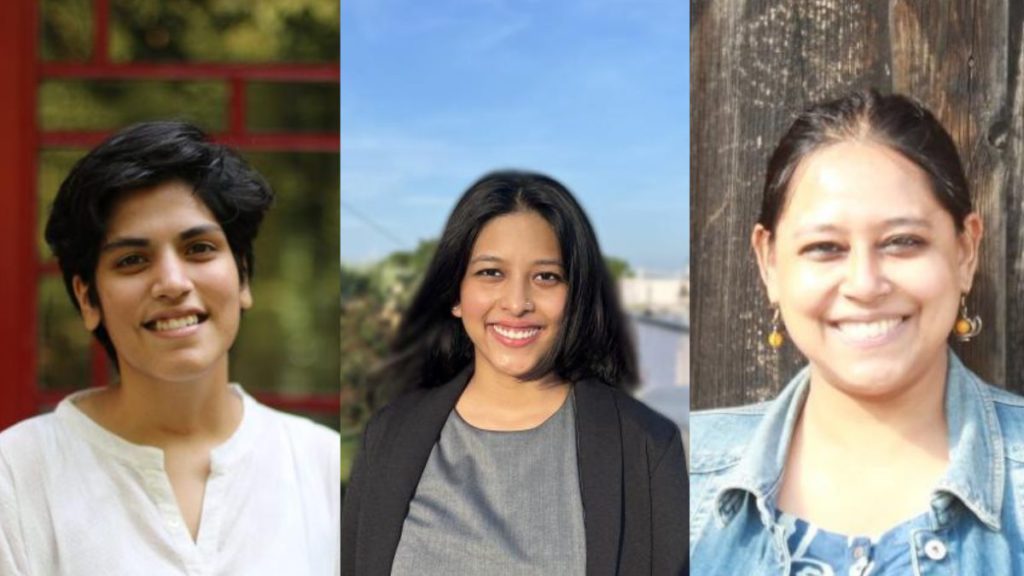
Three new Maitri Fellows will explore Australia-India partnerships in critical areas:
- Rushali Saha (United States Studies Centre), investigating maritime cooperation in the Western Indian Ocean to tackle emerging security threats.
- Preeti Mudliar (Australia India Institute), analysing digital identity policies in India and Australia, including implications of Aadhaar and automated governance.
- Shruti Jargad (Australian Strategic Policy Institute), mapping China’s digital influence in South Asia and identifying avenues for India-Australia collaboration in regional infrastructure.
Administered by the Centre for Australia-India Relations, the Maitri (Sanskrit for “friendship”) program supports collaborative initiatives that strengthen bilateral connections and showcase the richness of both nations. The Maitri initiative is part of Australia’s broader commitment to fostering ties with India in sectors critical to both countries’ futures—including defence, trade, education, and technology.
Support our Journalism
No-nonsense journalism. No paywalls. Whether you’re in Australia, the UK, Canada, the USA, or India, you can support The Australia Today by taking a paid subscription via Patreon or donating via PayPal — and help keep honest, fearless journalism alive.
