

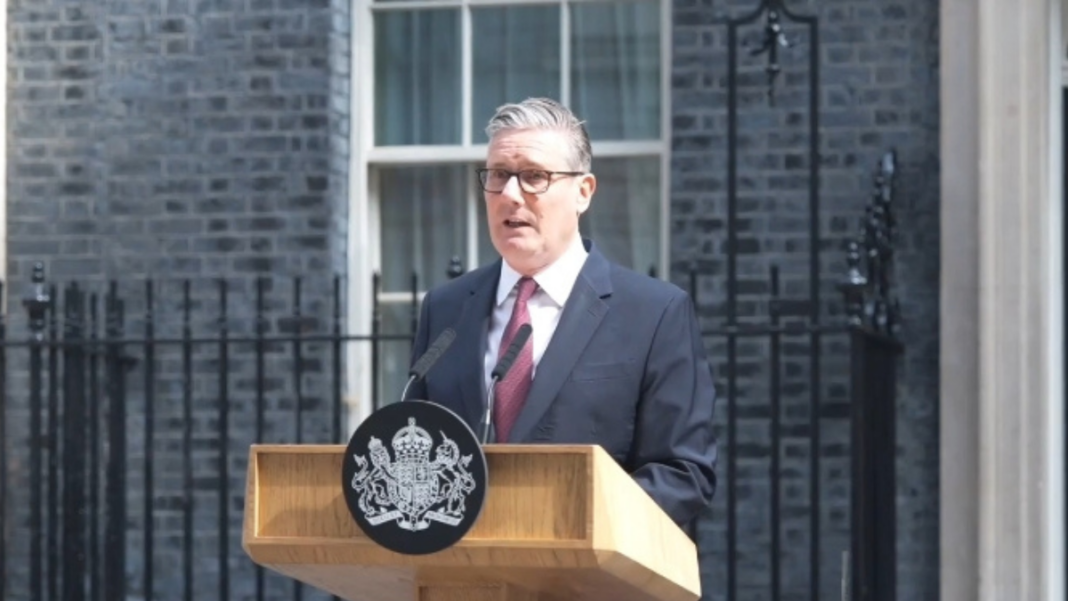
Keir Starmer has announced his resignation as Prime Minister of the United Kingdom, ending a period in office that began after Labour’s landslide victory in the 2024 general election. His resignation was announced on 22 June 2026, with Starmer stating that he would step down as both Prime Minister and leader of the Labour Party while ensuring an orderly transition of power.
The decision follows months of increasing political pressure within the Labour Party, driven by declining approval ratings, weaker-than-expected local election results, and growing dissatisfaction among sections of his parliamentary party. Over recent weeks, several senior political figures had either resigned from government positions or openly called for a leadership contest, intensifying scrutiny of Starmer’s leadership.
Tensions within Labour had been building over policy direction and political strategy, with critics arguing that the government had struggled to maintain momentum after its early legislative agenda. These internal divisions were reflected in public statements from MPs and reports of behind-the-scenes discussions about potential leadership challenges.
Despite initially insisting he intended to remain in post, Starmer ultimately conceded that continued internal unrest was undermining government stability. He confirmed he would remain in office on a caretaker basis until the Labour Party selects a new leader, a process expected to begin in the coming weeks.
Starmer’s tenure faced significant challenges, including criticism over immigration and energy policies. His position became more precarious after poor local election results and a decisive by-election victory in Makerfield by rival Labour politician Andy Burnham, the former Greater Manchester Mayor. Burnham’s strong performance emboldened calls for a leadership change.
His resignation marks a significant moment in UK politics, coming less than two years after Labour returned to power. The development is expected to trigger a leadership contest within the party and reshape the political landscape ahead of the next general election cycle, with senior Labour figures now emerging as potential contenders for the leadership.
On Sunday, U.S. President Donald Trump publicly claimed Starmer would resign, describing him as having “failed badly” on key issues, though Downing Street had not confirmed details at the time. In his statement, Starmer emphasized putting the country first. He informed King Charles III of his decision and stated he would remain in office until a new leader is selected, aiming for an orderly transition before Parliament returns in September. This avoids an immediate vacuum and allows time for a leadership contest.
Burnham is widely seen as the frontrunner to succeed Starmer, potentially without a formal contest, though other figures like former Health Minister Wes Streeting have also been mentioned as possible contenders. Burnham has previously contested the Labour leadership twice, in 2010 and 2015, without success.
Starmer’s resignation marks another period of instability in UK politics. He would be the sixth prime minister in roughly a decade, following a series of Conservative-led governments after Brexit. Labour’s 2024 victory ended 14 years of Conservative rule, but governing challenges—including economic pressures and internal divisions—quickly eroded support.
Support our Journalism
No-nonsense journalism. No paywalls. Whether you’re in Australia, the UK, Canada, the USA, or India, you can support The Australia Today by taking a paid subscription via Patreon or donating via PayPal — and help keep honest, fearless journalism alive.
