

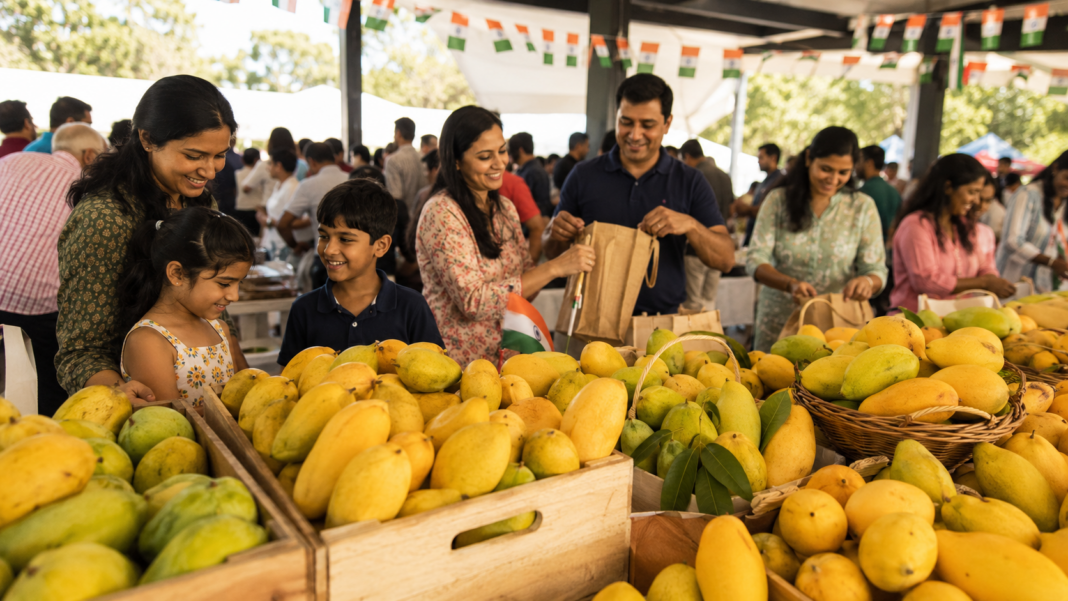
Sydney’s Indian Mango Festival is expected to be rescheduled after an unexpected delay in biosecurity and quarantine clearance prevented organisers from showcasing Indian mangoes at the event on 21 June.
The Australia Today understands that the mango consignment arrived in Sydney early last week, several days before the scheduled festival. However, the clearance process at Sydney Airport took significantly longer than anticipated.
Speaking on condition of anonymity, India’s Sydney Consulate officials acknowledged that the unavoidable delay disappointed families who travelled to the Harvey Lowe Pavilion in Castle Hill expecting to taste and purchase Indian mangoes.
The event had been organised by the Consulate General of India in Sydney in association with the Agricultural and Processed Food Products Export Development Authority.
It was promoted as Sydney’s first Indian Mango Festival, featuring premium Indian mangoes, fresh produce and delicacies at nominal prices.
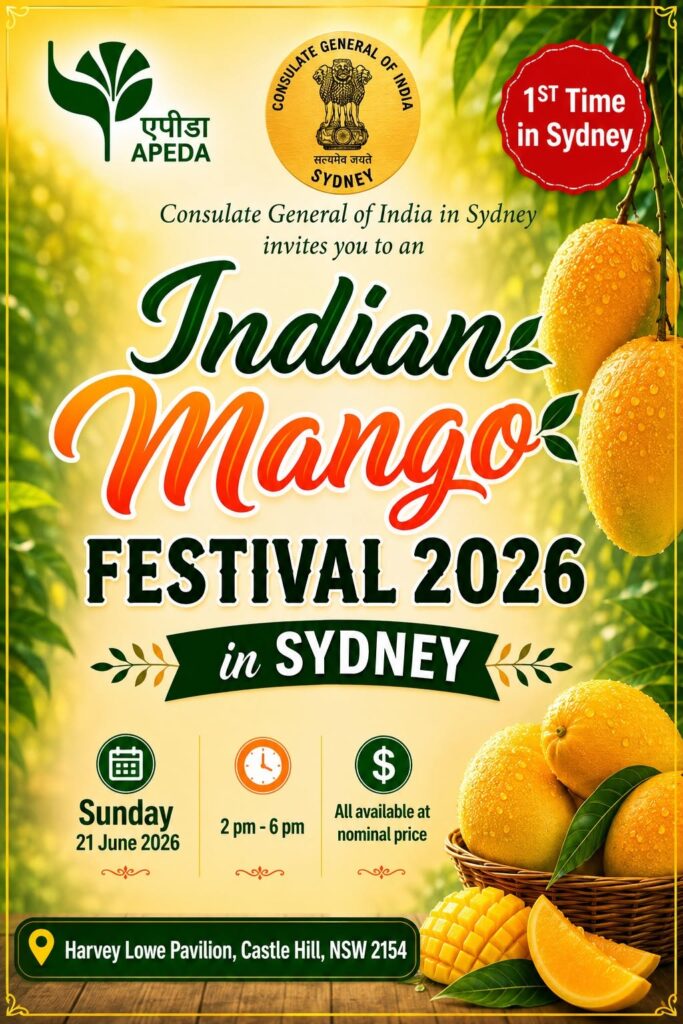
However, the shipment remained at Sydney Airport awaiting the required clearance, meaning the festival could not proceed as originally planned.
Australia maintains some of the world’s strictest biosecurity requirements for imported fresh produce. Indian mango shipments must satisfy treatment, certification and inspection requirements before they can be released into the Australian market.
While organisers expected the consignment to be cleared before the festival, the process was ultimately outside the Consulate’s direct control.
Consulate officials conceded that people were understandably disappointed but promised to make up for the experience in a significant way over the coming days.
The Australia Today has been told that the mangoes are expected to be released shortly. Once the consignment receives clearance, a new date for the festival is likely to be announced.
Officials are urgently searching for a suitable venue capable of accommodating at least 458 people who registered at the original event.
Every registered attendee invited to the rescheduled festival is expected to receive a special goody bag containing Indian mangoes.
The Consulate is also preparing to email everyone who registered, explaining what happened and inviting them to attend the festival at its new venue on the revised date.
In a public statement, the Consulate thanked mango lovers for their “overwhelming enthusiasm” as well as their understanding and cooperation.
“The planned mango festival could not showcase Indian mangoes as originally planned and scheduled, due to an unexpected long delay in the clearance of mango consignment at the Sydney airport,” the Consulate said.
“As soon as the consignment is received, the mango festival would be held at the earliest. The date and venue will be shared with the mango lovers accordingly.”
The delay prompted frustration among some visitors, particularly those who travelled long distances to attend the festival.
“What is the point of having a Mango Festival without mangoes?” attendee Mohan Ayyar wrote on social media.
“If the mangoes were not available they should have cancelled the event and informed the public.”
Other visitors said they would have appreciated receiving an update before travelling to Castle Hill.
Their concerns highlight the importance of timely communication when unexpected logistical problems affect a major community event.
At the same time, the overwhelming turnout demonstrated the extraordinary demand for Indian mangoes among Sydney’s Indian diaspora.
One attendee, Pavan Gudimella, estimated that between 500 and 600 cars arrived at the venue. He argued that thousands of kilograms of mangoes could have been sold had the consignment been available.
The response showed that the Consulate and APEDA had successfully generated considerable excitement around Indian mangoes and their potential in the Australian market.
Indian mango varieties carry deep emotional and cultural significance for the diaspora. For many families, the festival represented an opportunity to enjoy a taste of home while introducing younger generations and the wider Australian community to India’s celebrated mango heritage.
Organising a festival around imported fresh produce is also a complex undertaking, particularly given Australia’s strict quarantine regime. Although the clearance delay disrupted the inaugural event, the Consulate’s commitment to rescheduling it offers an opportunity to deliver the celebration that attendees originally expected.
The proposed larger venue, direct communication with registered attendees and promised mango goody bags indicate that officials are working to address the disappointment and restore public confidence.
The episode was unfortunate, but it need not define Sydney’s first Indian Mango Festival.
If the consignment is released in the coming days and the rescheduled event proceeds successfully, the initial disappointment could still be transformed into a memorable celebration of Indian produce, community enthusiasm and growing Australia-India ties.
For the 458 registered mango lovers, the message from the Consulate is now clear: the festival has been delayed, not abandoned.
A new venue, a new date and plenty of Indian mangoes are expected to follow.
Support our Journalism
No-nonsense journalism. No paywalls. Whether you’re in Australia, the UK, Canada, the USA, or India, you can support The Australia Today by taking a paid subscription via Patreon or donating via PayPal — and help keep honest, fearless journalism alive.
