

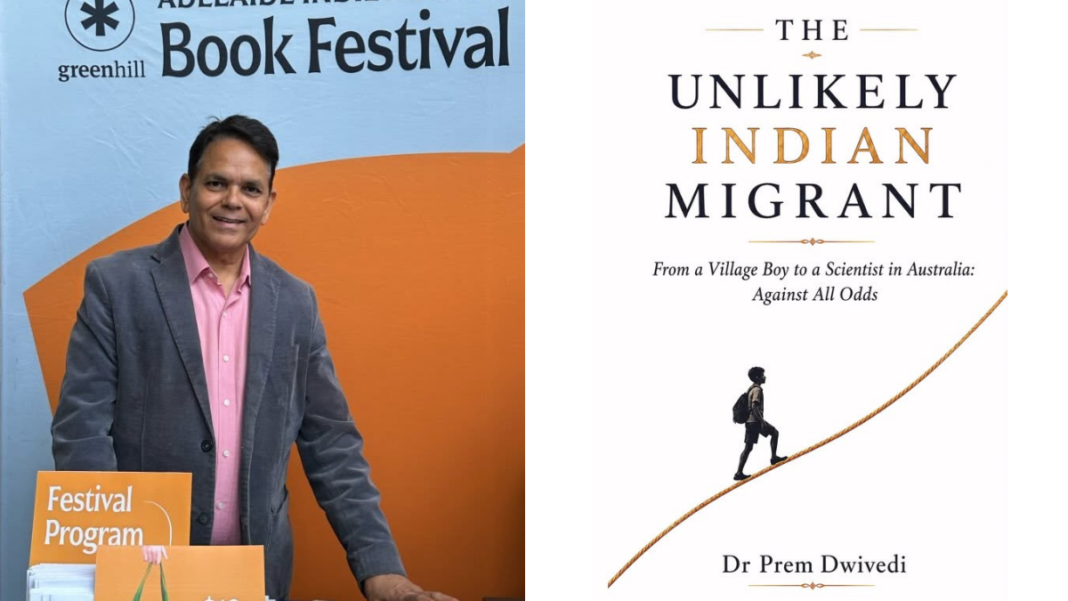
There is something quietly radical about the migrant memoir. In tracing the arc of a single life across continents, cultures, and circumstances, it asks a universal question: what does it take to build a life somewhere you were never meant to be? Dr Prem Dwivedi‘s debut autobiography, The Unlikely Indian Migrant, answers that question with warmth, candour, and an unpretentious sense of wonder at the twists his own story has taken.
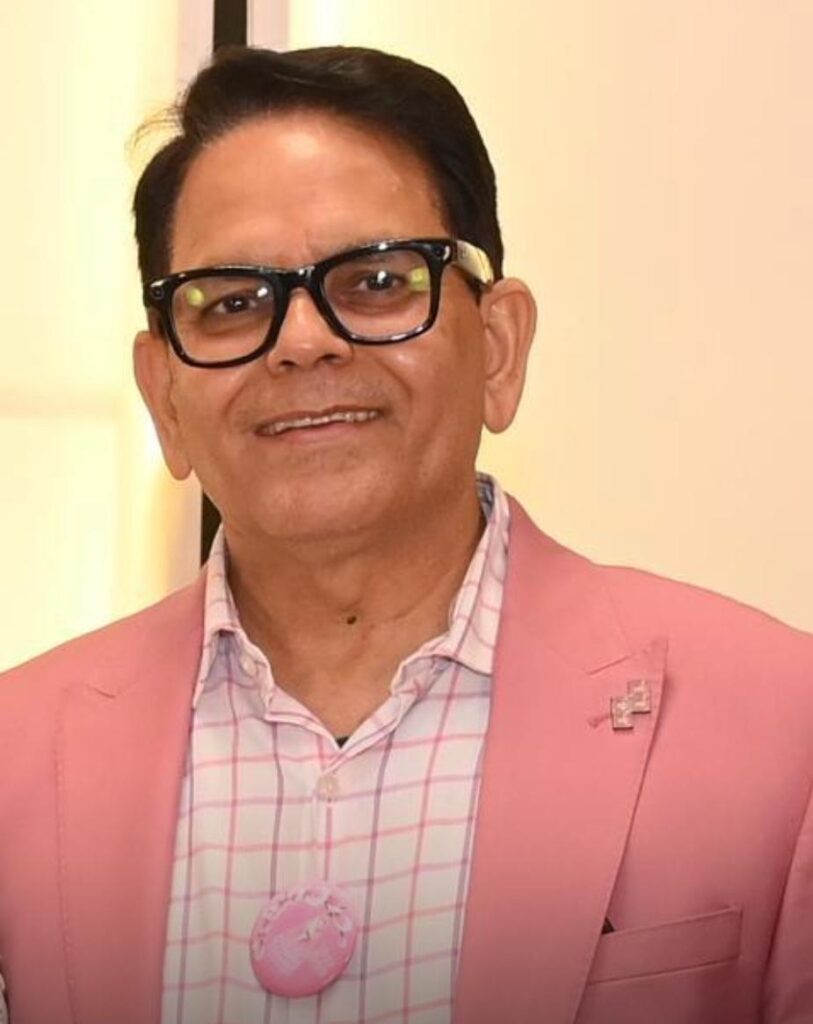
Dr Dwivedi begins where so many extraordinary lives do — in ordinary circumstances. Growing up in a small village in the Hardoi district of Uttar Pradesh, he was far from the corridors of international science. The image he conjures of studying under a banyan tree is not merely picturesque; it is emblematic of the resourcefulness that would define his trajectory.
From those beginnings, he would go on to complete a PhD at the Indian Institute of Toxicology Research in Lucknow, join the University of Auckland as a scientist, and eventually settle in Adelaide, where he has built both a distinguished career in biomedical research and a meaningful life within his adopted community.
What sets this memoir apart from a straightforward success story is precisely what the title promises: the unlikeliness of it all. Dr Dwivedi does not present himself as a man destined for greatness, but as one who navigated setbacks and seized opportunities, often without a clear map. That honesty lends the narrative its most compelling quality. Readers who have themselves felt like outsiders — in a new country, a new institution, or simply a life that has not gone to plan — will find something to hold onto here.
The book also functions as a quiet tribute to the migrant experience more broadly. Dr Dwivedi is attentive to the emotional textures of displacement: the longing, the adaptation, the gradual sense of belonging that is earned rather than given. His account of community involvement in multicultural Australia suggests that belonging, for him, has been an active project rather than a passive gift — something built through contribution as much as through time.
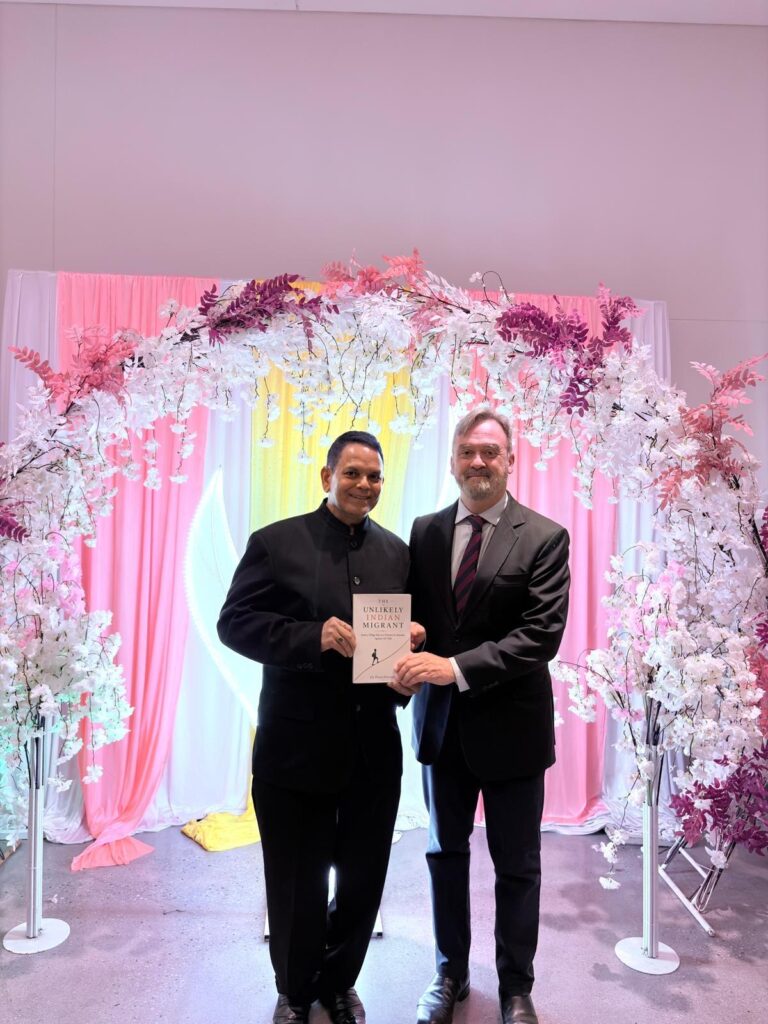
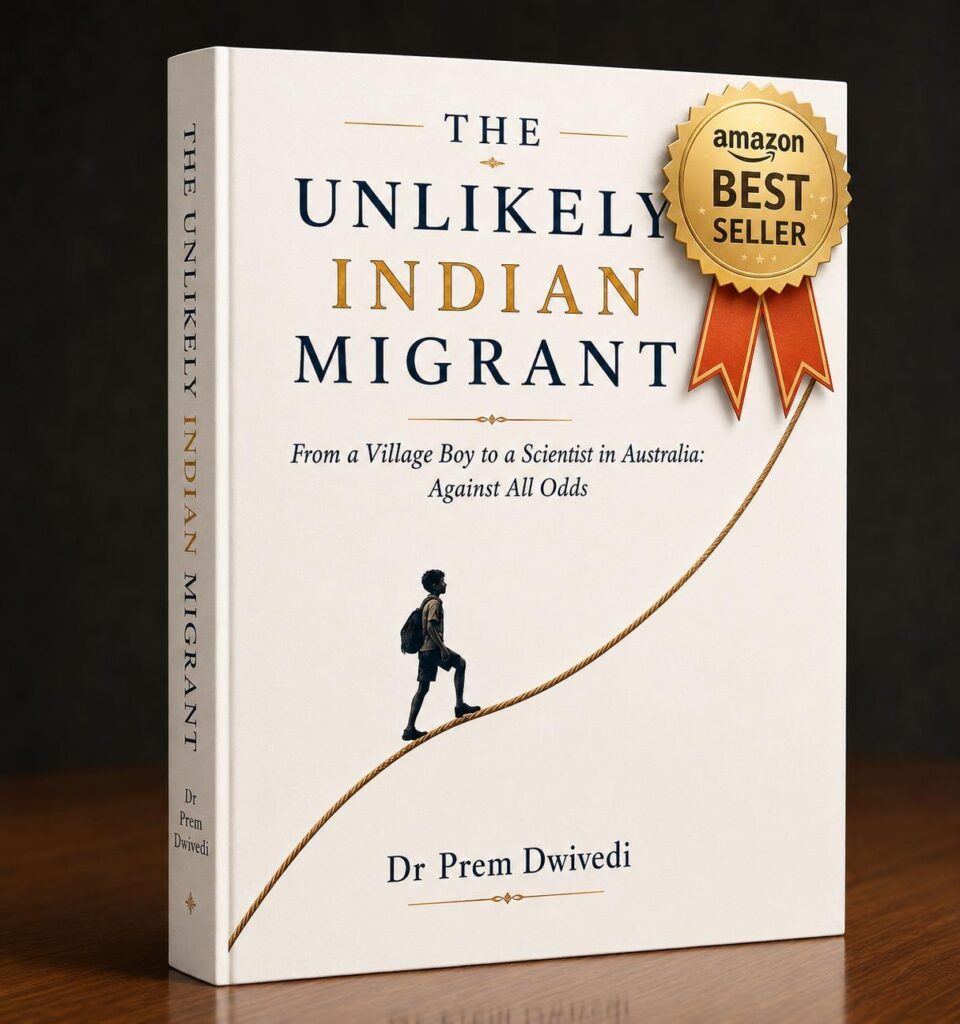
The autobiography’s reception has been striking. As per Dr Dwivedi, the book released on Amazon on 25 May 2026 and has already reached the number one position on Amazon Australia. A remarkable achievement for a debut work. Its launch event in Adelaide — hosted by community figures and officially launched by Senator Andrew McLachlan — drew members of the city’s diverse multicultural community, underscoring the degree to which Dwivedi’s story resonates beyond any single background or experience.
The Unlikely Indian Migrant has since been published in India, broadening its reach to readers who may recognise in Dr Dwivedi’s early chapters the landscape of their own beginnings. That dual readership feels apt: this is a book that speaks both to those who have left and those who are still deciding whether to go.
It will appeal especially to aspiring migrants, students navigating unfamiliar systems, and anyone who has wondered whether a modest beginning can still lead somewhere remarkable. On that question, Dr Dwivedi’s life — and this book — offers an unambiguous answer.
Support our Journalism
No-nonsense journalism. No paywalls. Whether you’re in Australia, the UK, Canada, the USA, or India, you can support The Australia Today by taking a paid subscription via Patreon or donating via PayPal — and help keep honest, fearless journalism alive.
