

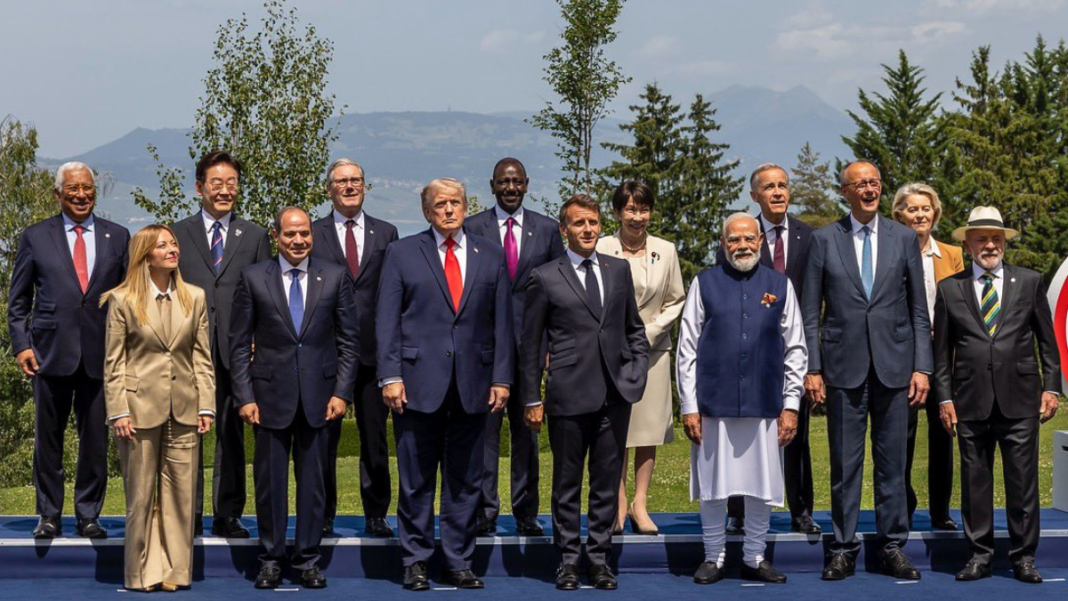
Leaders of the Group of Seven (G7) nations have gathered in France this week for discussions on global security, economic cooperation, trade, energy, and emerging technologies, amid a backdrop of ongoing geopolitical tensions and economic uncertainty.
Hosted by French President Emmanuel Macron, the summit brought together leaders from the United States, United Kingdom, Canada, France, Germany, Italy and Japan. France also invited several partner countries, including India, Brazil, South Korea, Kenya, and the United Arab Emirates, to participate in outreach sessions and bilateral engagements.
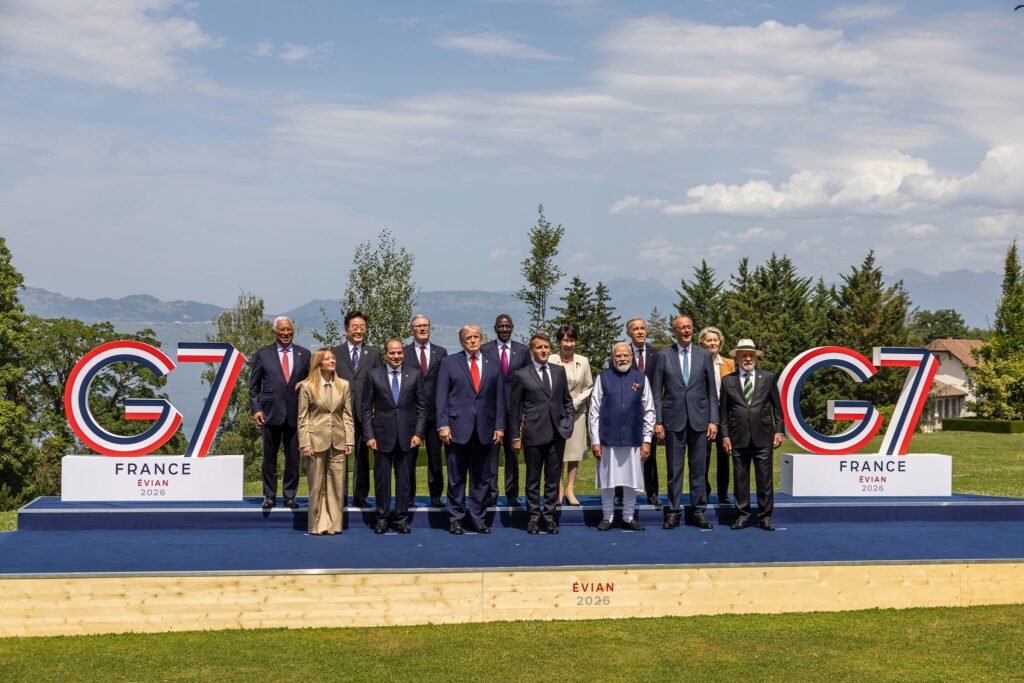
The summit agenda covers a range of issues including the war in Ukraine, tensions in the Middle East, global trade and investment, artificial intelligence, energy security and economic competitiveness.
Leaders have discussed supply-chain resilience, critical minerals and the challenges posed by emerging technologies, including artificial intelligence. France has sought to position the summit as a platform for strengthening economic competitiveness while addressing geopolitical risks and energy security.
US President Donald Trump has been among the most closely watched participants, with discussions touching on trade relations, security cooperation and ongoing international conflicts. European leaders also used the summit to reaffirm support for Ukraine and discuss broader security challenges facing the continent.
Ukrainian President Volodymyr Zelenskyy engaged with G7 leaders, seeking continued political, military and economic support as Ukraine’s war with Russia remains a key international security concern.
Ahead of the G7 summit, Macron hosted Indian Prime Minister Narendra Modi for bilateral talks in Nice, underscoring the growing strategic ties between France and India. They jointly inaugurated the “Bharat Innovates” initiative in Nice, highlighting growing cooperation between France and India in technology, innovation and space research.
The Indian Prime Minister also met with Canadian Prime Minister Mark Carney, British Prime Minister Keir Starmer, and UAE President Sheikh Mohamed bin Zayed Al Nahyan. Observers will be closely watching the Modi Trump bilateral scheduled for today as leaders of the world’s two biggest democracies meet during a time of uncertain global geo-political landscape.
As the summit progresses, leaders are expected to continue discussions on security, trade, technology, energy and global economic cooperation, while seeking common ground on several pressing international challenges.
Support our Journalism
No-nonsense journalism. No paywalls. Whether you’re in Australia, the UK, Canada, the USA, or India, you can support The Australia Today by taking a paid subscription via Patreon or donating via PayPal — and help keep honest, fearless journalism alive.
