

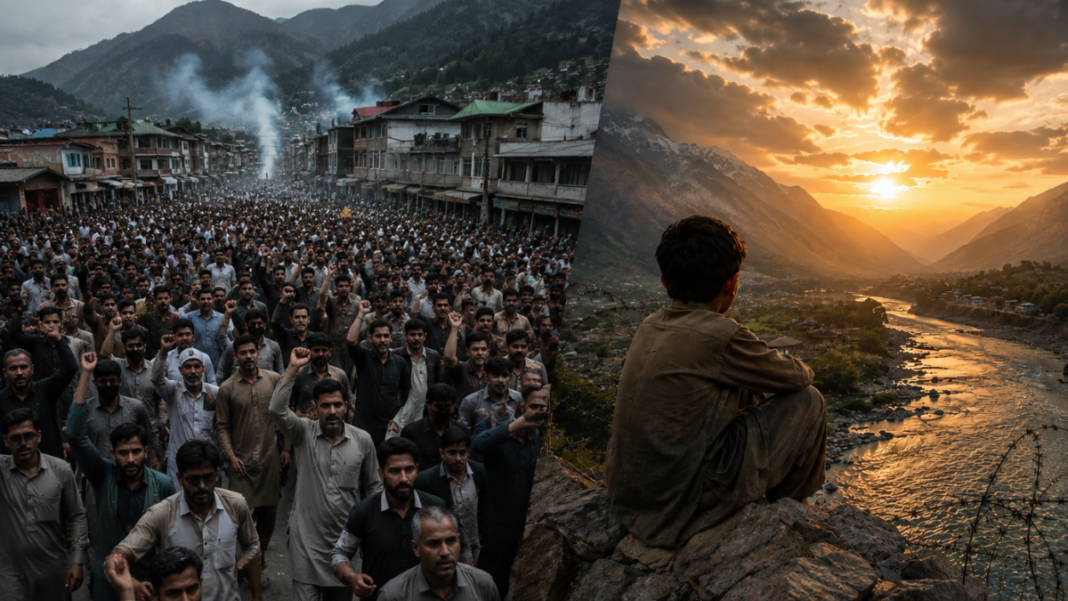
Tensions have erupted in Pakistan-occupied Kashmir (PoK), where protests and clashes between demonstrators and security forces have raged for days. The unrest has already left at least 11 civilians and four security officers dead and over 70 people injured, with some reports citing 30+ fatalities in Rawalakot and nearby areas.
The protests are being driven by groups like the Joint Awami Action Committee, fuelled by widespread anger over poor governance, crippling economic hardship, skyrocketing electricity prices, shortages of essentials like subsidized flour, and a lack of genuine political representation.
Protesters accuse Pakistani authorities of brutally suppressing dissent through mass arrests, communication blackouts, lethal force, and even bounties on movement leaders. Rights organisations and international observers have condemned the crackdown, warning that it is only making the situation more explosive.
This turmoil in PoK is part of a larger pattern of instability across Pakistan. In occupied Balochistan, a fierce freedom struggle and insurgency continue, marked by repeated attacks on security forces, Chinese-linked projects, and infrastructure. Activists regularly accuse the central government of human rights abuses, enforced disappearances, and exploiting the province’s resources while marginalizing its people.
Pakistan’s north-western regions remain plagued by militant violence and cross-border instability. Afghanistan still refuses to recognise the Durand Line as the official border, a dispute that dates back to colonial era and keeps the area volatile.
In Sindh, the Sindhudesh movement for greater autonomy or outright independence simmers alongside frequent protests over unfair water distribution, governance failures, and provincial rights. These reflect deep ethnic and economic resentments.
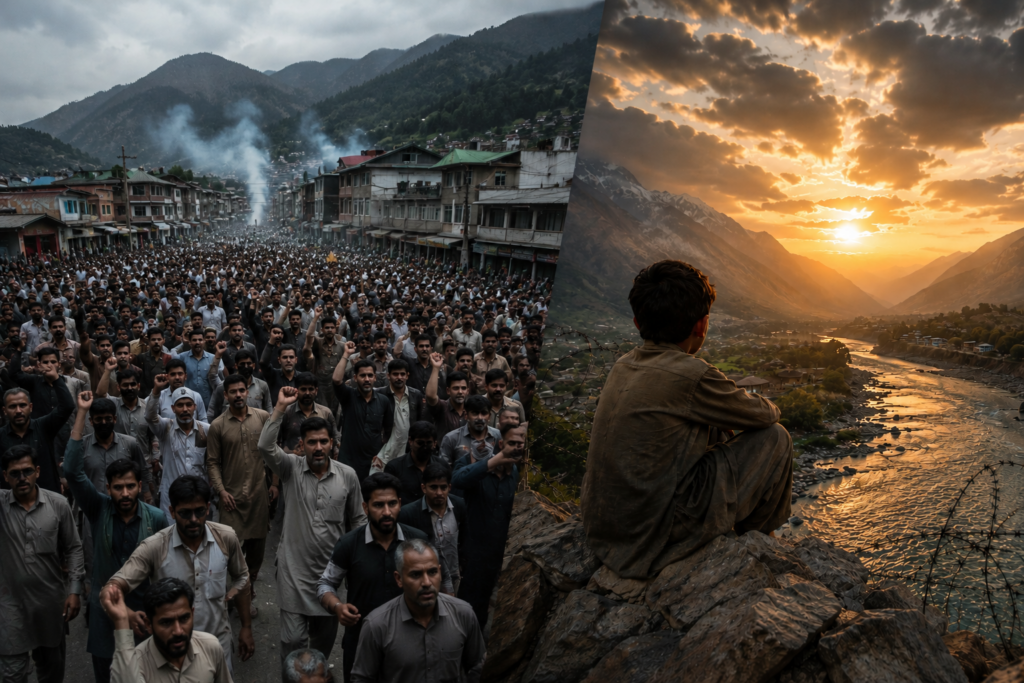
Analysts point out that these simultaneous crises are putting severe strain on Pakistan’s federal structure which is already in extreme stress due to the country’s financial hardships and political instability. Though the specific triggers differ by region, the core complaints are the same: centralised control that ignores local needs, economic mismanagement, and a failure to deliver fair representation.
Pakistan itself was created in 1947 as an explicitly Islamic state, carved out of India, on the basis of a religiously bigoted ideology that insisted Hindus and Muslims could not live together. The partition of India was accompanied by horrific communal violence and the ethnic cleansing of Hindus and Sikhs from the areas that became Pakistan, resulting in millions displaced and hundreds of thousands killed. Many observers argue that unless Pakistan fundamentally abandons its communal founding ideology and stops using terrorism as an instrument of state policy, it will remain trapped in this downward spiral of internal conflict and decline.
Support our Journalism
No-nonsense journalism. No paywalls. Whether you’re in Australia, the UK, Canada, the USA, or India, you can support The Australia Today by taking a paid subscription via Patreon or donating via PayPal — and help keep honest, fearless journalism alive.
