

By Anurag Punetha
Imagine a classic Bollywood political thriller scene: The camera opens with a slow aerial shot of New Delhi at dusk. Lutyens’ Delhi glows under amber lights. Black SUVs glide past Raisina Hill.
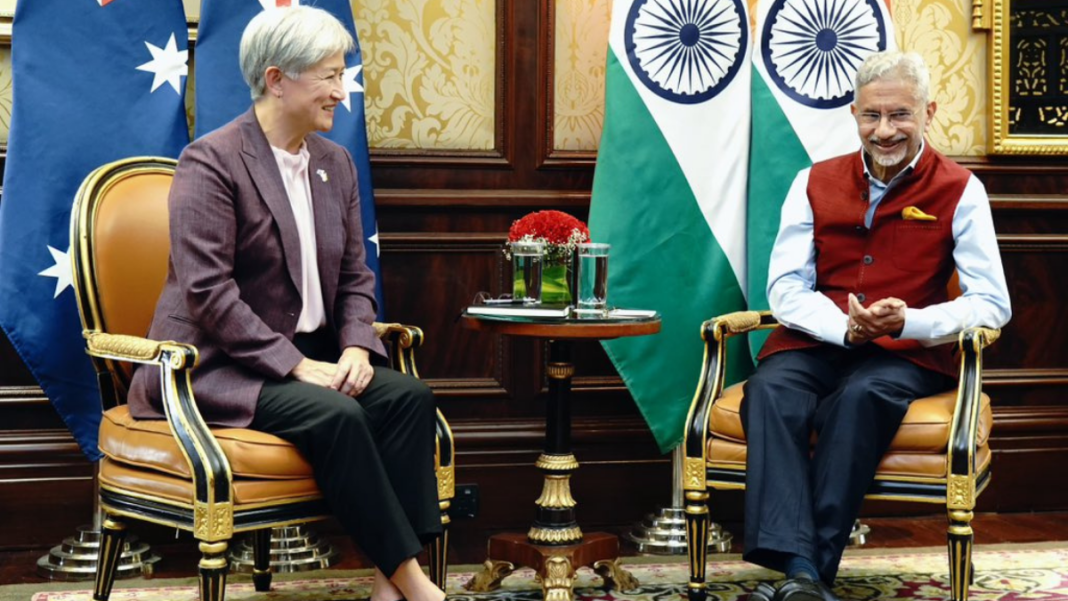
Inside Hyderabad House, the atmosphere is calm but electrically tense. No dramatic shouting. No chest-thumping nationalism. Just two seasoned diplomats walking through polished corridors with the quiet confidence of people who already know the stakes. And perhaps that is the best way to understand the new India-Australia relationship.
When Australian Foreign Minister Penny Wong visited New Delhi this week, she mentioned -almost casually- that this was her 28th in-person meeting with India’s External Affairs Minister Dr S. Jaishankar.
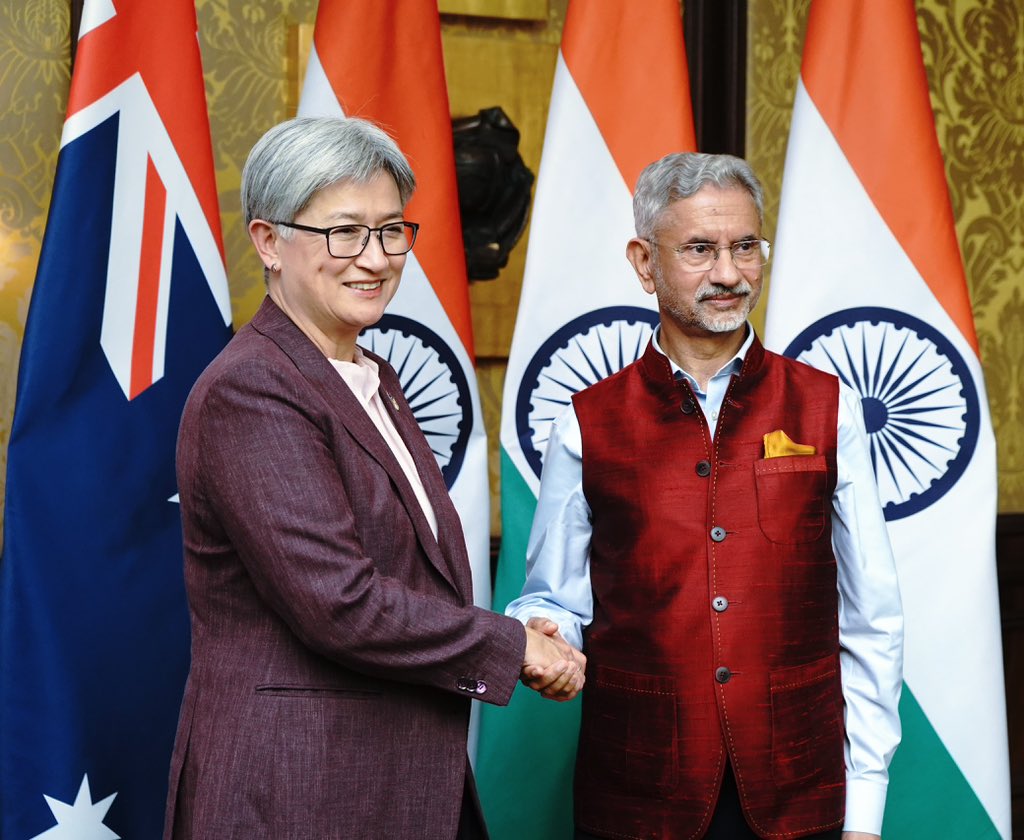
Twenty-eight meetings: In diplomacy, that number is not routine. It is not symbolism. It is not even chemistry alone. It is a sustained strategic investment.
Foreign ministers do not meet each other twenty-eight times merely because they enjoy each other’s company or appreciate cultural ties. Diplomacy, unlike cinema, has no room for unnecessary sequels. Every meeting costs political time, institutional energy and strategic bandwidth. When two countries keep returning to the table repeatedly, it usually means one thing: both believe the future may depend on that relationship.
For decades, India and Australia shared what could best be described as a comfortable distance. There was warmth but little depth. Cricket created emotional familiarity. Commonwealth connections added diplomatic politeness. Indian students flowed into Australian universities. Trade moved along steadily. Yet something essential was missing – strategic urgency.
Australia historically looked at Asia through a largely Western security lens while remaining economically tied to China. India, meanwhile, carried its own hesitations about alliances and Western strategic frameworks. The relationship existed, but it lacked geopolitical intensity.
That era is over. Today, the India-Australia partnership is being shaped not by nostalgia, but by the brutal mathematics of geopolitics. The central factor behind this shift is China, though neither side always says it loudly in public. For nearly two decades, Australia’s economic model was deceptively simple: extract natural resources, export them to China, grow rich, and maintain strategic comfort under the American security umbrella. It was one of the most profitable balancing acts in the world.
But geopolitics eventually punishes overdependence. As tensions between Canberra and Beijing sharpened over issues ranging from trade coercion to regional security, Australia discovered the vulnerability of relying excessively on a single economic engine. Suddenly, diversification stopped being an academic policy word and became a matter of national resilience. This is where India entered the Australian strategic imagination in a completely new way.
India is no longer seen merely as a large developing market or a useful democratic partner in Asia. Australia increasingly sees India as a long-term stabilising pillar in the Indo-Pacific balance. The logic is straightforward. Australia possesses enormous reserves of critical minerals – lithium, cobalt, rare earths – the raw materials that will power the future global economy through batteries, semiconductors and green technology. India possesses scale, engineering capability, a rapidly growing manufacturing ecosystem and one of the world’s largest consumer markets. One has resources. The other has an industrial ambition.
Together, they offer each other something deeper than trade: strategic insulation.
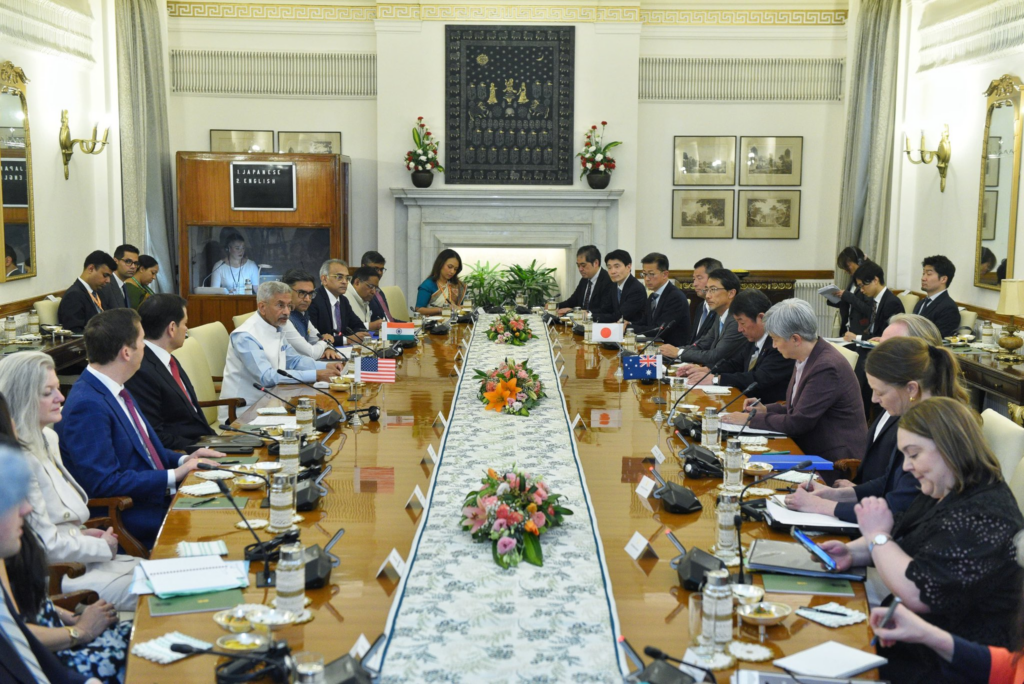
This is why conversations between New Delhi and Canberra have moved far beyond ceremonial diplomacy. Today they involve supply chains, maritime security, cyber resilience, critical technology, clean energy and regional infrastructure. And nowhere is this transformation more visible than in the evolution of the Quad.
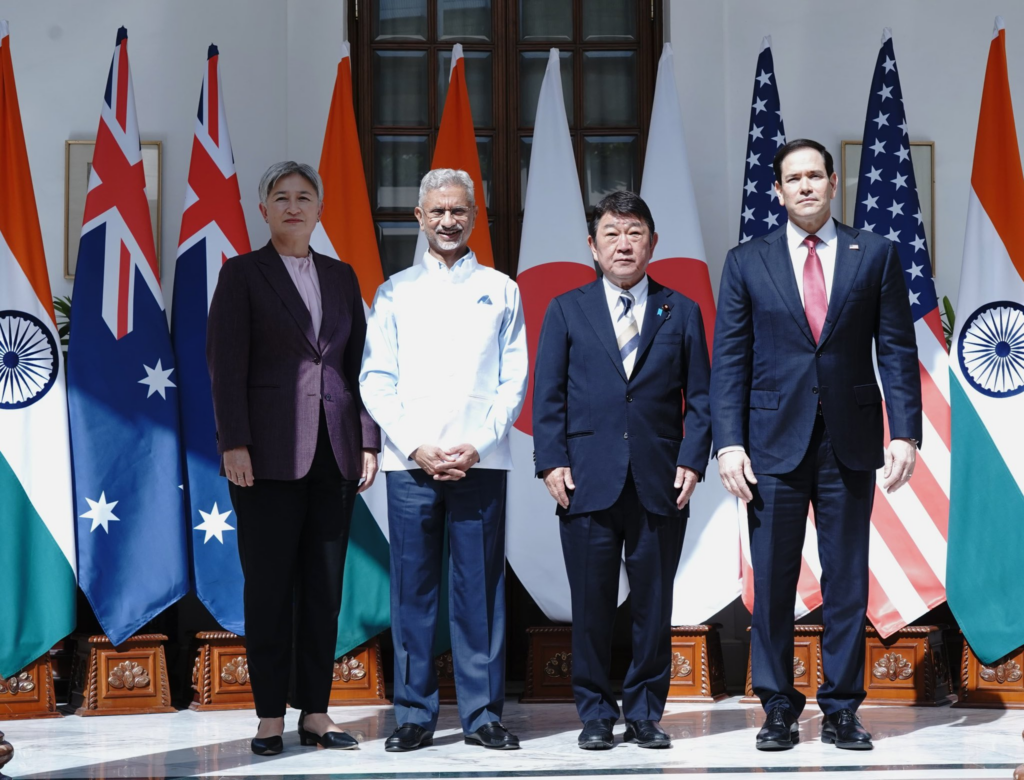
For years, critics mocked the Quad — India, Australia, Japan and the United States — as an overhyped diplomatic club that produced statements instead of strategy. Beijing dismissed it as an Asian NATO without real cohesion. Even many analysts privately wondered whether four democracies with different priorities could sustain serious coordination. But slowly, almost quietly, the Quad has started becoming operational.
The recently announced Quad Ports of the Future Partnership, beginning with Fiji, may appear like a technical infrastructure initiative. In reality, it is geopolitical signalling disguised as development policy. The Pacific Islands have become one of the great silent battlegrounds of modern geopolitics. China’s influence in the region expanded rapidly through infrastructure financing, loans and strategic outreach. For small island nations struggling with economic vulnerability, Beijing often arrived faster than Western democracies.
The problem was not merely about ports or money. It was about influence architecture. India and Australia now appear determined to offer an alternative model — transparent financing, resilient infrastructure and strategic cooperation without overt coercion. Australia brings regional familiarity and Western capital access. India brings execution capability, diplomatic goodwill and growing strategic credibility across the Global South.
Together, they are attempting something larger than bilateral cooperation. They are helping redesign the political geography of the Indo-Pacific. Equally important is maritime cooperation. The Indian Ocean and Pacific Ocean are no longer separate strategic theatres. Energy routes, semiconductor supply chains, naval mobility and undersea communication cables have linked them into one giant geopolitical continuum. From the Strait of Hormuz to the South Pacific, control over maritime stability now shapes global economic security.
This is precisely why India and Australia increasingly sound like countries preparing for a long strategic century together. Yet what makes this partnership particularly interesting is its tone. Unlike many Cold War-era alliances driven by ideological sermonizing, the India-Australia relationship is deeply pragmatic. It is not based on emotional rhetoric about eternal friendship. It is built on converging anxieties and mutual utility.
Jaishankar’s diplomacy reflects this realism perfectly. He rarely speaks in romantic geopolitical language. His approach is transactional but calibrated — issue-based partnerships, flexible alignments and strategic autonomy with selective cooperation.
Australia, too, has evolved. Canberra no longer sees India merely through the lens of South Asia. It increasingly sees India as a central Indo-Pacific power whose rise directly affects regional equilibrium. And perhaps this explains the unusual rhythm of those twenty-eight meetings. Strategic trust is not built through grand speeches alone. It is built through repetition. Through consistency. Through showing up again and again until both sides begin understanding each other’s instincts without lengthy explanations.
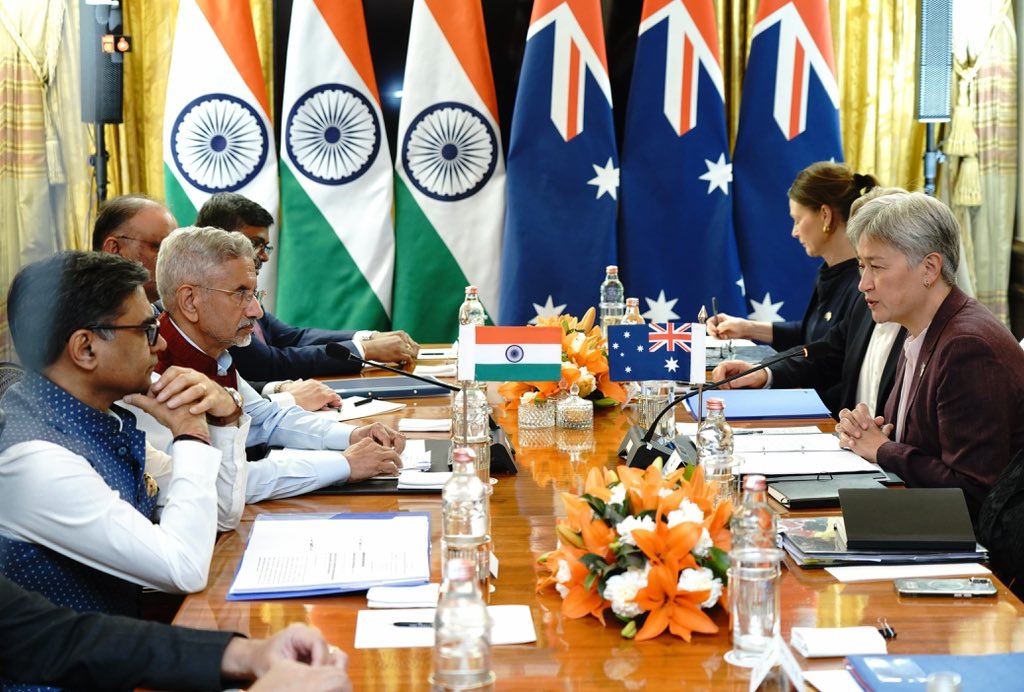
In cinema, chemistry between characters is often created through dramatic scenes.
In diplomacy, chemistry is built through accumulated predictability. That is what India and Australia are constructing right now — not a flashy alliance, but something potentially more durable: strategic familiarity. As Prime Minister Narendra Modi prepares for future engagements with Canberra and the Quad enters a more active phase, the relationship appears set to deepen further into energy security, critical technologies and regional connectivity. The story, however, is still in its opening act. Or, to borrow from the grammar of Bollywood itself:
Picture abhi baaki hai, mere dost (translation: The story isn’t over yet, my friend.)
Author: Anurag Punetha is the New Delhi-based India Editor of The Australia Today.
Support our Journalism
No-nonsense journalism. No paywalls. Whether you’re in Australia, the UK, Canada, the USA, or India, you can support The Australia Today by taking a paid subscription via Patreon or donating via PayPal — and help keep honest, fearless journalism alive.
