


Australia has long been recognised as a global pioneer in quantum research, producing groundbreaking discoveries and some of the world’s leading quantum scientists and startups. But as countries around the world rapidly accelerate investment in quantum technologies, the race is no longer just about scientific breakthroughs — it is increasingly about commercialisation, sovereign capability, economic resilience and strategic influence.
In this exclusive interview with The Australia Today, Quantum Australia CEO Petra Andrén speaks with Pallavi Jain about the opportunities and challenges facing Australia’s quantum sector, the industries likely to be transformed first, the global competition for talent and investment, and why the decisions made in this decade could determine whether Australia partakes in inventing the future — or importing it.

Q1. Australia has a long history of quantum breakthroughs, yet the global race is accelerating rapidly. What must Australia do in the next 3–5 years to ensure it doesn’t lose its early mover advantage?
Australia must move from being known primarily for quantum research excellence to being recognised for quantum coordination, translation and industry adoption.
Australia already punches far above its weight scientifically. The challenge now is whether that advantage can be converted into sovereign capability, globally competitive companies and long term economic value before the rest of the world catches up.
Over the next 3–5 years, the countries that succeed will not be the ones producing the most research papers. They will be the ones that can align government, industry, researchers, investors and international partners around a coordinated national strategy.
Quantum is too strategic for fragmented approaches. No single university, company or state can build a globally competitive quantum economy alone. Australia needs trusted national coordination that reduces duplication, accelerates industry engagement, supports commercialisation and helps Australia participate meaningfully in global supply chains and international partnerships.
Maintaining that national coordination capability beyond 2027 will be critical if Australia wants to sustain momentum and compete globally. (Quantum Australia’ s activities are only funded until March 2027. So far, it has created 13 new quantum startups in just 12 months, provided a 4.5x return on public funding and facilitated over 100 industry led partnerships working on quantum use cases.)
At the same time, Australia needs to improve how it communicates quantum. Many industry leaders and governments still see quantum as distant or experimental. In reality, it is becoming a foundational enabling technology that will influence sectors from cybersecurity, AI, advanced manufacturing, sensing, defence, energy and critical infrastructure to healthcare and resources.
The rest of the world is not slowing down. Governments in countries like the UK and the US are pouring significant investment into quantum because they see it as foundational to future productivity, security and economic influence. Australia needs to continue to support the sectors as it cannot afford to lose momentum at the exact moment the world is accelerating.
If Australia can coordinate nationally, support the ecosystem,communicate clearly and accelerate real world adoption, it can remain one of the world’s most influential quantum nations despite its size.
2. Quantum research often sounds futuristic and distant to the public. What are the first real world industries Australians are likely to see transformed by quantum technology — and how soon could that impact everyday life?
Quantum will not arrive as one dramatic moment where suddenly everything changes. It will emerge progressively, in waves, and most people will experience it indirectly as quantum capabilities become integrated into technologies and systems. In many cases, people may not even realise quantum is involved.
That is because quantum is not one technology. It is a broad suite of enabling technologies that will increasingly converge with AI, cybersecurity, cloud computing, advanced sensing and advanced manufacturing.
The earliest impacts are likely to appear in areas where Australia already has strong industrial capability and clear economic need:
- Quantum safe cybersecurity upgrades to protect governments, banks and critical infrastructure
- Quantum sensing (you don’t need a fault tolerant quantum computer for quantum sensing) for mining, navigation, defence and medical diagnostics
- Optimisation technologies (this is where you do need to tap into a quantum computer but there are already quantum inspired algorithms that can help model molecular systems) for logistics, energy systems, drug discovery and industrial operations
Some of these technologies are already moving into commercial environments now (where sensing is arguably the most mature). Others will mature over time.
Quantum is not a standalone industry sitting off to the side. It will increasingly become embedded across workflows, platforms and sectors, improving precision, security, efficiency and decision making across the economy.
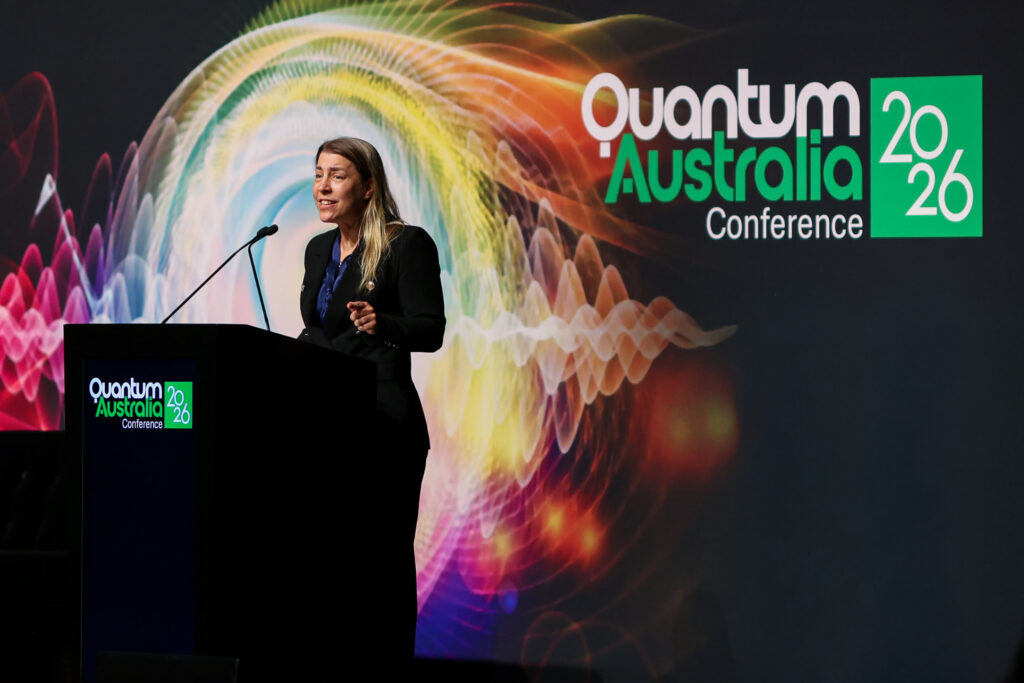
3. There’s huge demand globally for quantum talent. How is Australia preparing the next generation of quantum engineers, scientists and entrepreneurs?
The future quantum workforce will not just be physicists in laboratories. Australia needs software engineers, cybersecurity specialists, hardware engineers, entrepreneurs, product leaders, technicians, investors and industry operators who understand how to deploy and commercialise quantum technologies in real world environments.
That is why national coordination matters so much.
No single university or state can build the workforce Australia needs alone. Australia needs connected pathways across schools, universities, startups, industry and government, supported by nationally coordinated programs that expose people to both the science and the commercial opportunity.
Young people should not think of quantum as a narrow career path. The most valuable people in the next decade will be those who can bridge disciplines, combining technical depth with communication skills, commercial understanding and systems level thinking. At the end of the day, Quantum will reward people who can connect worlds: research and industry, engineering and entrepreneurship, deep science and practical problem solving.
4. Quantum is still a deep tech, long horizon investment. How are you convincing industry and investors to commit now, before the full commercial payoff arrives?
The conversation is evolving rapidly. A few years ago, industry was asking whether quantum was real. Today, the question is increasingly how to prepare strategically.
For companies, becoming quantum ready does not mean making speculative bets. It means understanding where quantum could create future competitive advantage, operational efficiencies or security resilience.
For investors, the opportunity is much broader than simply backing quantum hardware companies. Some of the most significant value creation may come from the industries that become early adopters of quantum technologies, including finance, resources, defence, healthcare, logistics and energy.
That means venture capital increasingly needs to understand not only who is building quantum technologies, but also who will use them first and where commercial demand is likely to emerge across the economy.
This is another reason national coordination matters.
A platform like Quantum Australia helps connect researchers, startups, corporates, government and investors so the ecosystem develops around real world problems and commercial adoption pathways, not just technical milestones in isolation.The countries that build the strongest quantum economies will be the ones that successfully connect technology capability with industry demand.
5. Many countries now see quantum as a strategic technology tied to economic and national security. How important is quantum to Australia’s future sovereignty and global influence?
Quantum is no longer just a scientific opportunity. It is becoming a strategic capability tied directly to economic resilience, cybersecurity, defence and technological sovereignty. The countries that lead in quantum will help shape the future architecture of computing, secure communications, sensing and advanced industry.
For Australia, this is about far more than scientific prestige.It is about whether Australia can translate decades of world leading research into sovereign capability, trusted international partnerships, high value industries and long term economic resilience.
Australia will not compete by trying to outspend the largest economies. It will compete through talent, agility, trusted partnerships and strategic coordination.
That is why national coordination is essential.
Australia needs the ability to coordinate nationally, engage internationally with credibility, and ensure that its quantum capability delivers broad national benefit rather than fragmented outcomes.
Quantum is one of the few technologies capable of reshaping productivity, security and geopolitical influence simultaneously. The decisions made in this decade will determine whether Australia remains a country that invents the future, or one that imports it.
Support our Journalism
No-nonsense journalism. No paywalls. Whether you’re in Australia, the UK, Canada, the USA, or India, you can support The Australia Today by taking a paid subscription via Patreon or donating via PayPal — and help keep honest, fearless journalism alive.
