

I moved to Australia in 2013. I remember the particular mixture of excitement and uncertainty that comes with starting over in a new country — the paperwork, the accent adjustments, the small daily negotiations of belonging. What I did not fully anticipate was how much Australia would give back.
In 2017, I was named a finalist for International Student of the Year in Victoria. Standing in that room, I felt something I still find difficult to articulate precisely — not just pride, but a kind of recognition that went beyond a certificate. It was the feeling that the country had noticed, that contribution was being seen.
More recently, I was named a finalist for the Asian-Australian Leadership Awards in the Media and Journalism category — an honour I am genuinely grateful for, not least because it recognises the work of The Australia Today, the independent media organisation I co-founded with Jai Bharadwaj and Pallavi Jain to create a platform which catches the breadth and depth of Australia’s truly layered, vibrant and diverse voices.
I tell you this not to list my achievements, but because they are part of a story about what Australia made possible.
In 2018, I left briefly to take up a position at the University of the South Pacific in Fiji. I expected it to be a professional interlude. It turned into something more: three years that sharpened my understanding of migration, belonging, and the particular cruelty of telling people who have built a nation that they do not fully belong to it.
Fiji has its own version of the debate now unfolding in Australian politics. It is older, rawer, and in some ways more honest about the stakes. The Girmitiyas — the more than 60,000 Indian indentured labourers brought to Fiji between 1879 and 1916 to work British sugarcane plantations — spent over a century negotiating exactly the questions now circulating in Canberra and on Australian (social)media: who belongs, on what terms, and who gets to decide. The word girmit is itself a corruption of the English word “agreement” — a contract signed under duress by people who often had little idea where they were going or what awaited them. They arrived into harsh conditions, suffered, and then — because Fiji had become real to them, because their children were born there, because they had nowhere else to go — they stayed and built.
What they built is extraordinary by any measure. The sugar industry those labourers created became the economic backbone of Fiji for well over a century, with cane production at its peak exceeding three to four million tonnes annually, shaping rural communities and anchoring families across generations. They brought their culinary traditions, their music, their festivals, their languages — and in time those things became not just Indo-Fijian culture but simply Fijian culture. Curry and roti are not foreign foods in Fiji. They are Fijian foods.
And yet, despite all of this, the question of whether Indo-Fijians truly belonged was never fully resolved through lived contribution alone. It took Fiji’s 2013 constitution to formally recognise descendants of indentured labourers as equal citizens, declaring all Fijians “united by common and equal citizenry.” A legal document was required to say what should have been self-evident from the fields, the markets, the schoolrooms, the generations of sacrifice. Living and working in Suva, those unresolved tensions were still palpable — not always in what people said, but in how they navigated identity, in which communities trusted which institutions, in what stayed carefully unspoken in certain rooms. The debates I encountered there echoed, in a different register, the ones I had left behind in Australia. Migration framed as threat. Culture described as something fragile that newcomers endanger rather than enrich. Belonging treated as something that must be re-earned, no matter how many generations your family has been there.
I returned to Australia in December 2021. I could have gone to Canada, US or UK but I chose Australia. I chose this country because of its values, and I want to be precise about what I mean — because “Australian values” has become one of those phrases that can mean almost anything, and is sometimes deployed to mean something uncomfortably narrow. What I mean is something more foundational: fair go – the belief that where you come from does not determine what you can become here. An irreverence that cuts against pretension, but also against exclusion. A commitment to the country whether you have lived here for generations or are a recent migrant.
So when I watch the current debate about migration descend into accusations, counter-accusations and political point-scoring, I feel something more than academic frustration. I feel it as a person with a stake in the outcome.
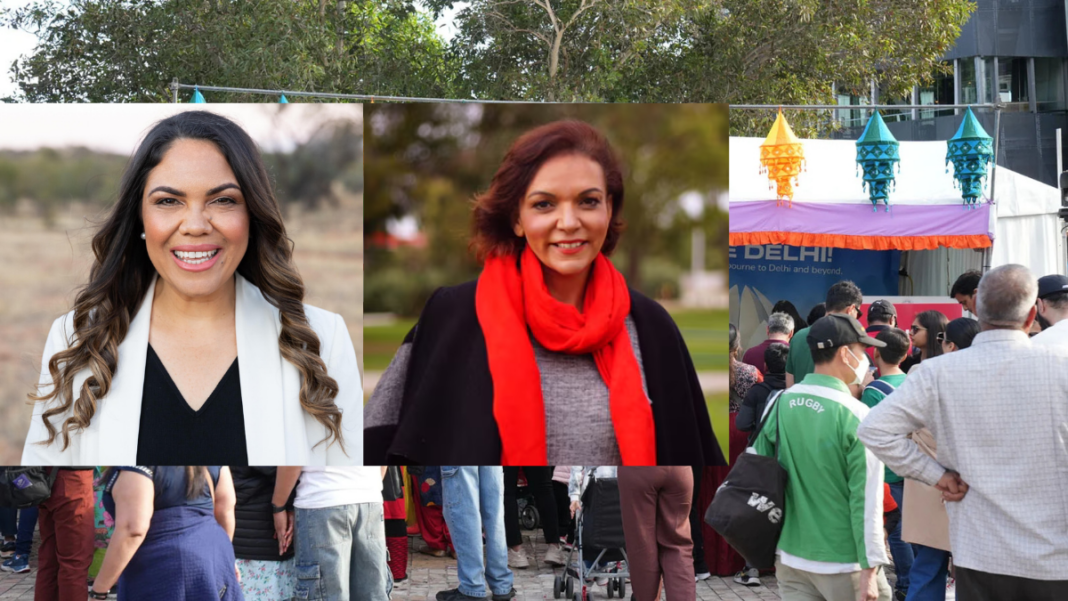
The recent exchange involving Assistant Minister Julian Hill, Senator Jacinta Nampijinpa Price, and Minister Anne Aly is, on the surface, a political skirmish. Underneath it lies something that has been building in Australian public life for years: a collective inability to talk about migration honestly without the conversation collapsing into either defensiveness or insinuation.
At the centre of the controversy is the term “remigration” — a word circulating in international far-right circles that critics describe as a sanitised cover for ethnicity-based mass deportation. Hill called it “vile” and “racist”, and his broader concern is about a pattern: a reluctance in parts of the political spectrum to clearly reject rhetoric that ties national belonging to race. That concern is legitimate.
My own research on Australia’s relationship with Indian subcontinental migration — including the history of the White Australia Policy, its slow dismantling, and the diplomatic realignments that followed — shows how quickly cultural anxiety can calcify into exclusionary policy when given political permission.
But I also understand Price’s frustration at having her words reframed. She says she was responding to a long, wide-ranging question about migration volumes, housing strain, and integration capacity. Her argument — that record levels of recent migration require scrutiny because of real pressures on services — is not inherently racist. It is a governance argument. Many people who hold genuinely multicultural values are making it. The problem is not the argument itself. It is the language that sometimes attaches to it, and the way legitimate policy concerns can quietly become a vehicle for something else when the rhetoric drifts.
Minister Anne Aly’s intervention matters too. When she spoke about Australians who feel their place in the nation is constantly being questioned, she was naming something real — the lived experience of people for whom political rhetoric is not abstract.
Speaking recently, Prime Minister Anthony Albanese declared:
“Australia is always at our best, when we choose to lift people up — not shut them out. Because every time we have followed our national instinct for unity and fairness, we have been better for it.”
He is right. The question is whether our political language is currently living up to that instinct — or working against it.
When debate slides from visa numbers to cultural generalisations, when “migration pressures” begins to imply a particular kind of person rather than a particular kind of planning failure, it stops being a policy conversation. People hear it differently. I have heard it differently, at times, myself.
The Girmitiya story is not just history. It is a structural lesson. Those Indian indentured labourers did not arrive with citizenship papers or cultural guarantees. They became foundational to Fiji despite the terms of their arrival, not because of them. Their contribution was undeniable, and yet it took generations — and ultimately a constitution — for their belonging to be formally acknowledged. Australia has travelled a very different road and is among the most developed and multicultural countries on earth today. But the underlying question is the same: does belonging grow through contribution and commitment, or is it always subject to a prior test of origin?
My answer — and the reason I am here rather than in Vancouver, London or New York — is that Australia has mostly answered that question the right way. The task now is to keep answering it that way. Even when the politics are loud. Even when the easier path is to let the rhetoric do the exclusionary work quietly, without anyone having to say what they actually mean.
A mature national conversation would hold two things simultaneously: that migration levels can have genuine impacts on housing and services and deserve honest, evidence-based debate, and that Australia’s identity is irreducibly plural, built on the principle that citizenship and commitment to Australian values — not ethnicity, not ancestry, not the number of generations your family has been here — is the only basis for belonging.
Those truths are not in conflict. They only appear to be when we let the language get away from us.
Support our Journalism
No-nonsense journalism. No paywalls. Whether you’re in Australia, the UK, Canada, the USA, or India, you can support The Australia Today by taking a paid subscription via Patreon or donating via PayPal — and help keep honest, fearless journalism alive.
