
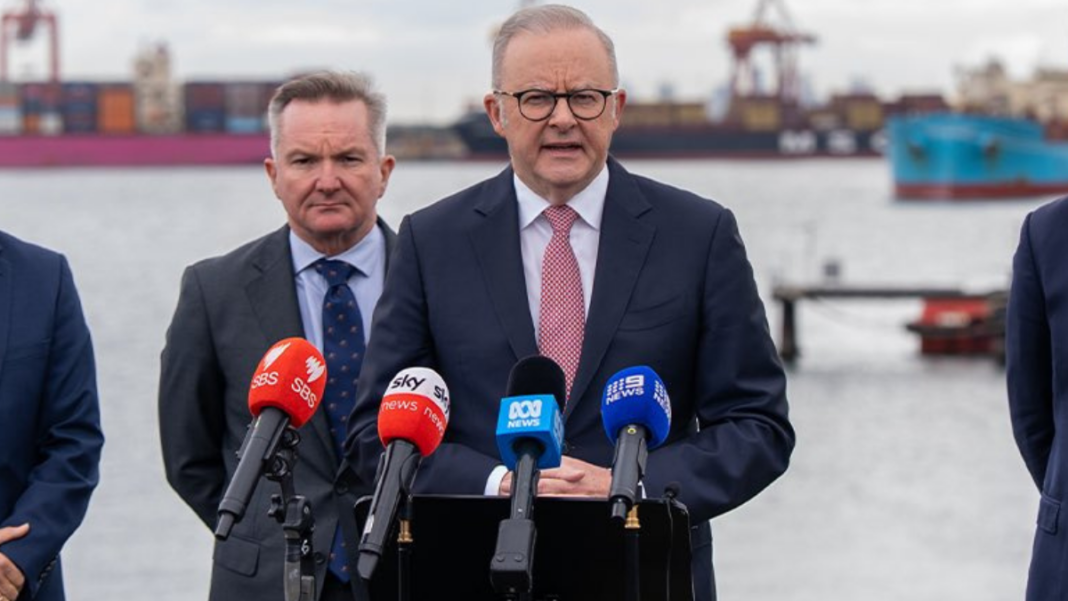
Prime Minister Anthony Albanese has announced a $10 billion fuel security package aimed at protecting Australia from worsening global supply disruptions linked to the ongoing Middle East conflict, while warning the nation faces “extraordinarily volatile times”.
Speaking in Sydney after a National Cabinet meeting, Albanese said the prolonged closure of the Strait of Hormuz — despite a ceasefire being in place for four weeks — continued to threaten global fuel supplies and inflation pressures.
“The longer this conflict goes, the greater the impact will be. It’s as simple as that.”
The package, to be formally outlined in next week’s Federal Budget, includes plans for a permanent government-owned fuel reserve of around one billion litres, increased minimum fuel stockholding requirements for industry, and billions of dollars in financial support to secure fuel and fertiliser supplies.
Under the plan, the Commonwealth will spend $7.5 billion establishing a fuel and fertiliser security facility offering loans, guarantees and insurance support to industry, alongside $3.2 billion to create a national reserve focused on diesel and aviation fuel supplies.
The government also intends to lift Australia’s minimum fuel reserves to at least 50 days’ supply, amid concerns over the nation’s reliance on imported fuel refined overseas.
Chris Bowen said Australia currently had more fuel in storage than when the conflict involving Iran escalated earlier this year, crediting cooperation between government and industry for securing additional fuel shipments.
Bowen described the crisis as the “worst international fuel crisis in history”, citing assessments by the International Energy Agency, and said Australia was among a minority of developed nations without a government-owned fuel reserve.
The government said April recorded 92 fuel shipments into Australia — the highest monthly figure this year — as authorities diversified supply chains through imports from Europe, North America, South America and Algeria.
Albanese urged Australians to continue voluntary fuel-saving measures, including using public transport, working from home and reducing unnecessary travel, saying panic buying seen before Easter had eased significantly.
He warned against stockpiling petrol in homes and garages, describing the practice as dangerous.
The announcement came as the Prime Minister repeatedly refused to confirm or deny whether changes to negative gearing or capital gains tax concessions would feature in next Tuesday’s Budget, despite persistent questioning from journalists.
Albanese insisted the Budget would remain “consistent with Labor values” and focused on housing supply, while declining to engage with speculation ahead of its release.
The Prime Minister also confirmed that 13 Australians — including four women and nine children — linked to camps in Syria were expected to return to Australia independently, stressing the government had provided no assistance for their travel.
He said any individuals suspected of criminal offences would face investigation and prosecution.
Support our Journalism
No-nonsense journalism. No paywalls. Whether you’re in Australia, the UK, Canada, the USA, or India, you can support The Australia Today by taking a paid subscription via Patreon or donating via PayPal — and help keep honest, fearless journalism alive.
