

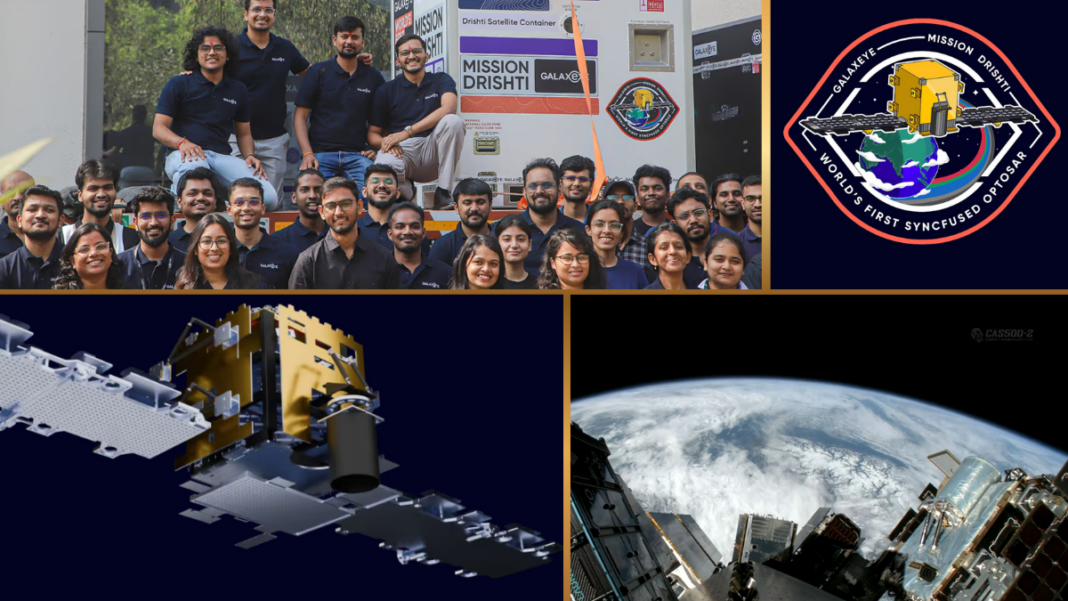
Indian space startup GalaxEye has launched its Earth-observation satellite Drishti, a spacecraft designed to capture imagery using both optical sensors and Synthetic Aperture Radar (SAR) in a single satellite. The launch marks the first time a compact commercial Earth-observation satellite has combined optical and radar imaging together on one platform, enabling continuous monitoring of the Earth regardless of weather or time of day.
Optical satellites provide high-resolution images similar to photographs but depend on daylight and clear skies, while radar satellites can image the Earth at night and through clouds, rain, smoke and dust. By integrating both technologies into one satellite, Drishti can deliver round-the-clock, all-weather Earth observation from a single spacecraft, reducing delays that typically occur when separate optical and radar satellites are used.
The combined imaging capability is expected to support disaster response, agriculture monitoring, maritime surveillance, infrastructure tracking and environmental monitoring, where continuous and reliable data is critical. The satellite can provide consistent monitoring even during monsoon conditions, wildfires or nighttime operations, when optical-only systems are limited.
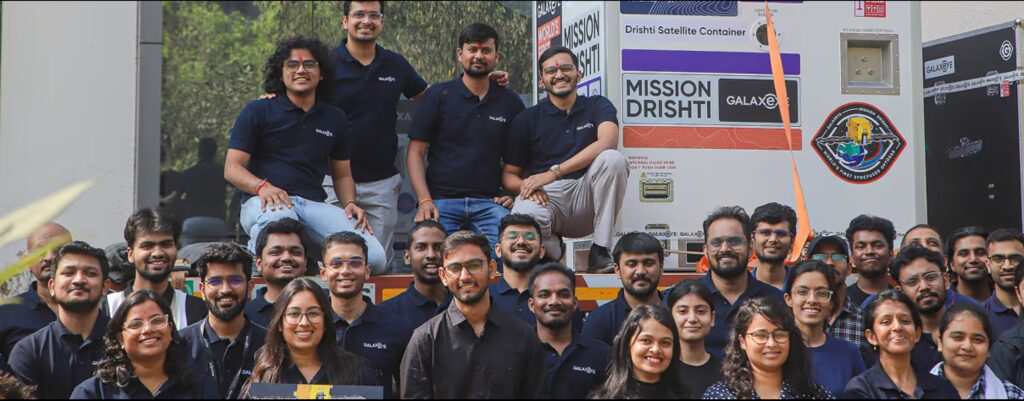
GalaxEye was founded by researchers and engineers from the Indian Institute of Technology Madras, highlighting the growing role of deep-technology startups in India’s expanding private space sector. The launch also reflects the broader opening of the country’s space ecosystem to private companies alongside the national programme led by the Indian Space Research Organisation. The successful launch of Drishti represents a major step for India’s commercial space industry and its entry into next-generation Earth-observation technology.
The satellite was launched on 3 May 2026 aboard a SpaceX Falcon 9 rocket from Vandenberg Space Force Base in California, United States. Its successful separation from the launch vehicle was confirmed on 4 May 2026, marking the completion of its deployment into orbit.
Support our Journalism
No-nonsense journalism. No paywalls. Whether you’re in Australia, the UK, Canada, the USA, or India, you can support The Australia Today by taking a paid subscription via Patreon or donating via PayPal — and help keep honest, fearless journalism alive.
