

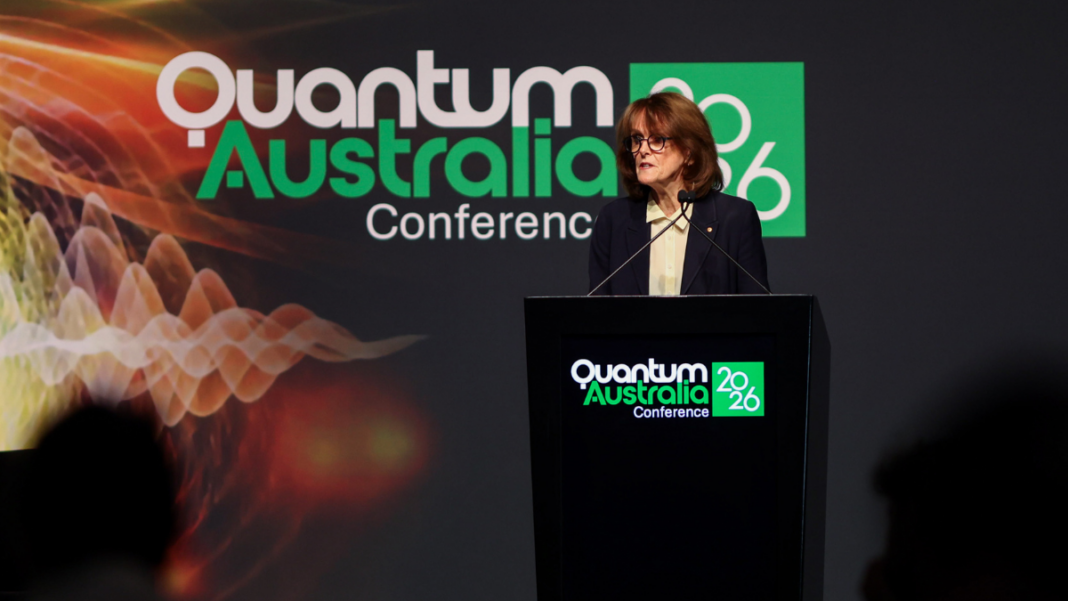
Industry leaders, researchers and international partners have used the Quantum Australia Conference 2026 to push for quantum technology to be treated as a core national economic priority, as Australia seeks to secure its share of a global industry projected to reach around $2 trillion by 2035.
The conference, hosted by Quantum Australia in Adelaide, brought together about 900 investors, policymakers and global industry leaders to examine how quantum is moving from research into real-world deployment.
Speakers warned that while Australia has built a strong foundation in quantum research, there is a narrow and time-sensitive window to translate that advantage into long-term economic resilience. They emphasised the need for sustained national coordination, stronger federal leadership and long-term investment to support industry adoption and commercialisation.
Minister for Industry and Science, Tim Ayres, described quantum as a critical capability for future competitiveness, reinforcing the government’s focus on strengthening the nation’s industrial and innovation systems.
Quantum Australia chief executive Petra Andrén said the sector had moved beyond pure research. “Quantum is no longer just a scientific endeavour. It is becoming a strategic capability shaping economic resilience, national security, and global competitiveness,” she said, adding that coordinated action across industry, government and research would define the next phase of growth.
“To secure a Future Made in Australia, quantum will need to be treated as a national priority, with sustained support to ensure we remain competitive in a rapidly evolving global landscape.”
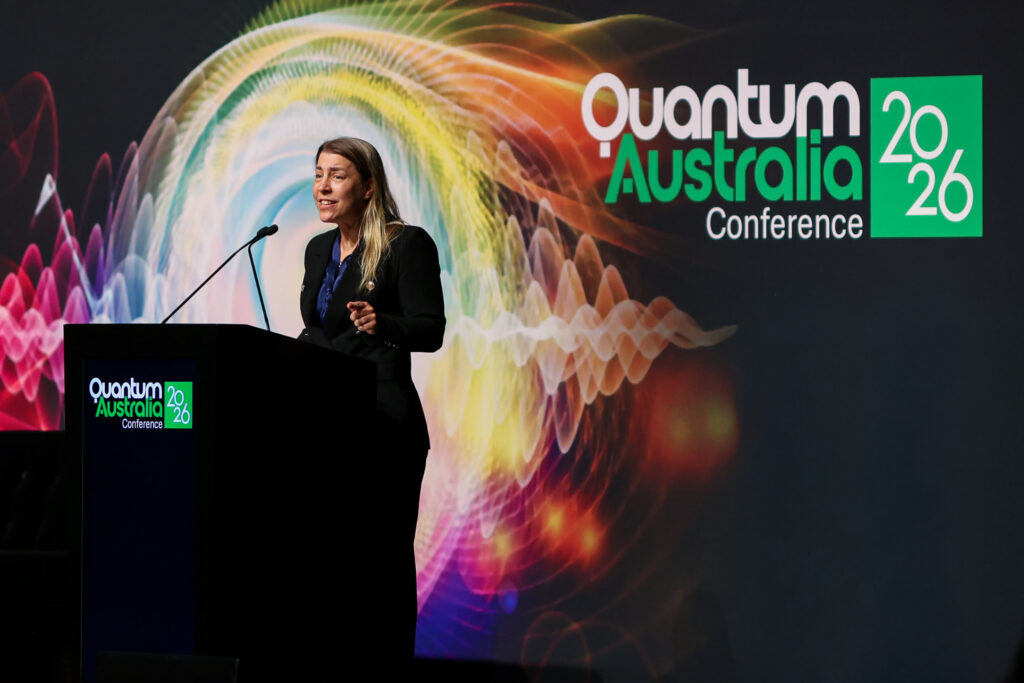
Australia’s ecosystem now includes more than 40 dedicated quantum companies, 26 research organisations and the world’s fifth largest quantum workforce, despite the country accounting for just 0.3 per cent of the global population.
Former chief scientist Cathy Foley said decades of investment had created a strong talent pipeline but warned that Australia must improve its track record in translating research into commercial outcomes. “You don’t just get an industry. You have to want it,” she said, pointing to rapid growth in quantum startups over the past five years.
“If you look at many of the big companies globally, you will find Australians leading the way, which shows the depth of capability we have built over decades.”
Discussions at the conference highlighted quantum’s potential impact across major sectors.
In financial services, it could unlock up to $600 billion globally through advanced modelling and optimisation. In mining and resources, quantum sensing could improve discovery rates and reduce costs across Australia’s $235 billion sector. Healthcare, energy systems, logistics and defence were also identified as key areas where quantum technologies could drive productivity and strategic advantage.
International delegates underscored the scale of global competition. Countries including the United States, United Kingdom, Japan, Germany and the Netherlands outlined major national strategies and multi-billion-dollar investments aimed at securing leadership in quantum technologies. China alone has committed about US$10 billion to quantum infrastructure, while the US and European Union continue to expand coordinated funding programs.
From Finland, Trade Minister Ville Tavio said nations leading in quantum development would shape future markets and digital standards, positioning the technology as central to economic and geopolitical influence.
Experts also stressed the need for stronger procurement pathways, industry adoption programs and mechanisms to translate research into deployable solutions. Without these, Australia risks falling behind despite its early scientific leadership.
The conference heard that quantum technologies could deliver significant productivity gains across the broader economy by solving complex problems beyond the reach of classical computing, contributing to a multi-trillion-dollar global value pool.
Support our Journalism
No-nonsense journalism. No paywalls. Whether you’re in Australia, the UK, Canada, the USA, or India, you can support The Australia Today by taking a paid subscription via Patreon or donating via PayPal — and help keep honest, fearless journalism alive.
