


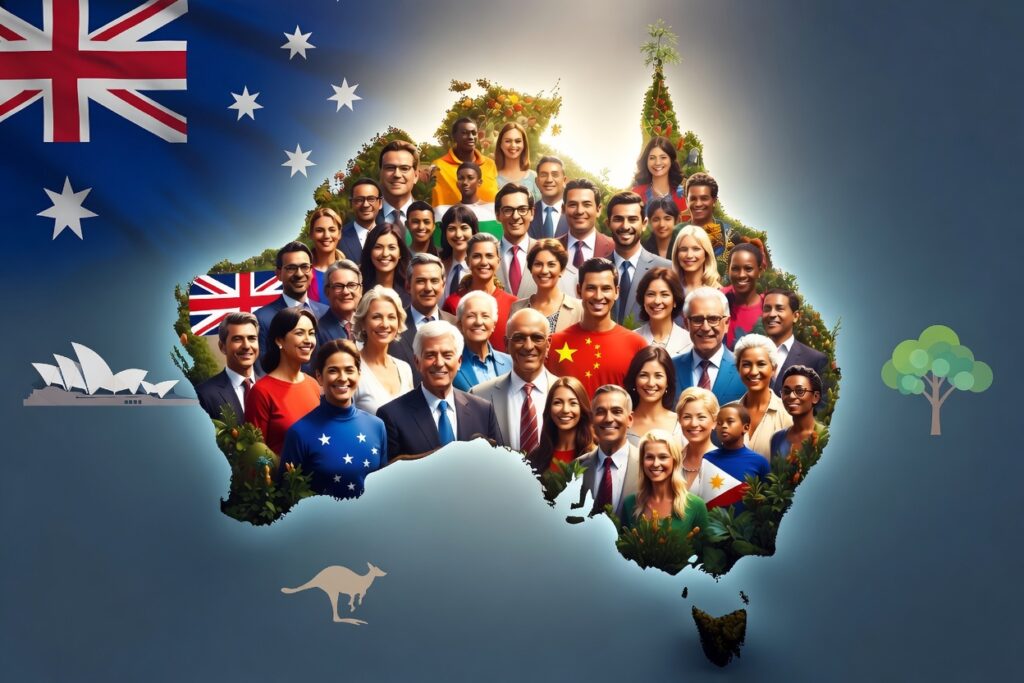
Australia’s population is becoming increasingly diverse, with new data showing that nearly one in three residents was born overseas, and that India has emerged as the top country of birth for migrants for the first time.
According to the Australian Bureau of Statistics (ABS), 8.8 million people living in Australia in 2025 were born overseas, compared to 18.8 million Australian-born residents.
This means overseas-born individuals now make up 32 per cent of the country’s estimated population of 27.6 million—approaching the historic peak of 32.4 per cent recorded in 1891.
In a significant shift, India has narrowly overtaken England to become the largest overseas-born population in Australia, with both groups numbering around 971,000 people. The Indian-born population has also seen the fastest growth over the past decade, increasing by more than 522,000 since 2015.
Dr Amit Sarwal, a prominent expert of Indian diaspora in Australia, says: “Seeing India emerge as the largest overseas-born group in Australia reflects not just migration trends, but the deepening cultural and economic ties between the two nations.”
“I see this as a powerful reminder of how Indian diaspora and diversity continues to shape Australia’s identity and future.”
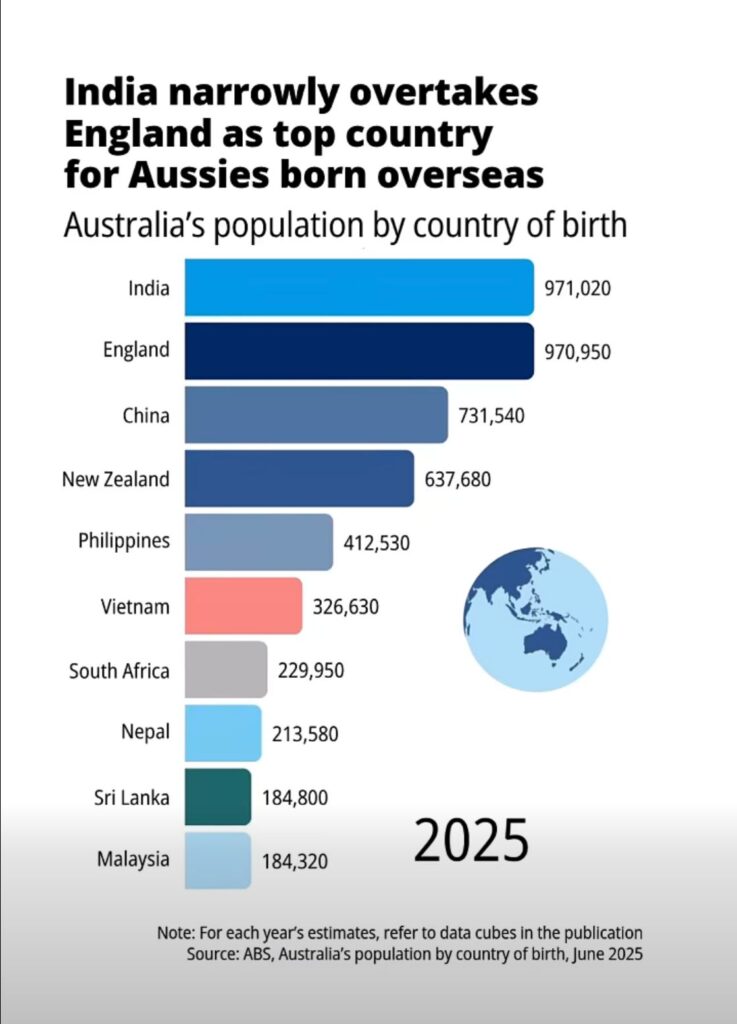
England, long the dominant source of migration to Australia, now ranks second, followed by China, New Zealand and the Philippines.
The data also highlights changing migration patterns over time. Populations born in England and Italy recorded the largest declines since 2015, reflecting ageing migrant communities who arrived in large numbers after World War II. Both groups now have a median age of 60 or older.
By contrast, newer migrant groups tend to be younger. The median age of overseas-born residents has fallen to 43, down from 46 in 2005, while the median age of Australian-born residents has risen to 35.
There are also stark differences across communities. People born in Latvia are the oldest group in Australia, with a median age of 80, while those born in Qatar are the youngest, with a median age of just 15.
The ABS said the figures reflect Australia’s evolving migration trends, with newer waves of migrants contributing to population growth, workforce participation and the country’s cultural diversity.
Support our Journalism
No-nonsense journalism. No paywalls. Whether you’re in Australia, the UK, Canada, the USA, or India, you can support The Australia Today by taking a paid subscription via Patreon or donating via PayPal — and help keep honest, fearless journalism alive.
