


In one of the latest disciplinary actions, the regulator steps up its cleanup of the migration advice sector. Jujhar Singh Bajwa, the founder of Bajwa Immigration Consultants and a long-time registered migration agent, has had his registration cancelled by the Office of the Migration Agents Registration Authority.
OMARA’s official disciplinary decisions list records “Bajwa, Jujhar” as cancelled on 23 April 2026, and the official register previously listed Jujhar Bajwa under Migration Agent Registration Number 0742209.
According to an OMARA decision summary reviewed by The Australia Today, Bajwa was first registered as a migration agent on 20 March 2007.
The regulator said it reviewed visa applications he submitted to the Department of Home Affairs, along with other departmental information, and identified concerns that he may have failed to act lawfully, honestly and with integrity, made false and misleading statements, acted in a way intended to defeat the purpose of migration law, and provided immigration assistance without declaring that assistance to the Department.
A particularly striking aspect of the case is the apparent concentration of protection (Refugee) visa matters.
As the material before the regulator indicates, 30 of the 38 applications in question were refugee-related matters, which had placed subclass 866 protection visa work at the centre of the investigation. The subclass 866 visa is an onshore protection visa for people who arrived in Australia on a valid visa and later seek asylum, making it one of the most sensitive areas of migration practice and one where honesty, proper declaration of assistance and strict compliance with the law are critical.
The scale of those alleged protection visa matters is likely to intensify scrutiny of whether parts of the migration advice sector are misusing humanitarian pathways for commercial gain.
Critics within the industry have long argued that some operators target vulnerable clients, especially in communities where migration pressures are high, by encouraging weak or improper claims that can keep people in the system longer.
In that context, the Bajwa case is likely to be read not just as an individual disciplinary matter, but as part of a wider regulator push to clean out exploitation and restore confidence in the system.
The investigation unfolded over more than a year.
OMARA issued two notices under section 309 of the Migration Act 1958, advising that it was considering cautioning, suspending or cancelling Bajwa’s registration under section 303(1). It also issued a notice under section 305C requiring him to produce prescribed documents, including relevant client files.
The first section 309 notice, sent on 25 January 2024, attached a list of 38 visa applications in which the authority alleged Bajwa had provided immigration assistance but failed to declare that assistance to the Department.
In his first response, Bajwa denied providing immigration assistance to applicants for Permanent Protection (Refugee) visas, subclass 866. He acknowledged that IP addresses were linked to his MARN and confirmed his email address for communication with the regulator.
He admitted providing immigration assistance in eight of the 38 visa applications identified, but said the failure to declare that help was an administrative error.
He also said applicants for Refugee (subclass 866) visas had lodged those applications themselves while connected to free Wi-Fi at his office, and he provided statutory declarations from clients, which, he said, he and his staff had assisted in writing.
He further claimed he had never acted unprofessionally or provided what he described as malicious information to the Department, and said information sheets and booklets prepared by his office for different visa subclasses did not promote the lodging of any particular application.
OMARA said it was not satisfied with that explanation.
After reviewing his submissions and supporting documents, the authority carried out further inquiries and identified what it described as additional links between Bajwa and undeclared applications, as well as concerns about the truthfulness of some client statutory declarations and broader concerns about his integrity.
A second section 309 notice was issued on 6 March 2025.
In response, Bajwa provided more detail about his registration history, his work as an education agent, the operation of his two businesses, his office arrangements, and his email and IP addresses.
He again accepted responsibility for failing to notify the Department that he had provided immigration assistance in eight visa applications, but denied that his protection visa booklet encouraged people to lodge subclass 866 applications.
He also denied allegations about the use of specific credit cards across both his declared and undeclared caseloads, rejected claims that he or his staff wrote the client statutory declarations, and said the declarations provided earlier did not show immigration assistance had been given.
He supplied supplementary statutory declarations, said he identified the applicants from the original list using transaction reference numbers and initials, and denied lodging subclass 866 applications without declaration in order to keep them separate from his legitimate caseload. He also pointed to his continued professional development, saying he had voluntarily enrolled in extra training in file management, ethics and client communication.
OMARA ultimately found against him on multiple grounds.
As per the decision summary, the authority found Bajwa had failed to notify the Department that he had provided immigration assistance, contrary to section 312A of the Migration Act.
Failed to act ethically, honestly and with integrity; failed to comply with migration law and his duty not to undermine it;
provided false and misleading information to the regulator;
and made false and misleading statements in support of applications and to the Department, which he knew were false or misleading.
It also found he had breached both the former Code of Conduct for Registered Migration Agents and the current 2021 Code, and was not a person of integrity or otherwise not a fit and proper person to provide immigration assistance.
OMARA decided on 23 April 2026 to cancel Bajwa’s registration under section 303(1)(a) of the Act.
The authority said it was satisfied for sections 303(1)(f) and (h) that he was not a person of integrity or otherwise not fit and proper to give immigration assistance, and that he had failed to comply with clauses 2.1 and 2.9 of the former Code and sections 13, 15, 17, 18(1)(a) and 20 of the current Code.
Under section 292 of the Act, an agent whose registration is cancelled cannot be re-registered within five years, meaning the cancellation will remain in effect until 23 April 2031.
The decision lands amid a broader OMARA crackdown that the Albanese Government says is designed to weed out unethical migration agents and restore trust in the system.
In March, Assistant Minister Julian Hill said 61 registered migration agents had been sanctioned since 2021-22, including 14 in this financial year alone, as part of a strengthened regulatory push backed by a threefold increase in staffing. The government also introduced new legislative instruments from 1 April 2026, including mandatory annual training on ethical standards and the Code of Conduct, tighter continuing professional development rules, and other updates aimed at lifting standards across the profession.
Hill said the government’s crackdown was “showing results” and warned that agents engaging in wrongdoing would be caught. OMARA says it regulates more than 5,400 registered migration agents nationwide and that only registered migration agents and Australian legal practitioners can lawfully be paid for immigration assistance in Australia.
In a written statement to The Australia Today, Mr Jujahar Bajwa said, “This is not a matter where I was accused by a client of any wrongdoing, fraud or incompetent migration assistance. I take pride in the fact that during the last nearly 20 years, I have assisted countless clients, many in dire straits with very little hope of getting a good migration outcome.”
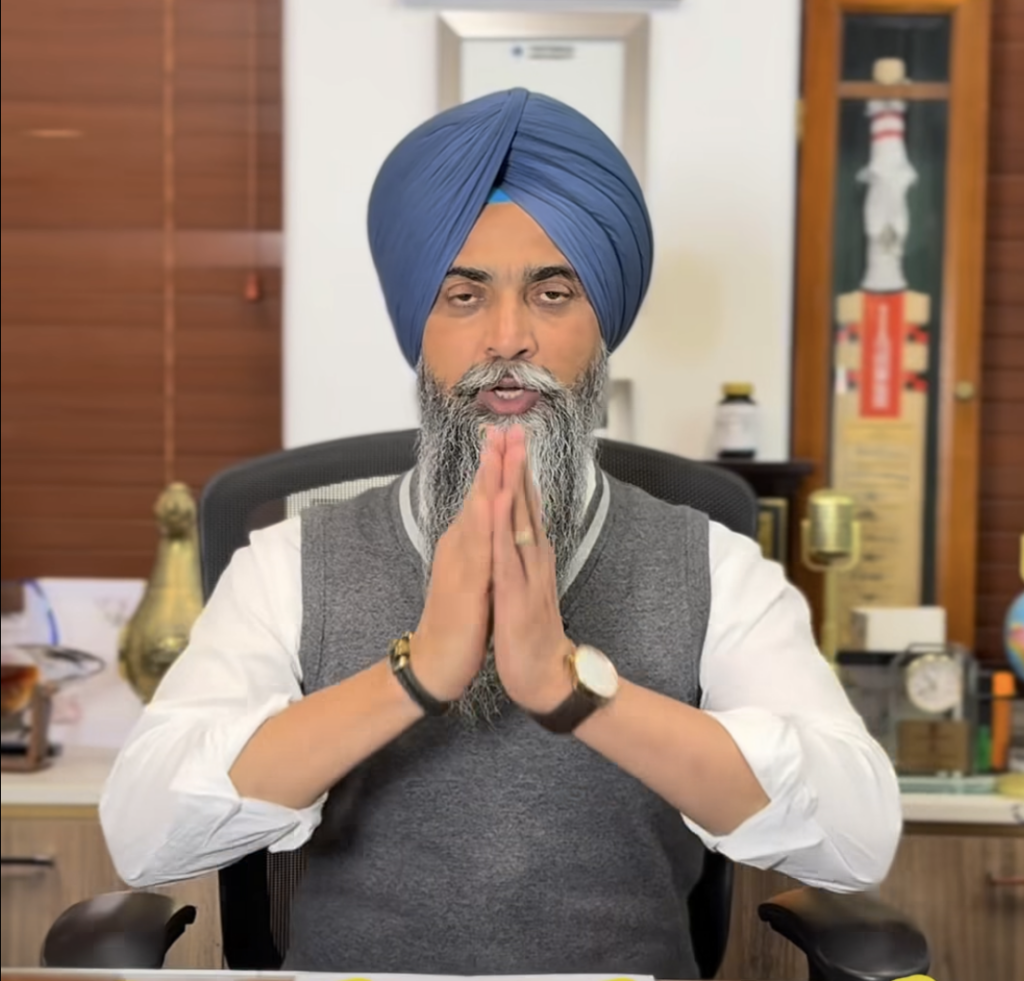
“The allegation against us was that I did not declare migration assistance in 38 visa applications, of which 30 were for protection visas. OMARA’s basis for this allegation that they found these applications were lodged from IP addresses of my office. We provided sufficient evidence to OMARA to prove that the applications were lodged by the applicants themselves.”
Most of the clients in question even provided statutory declarations stating that I did not assist them in their protection visa applications.”
“Almost a year after first sending a notice, the investigator alleged that I used my business bank cards to pay application fee for these protection visa applications, simply because the last four digits on the cards used to pay the visa fees matched my the last four digits on my card, not realising that there may be thousands of cards with the same four digits.”
“We provided a comprehensive response to OMARA in this matter, and any fair-minded person would have concluded that the allegations against me were unfounded. However, it is evident from the two-year witch hunt that OMARA investigator was working on a pre-determined outcome, stretching the dots to somehow join them even when they did not.”
“I am confident that our appeal against this decision will be successful in the Administrative Review Tribunal where the process is much fairer.”
One Melbourne migration agent, who did not want to be named, told The Australia Today the case would send a message across the sector.
“There are black sheep in the migration industry, and people are being exploited by them,” the agent said.
For a system already under pressure from high demand, rising complexity and growing scrutiny, Bajwa’s deregistration is likely to be seen as another clear sign that OMARA is moving more aggressively to clean up the migration advice industry.
Support our Journalism
No-nonsense journalism. No paywalls. Whether you’re in Australia, the UK, Canada, the USA, or India, you can support The Australia Today by taking a paid subscription via Patreon or donating via PayPal — and help keep honest, fearless journalism alive.
