
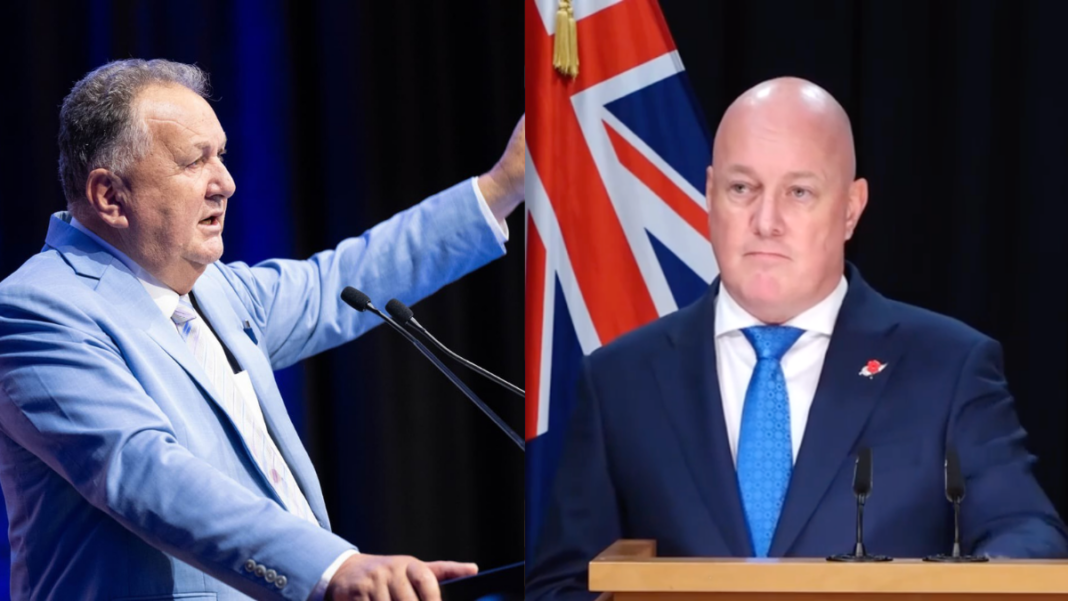
New Zealand Prime Minister Christopher Luxon has criticised controversial comments by Deputy Leader of NZ First and Senior Minister Shane Jones about a proposed free trade agreement (FTA) with India, calling them “unhelpful” and “alarmist” as the two countries prepare to formally sign the deal.
As per RNZ, Jones sparked backlash after warning of a “butter chicken tsunami” if the agreement led to increased migration from India, saying his party would “never accept” the deal and linking it to fears of “unfettered immigration”.
“I am just never going to agree with a butter chicken tsunami coming to New Zealand,” he said in a video circulating online.
Responding at a post-Cabinet media conference, Luxon said the remarks misrepresented the agreement and fuelled unnecessary fear.
“The immigration story that they are scaremongering around is absolutely false,” he said.
Pushed on whether he considered the comments racist, Luxon stopped short of explicitly saying so, but said the language “doesn’t sound right” and was “alarmist and unhelpful”, adding Jones was known for “oratorial flourishes”.
The criticism comes as New Zealand and India prepare to sign the long-awaited FTA in New Delhi on April 27, following the completion of legal verification. Trade and Investment Minister Todd McClay said the signing ceremony would take place in front of business leaders from both countries, framing the agreement as a major economic milestone.
McClay described the pact as a “once-in-a-generation agreement” that would give New Zealand exporters “unprecedented access” to India’s 1.4 billion people and a rapidly growing economy expected to become the world’s third largest.
“At a time of global instability, a trade deal with India has never been more important for New Zealand’s prosperity,” he said.
The agreement, launched during Luxon’s visit to India in March 2025 and concluded in December after just nine months of negotiations, has been described by Indian officials as “historic, ambitious and mutually beneficial”.
Under the deal, tariffs will be eliminated or reduced on 95 per cent of New Zealand exports to India — one of the broadest outcomes secured in any Indian trade agreement. About 57 per cent of exports, including lamb, wool, coal, leather and most forestry goods, will become duty-free immediately, rising to 82 per cent over time, with additional gains expected for seafood, infant formula and kiwifruit.
McClay also highlighted a Most Favoured Nation clause covering wine and services, saying it could deliver “tens of millions of dollars” in additional export value.
The agreement is also strategically significant. Two-way trade between the countries currently sits at NZ$3.68 billion, with both governments aiming to double that within five years and encourage up to NZ$20 billion in New Zealand investment into India over 15 years.
Despite the economic potential, the deal remains politically contentious at home. New Zealand First opposes the agreement, meaning Luxon’s government will likely need support from the opposition New Zealand Labour Party to pass the necessary legislation.
Luxon said rejecting the deal would harm New Zealand’s economic prospects, particularly for key export sectors.
“It creates huge opportunity for people … foresters, aquaculture, our farmers, our horticulturalists. This is a great deal,” he said.
Immigration Minister Erica Stanford also distanced the government from Jones’ remarks, saying they were “not helpful”.
Even after signing, the FTA will not take effect immediately. It must go through New Zealand’s parliamentary treaty examination process, including scrutiny by the Foreign Affairs, Defence and Trade Committee, before enabling legislation is introduced.
Support our Journalism
No-nonsense journalism. No paywalls. Whether you’re in Australia, the UK, Canada, the USA, or India, you can support The Australia Today by taking a paid subscription via Patreon or donating via PayPal — and help keep honest, fearless journalism alive.
