

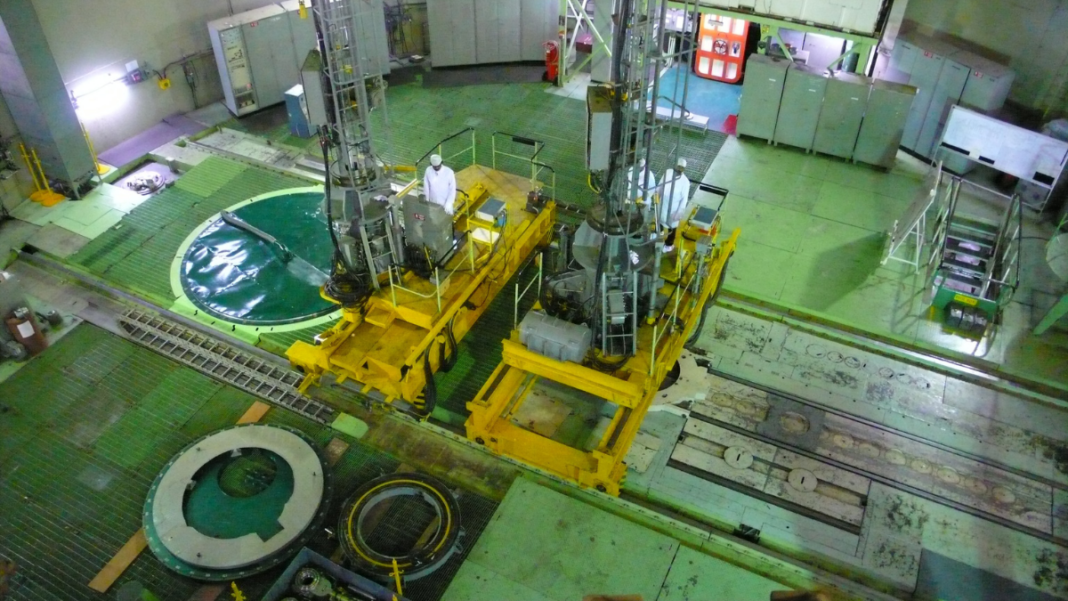
India has reached a major milestone in its civil nuclear programme, with Prime Minister Narendra Modi announcing that the country’s first indigenously designed and built Prototype Fast Breeder Reactor at Kalpakkam has attained criticality.
Calling it a “defining step” and a “proud moment”, Modi said the 500 MWe reactor marks India’s advance into the second stage of its long-planned three-stage nuclear programme.
The achievement is significant not just because of the reactor itself, but because of what it is meant to unlock. India’s nuclear strategy has long been built around eventually using its large thorium reserves, and the fast-breeder stage is central to that roadmap.
In his statement, PM Modi described the PFBR as a “decisive step towards harnessing our vast thorium reserves”, while earlier official material from the Prime Minister’s Office explained that fast breeder reactors are the bridge between India’s current uranium-based system and a future thorium-based stage.
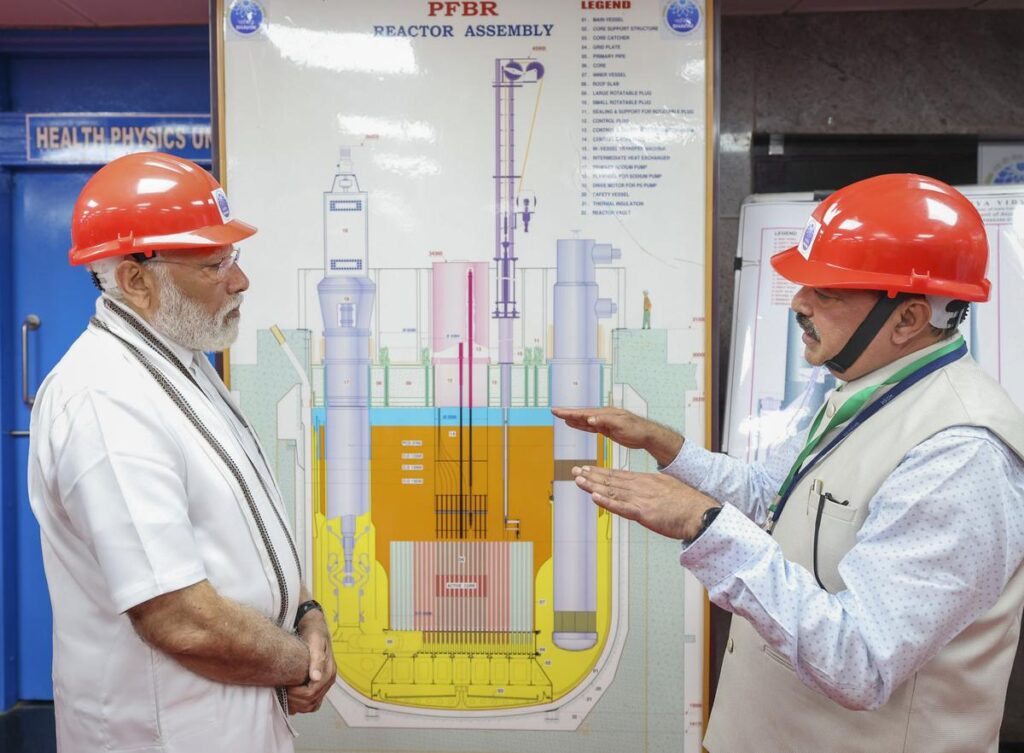
The Kalpakkam reactor has been developed by Bharatiya Nabhikiya Vidyut Nigam Limited, or BHAVINI, a public sector company created in 2003 to build and operate the project. Official government material says the PFBR has been designed and constructed indigenously, with contributions from more than 200 Indian industries, including micro, small and medium enterprises. That makes the reactor a flagship example of domestic nuclear engineering and industrial capability, not just a power project.
Technically, the PFBR is built around fast breeder technology that allows it to generate more fissile material than it consumes. It will initially use uranium-plutonium mixed oxide fuel, while the uranium-238 blanket surrounding the core undergoes transmutation to create more usable fuel. The same official explanation says thorium-232 can also be used as a blanket material in this stage, producing uranium-233 for India’s future third-stage reactors.
That is why the project has always carried strategic weight far beyond its 500 MWe capacity. India’s Department of Atomic Energy has repeatedly described the PFBR as a commissioning-stage project that sits at the centre of the next wave of nuclear expansion. In a March 2026 parliamentary reply, the government said that once the PFBR achieved first criticality, it would approach the financial sanction of the twin FBR 1 and FBR 2 projects at Kalpakkam, indicating that this milestone is also expected to shape the next set of breeder reactor investments.
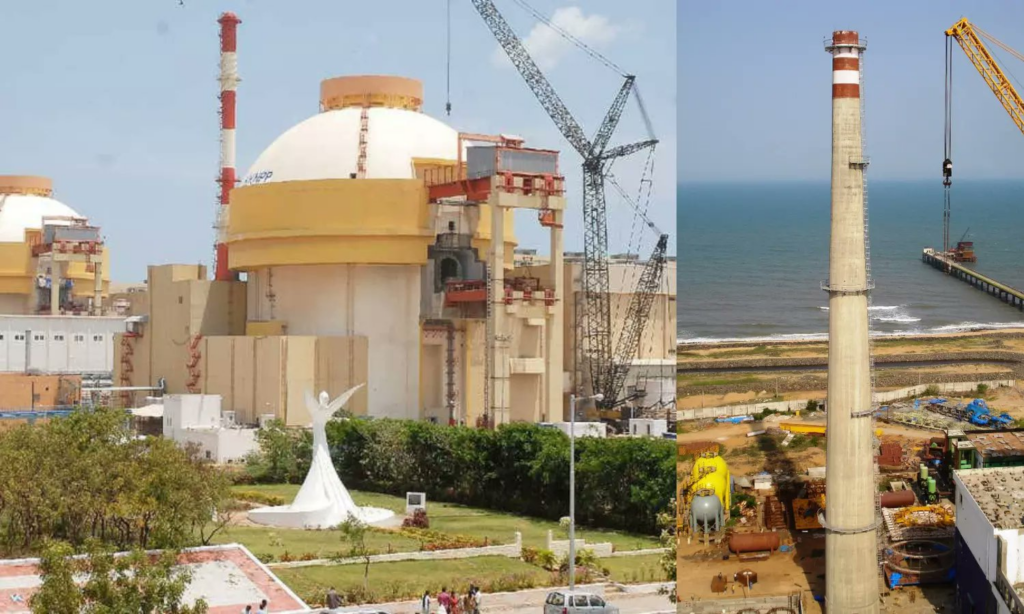
The reactor also has symbolic value for India’s wider energy ambitions. The government has set out plans to expand nuclear capacity sharply over the coming years, with a target of about 22 GW by 2031-32 and a much larger 100 GW ambition by 2047 under the Nuclear Energy Mission. In that context, the PFBR is not a standalone engineering feat but part of a larger push to strengthen energy security, reduce fossil fuel dependence and build a bigger low-carbon electricity base using indigenous technology.
Safety has been a major part of the official pitch around the reactor. The Prime Minister’s Office has described the PFBR as an advanced third-generation reactor with inherent passive safety features designed to shut the plant down safely in an emergency without relying on active intervention. The same official note also argues that because the fast breeder stage uses spent fuel from the first stage, it offers an advantage in reducing the volume of nuclear waste requiring long-term disposal.
The milestone also carries international significance. The Indian PMO said in 2024 that once commissioned, India would become only the second country after Russia to have a commercial operating fast breeder reactor. That places Kalpakkam in a very small club globally and gives the project added strategic and technological importance as India seeks to position itself as a major long-term player in advanced nuclear energy.
For New Delhi, then, the PFBR reaching criticality is more than a technical checkpoint. It is a test of whether India’s decades-old nuclear vision can finally move from theory into a more scalable reality. If the Kalpakkam reactor now progresses smoothly through the remaining commissioning steps and into power generation, it will not just validate years of engineering work. It will also give real momentum to India’s effort to build an energy future around domestic nuclear know-how and, eventually, its vast thorium reserves.
Support our Journalism
No-nonsense journalism. No paywalls. Whether you’re in Australia, the UK, Canada, the USA, or India, you can support The Australia Today by taking a paid subscription via Patreon or donating via PayPal — and help keep honest, fearless journalism alive.
