

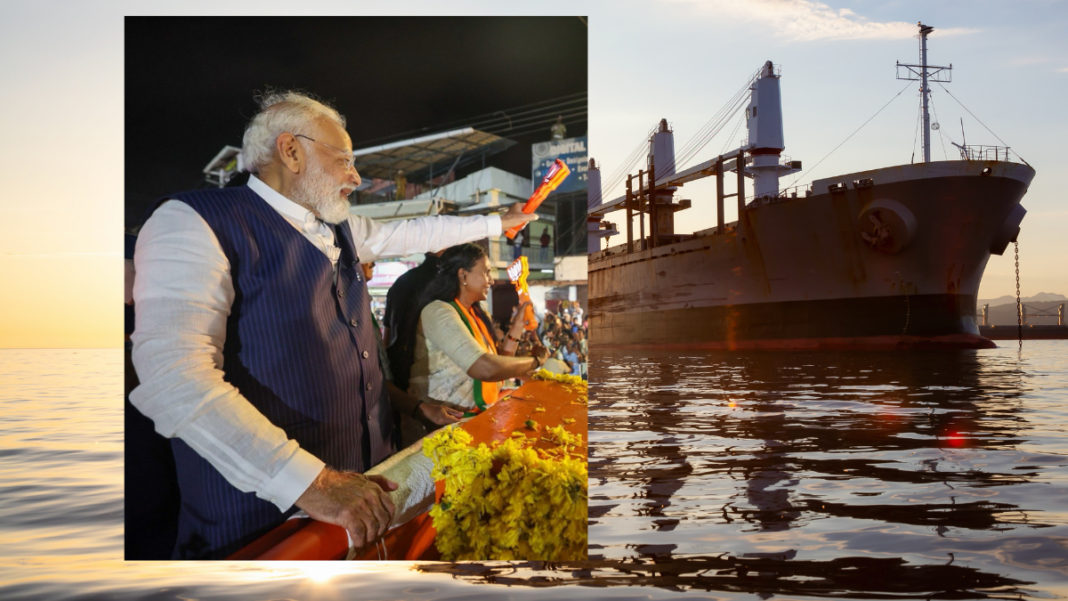
India has continued to secure critical energy supplies through the Strait of Hormuz despite escalating tensions in West Asia, with the India-flagged vessel Green Asha the latest to reportedly safely transit the volatile corridor.
As per news reports, the crossing marks the eighth Indian LPG carrier to pass through the strait since late February, when conflict in the region intensified.
Vessels such as Green Sanvi and MT Jag Vasant have delivered tens of thousands of tonnes of liquefied petroleum gas, supported by naval standby operations and sustained diplomatic engagement led by Indian Prime Minister Narendra Modi and Foreign Minister Dr S. Jaishankar.
It comes as no surprise that the India-flagged vessel successfully sailed through the Strait of Hormuz on National Maritime Day. India’s rich maritime heritage and the dedication of all those connected to this vital sector have long ensured safe passage for its vessels, while bolstering trade, connectivity, and the economy. As Prime Minister Modi observed,
“We will continue to harness the immense potential of our maritime sector for a prosperous future.”
President Donald Trump recently indicated that the U.S. could reopen the Strait of Hormuz “with a little more time,” as he continues to fine-tune his messaging regarding the strategic passage linking the Persian Gulf and the Arabian Sea.
The strait, through which roughly one-fifth of the world’s oil supply passes, has become increasingly dangerous, with Iranian forces targeting vessels and disrupting maritime traffic. Despite the risks, Indian authorities say all ships and seafarers in the region are being closely monitored, with contingency plans in place to ensure continuity of supply.
In contrast, wannabe mediator heavy debt-ridden Pakistan is facing a deepening energy crisis triggered by disruptions to liquefied natural gas (LNG) imports.
The country, which relies heavily on LNG routed through the strait, has seen shipments fall sharply – from around 12 in January to just two in March – after supply interruptions from Qatar following regional hostilities.
With LNG accounting for more than 20 per cent of Pakistan’s electricity generation and limited reserve capacity, officials have warned of prolonged blackouts and severe fuel shortages.
At the same time, Islamabad has sought to position itself as a diplomatic intermediary in the conflict, engaging alongside countries such as Türkiye and Egypt in efforts to broker talks between Iran and the United States. However, these initiatives have yielded little progress.
Iranian officials have publicly indicated they are not seeking Pakistan’s involvement, instead calling for a broader cessation of hostilities.
Analysts say the ludicrous gap between Pakistan’s diplomatic messaging and its practical influence has become more visible on the global stage. While officials have projected a narrative of active mediation, the absence of tangible outcomes has undercut those claims.
Further complicating matters, Pakistan’s domestic vulnerabilities have limited its strategic leverage. A heavy debt burden, reliance on external energy supplies, and ongoing economic pressures have constrained its ability to respond effectively to the crisis or shape regional developments.
India under Prime Minister Modi has focused on securing supply chains through a combination of diplomacy, naval preparedness and operational coordination, while Pakistan under Prime Minister Shehbaz Sharif faces mounting internal challenges alongside limited success in advancing its diplomatic ambitions.
Support our Journalism
No-nonsense journalism. No paywalls. Whether you’re in Australia, the UK, Canada, the USA, or India, you can support The Australia Today by taking a paid subscription via Patreon or donating via PayPal — and help keep honest, fearless journalism alive.
