

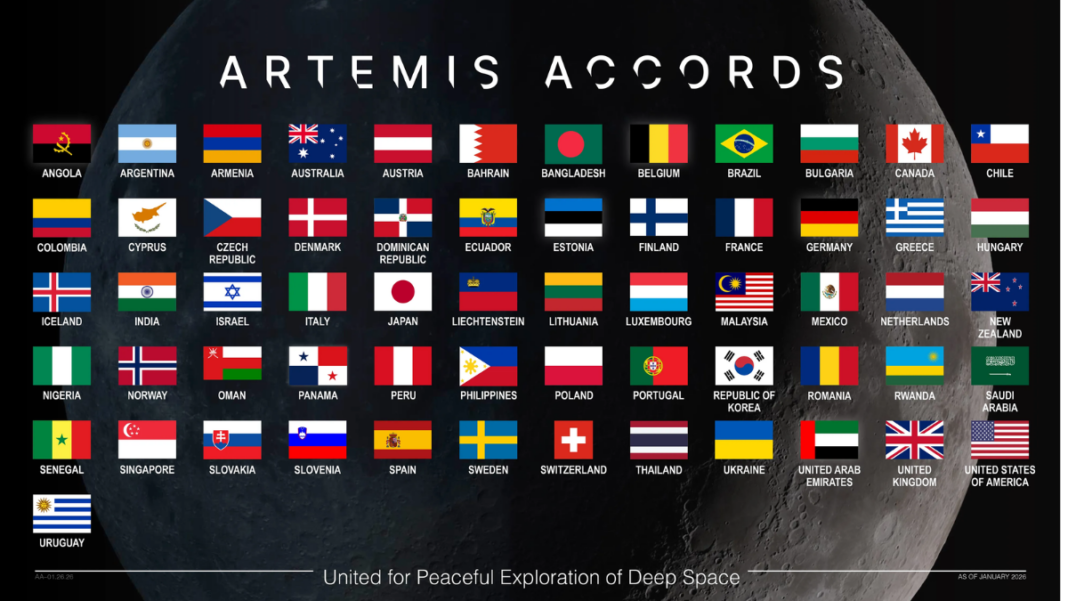
The Artemis Accords are a set of non-binding principles created to guide peaceful and responsible exploration of the Moon, Mars and deeper space. Introduced in 2020 by NASA alongside the United States government, the framework updates the spirit of the 1967 Outer Space Treaty for a new era in which multiple nations and private companies are preparing to operate on the Moon.
The Accords aim to prevent conflict as space becomes more crowded and strategically important. Countries that sign commit to transparency in their missions, sharing scientific data, registering space objects and communicating openly to avoid harmful interference.
A major focus is the idea that space resources can be used responsibly, including mining lunar ice for fuel and life-support systems or extracting materials to support long-term missions. The agreement also encourages the creation of safety zones around operations and the protection of historic sites such as early lunar landing locations.
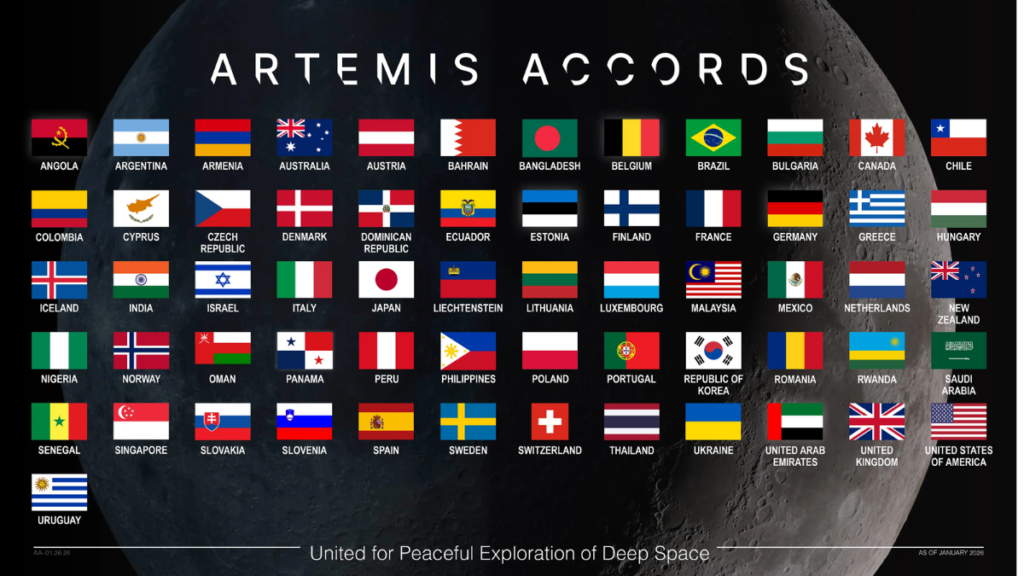
Since 2020, the number of signatories has grown rapidly, with 61 countries now part of the framework. Key members include the United States, India, Australia, United Kingdom, Canada, Japan, France, Germany, Italy, South Korea, Brazil, United Arab Emirates, Saudi Arabia, New Zealand, Singapore and Ukraine, with more countries continuing to join.
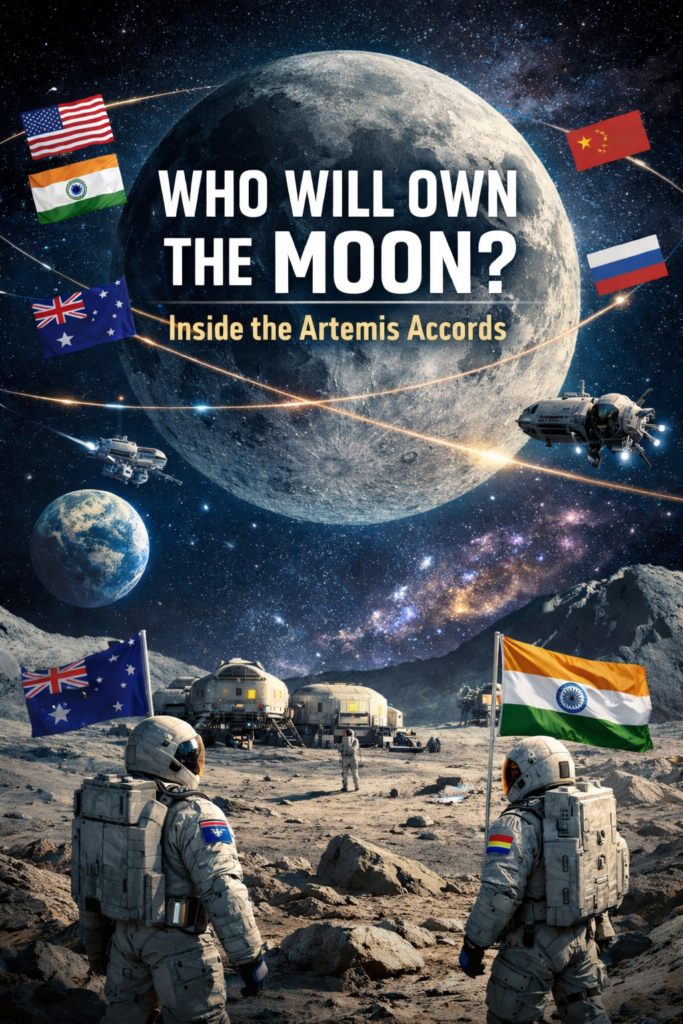
Notably, China and Russia are not part of the Accords and are pursuing a separate lunar cooperation framework.
But despite tensions on Earth, the International Space Station (ISS) remains one of the last major areas of active cooperation between the United States and Russia.
The station is a joint project involving NASA and Roscosmos, along with Europe, Japan and Canada. Even after the Ukraine war began in 2022, both sides continued working together because the ISS is technically interdependent:
- Russian modules provide propulsion and orbit adjustments that keep the station from falling back to Earth.
- American systems supply power, life-support, and much of the onboard infrastructure.
- Astronaut seat-swap agreements still send US astronauts on Russian Soyuz spacecraft and Russian cosmonauts on US commercial crew missions.
This cooperation is expected to continue until the planned retirement of the ISS around the end of the decade.
As lunar missions accelerate and long-term plans for Mars take shape, the Artemis Accords are increasingly seen as an early attempt to establish shared rules for how humanity will live, work and cooperate beyond Earth.
Support our Journalism
No-nonsense journalism. No paywalls. Whether you’re in Australia, the UK, Canada, the USA, or India, you can support The Australia Today by taking a paid subscription via Patreon or donating via PayPal — and help keep honest, fearless journalism alive.