

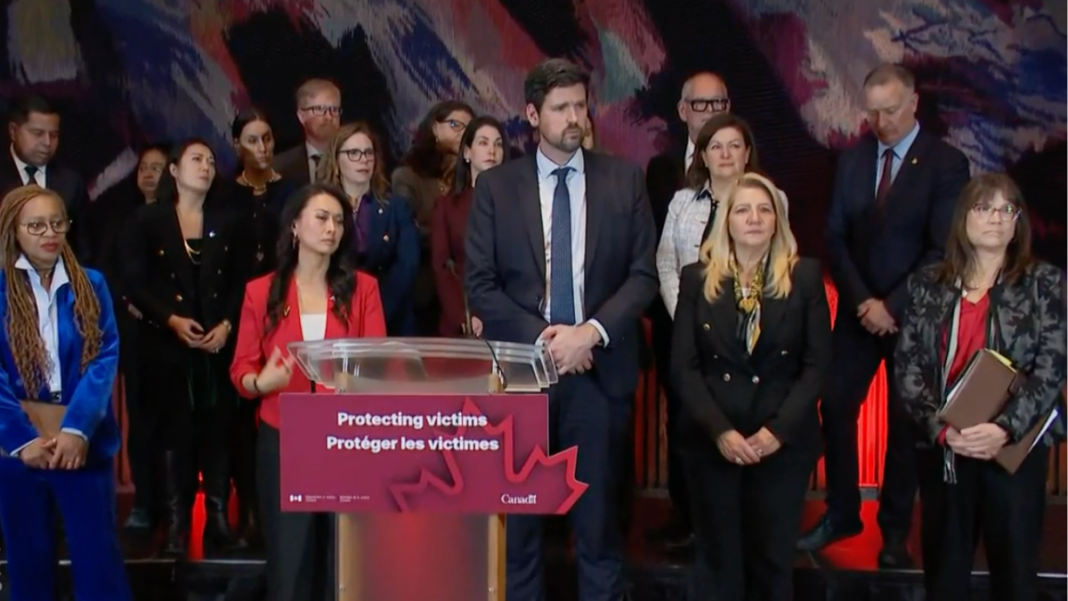
Canada’s Liberal government has secured passage of its politically debated anti-hate legislation, with the proposed Combating Hate Act (Bill C-9) clearing the House of Commons and now moving to the Senate for further scrutiny.
The bill introduces new Criminal Code offences, including provisions to criminalise the intentional promotion of hatred against identifiable groups in public, particularly through the use of symbols linked to hate or terrorist organisations.
Supporters say the legislation is a significant step toward strengthening community safety and curbing the public display of extremist imagery.

The legislation passed its final reading with the Bloc Québécois backing, while the Conservatives and the New Democratic Party opposed it.
Bloc support was secured after the government agreed to remove an existing religious exemption in Canada’s hate speech law, previously allowing certain expressions made in good faith on religious grounds.
Justice Minister Sean Fraser, who sponsored the bill, has defended the changes, stating the law is designed to target harmful conduct rather than restrict legitimate religious expression.
The move has been welcomed by sections of the Indo-Canadian and Jewish community, who have long called for stronger action against the glorification of extremist ideologies—including extremist Khalistan-linked elements—and attacks on places of worship.

The bill includes penalties for displaying symbols associated with Canada-banned terrorist organisations, such as Babbar Khalsa International and the International Sikh Youth Federation, as well as acts that incite hatred.
Supporters argue these measures will help deter radicalisation and improve safety for affected communities.
The legislation also draws attention internationally, with comparisons to laws in countries such as Australia, where displaying certain prohibited symbols—such as Nazi imagery—is already a criminal offence under federal law. However, some Indian diaspora groups are now urging the federal government to broaden inclusion of additional extremist symbols, including those linked to Khalistani extremism, within Australia’s legal framework.
While the Canadian bill still requires Senate approval before becoming law, its passage in the lower house marks a key milestone for the government’s agenda to modernise hate speech laws and address rising concerns around extremism.
Support our Journalism
No-nonsense journalism. No paywalls. Whether you’re in Australia, the UK, Canada, the USA, or India, you can support The Australia Today by taking a paid subscription via Patreon or donating via PayPal — and help keep honest, fearless journalism alive.
