
Dr Aditya Anshu
The current escalation involving Iran, Israel, and the United States is not just another distant war. For many of us living and working in the Gulf, it is a reminder that conflict now travels across borders, screens, and emotions, collapsing the distance between “here” and “there”.
In fact, the current escalation involving Iran, Israel, and the United States is not merely another chapter in the long history of Middle Eastern conflict. It is a profound moment of reckoning for the ideas that have shaped how scholars, policymakers, and ordinary citizens have understood world politics since the end of the Cold War.
For decades, liberalism promised that economic interdependence, diplomacy, institutions, and globalisation would make large-scale war irrational, costly, and therefore unlikely. Yet, once again, realism—with its emphasis on power, security, deterrence, and survival—has returned to dominate the international stage.
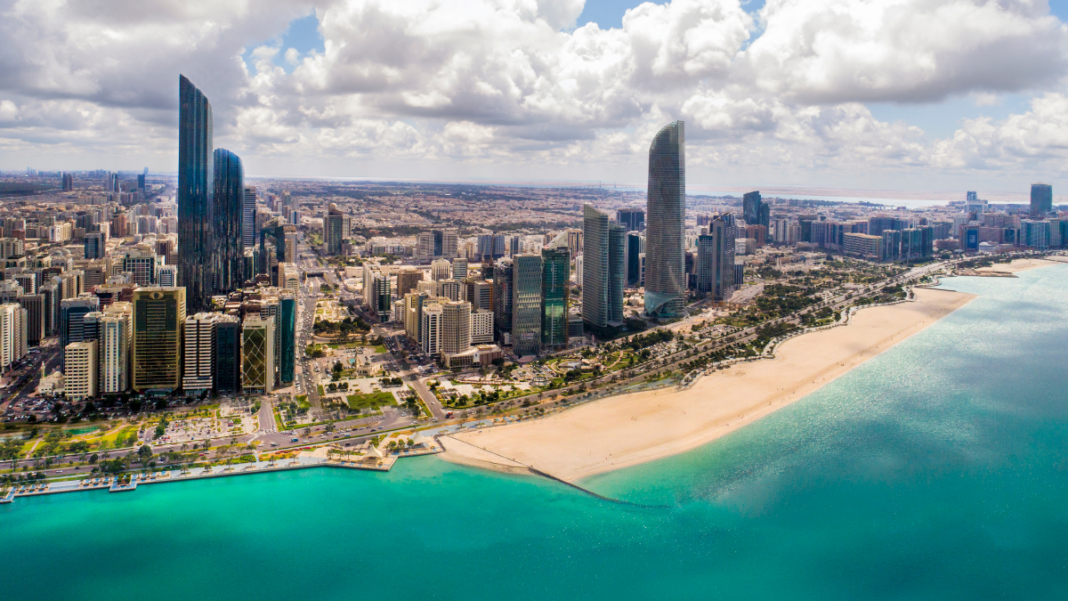
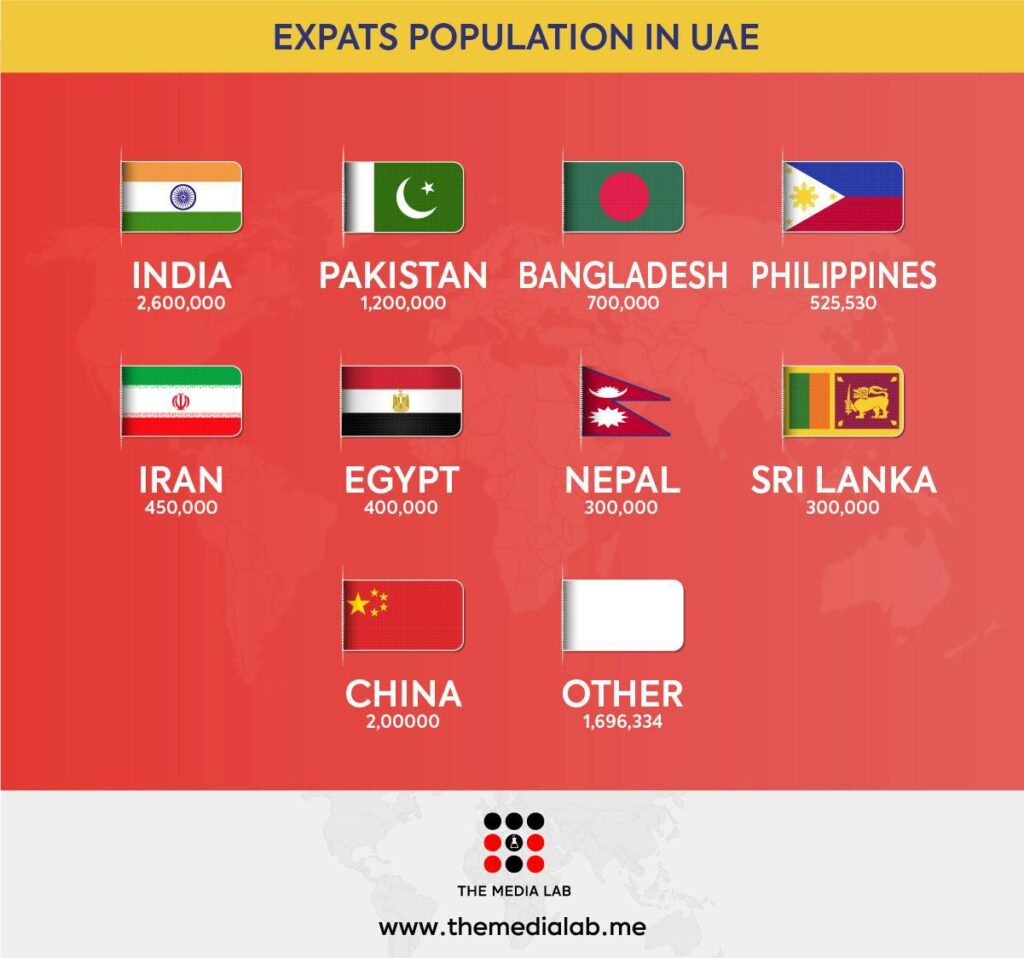
From Abu Dhabi, where I live and work, this crisis feels both distant and uncomfortably close. As an academic chairing a department of social sciences, I analyse wars through theories, frameworks, and historical comparisons. But as a migrant in the United Arab Emirates, I also experience these crises emotionally and personally, as someone who feels protected by the UAE state while simultaneously sharing the anxieties of millions of expatriates worried about families and friends back home.
This duality—safety here, fear there—is perhaps the defining experience of our generation.
Liberal Dreams, Realist Realities
Liberalism in international relations rests on three core pillars: economic interdependence reduces incentives for war; international institutions constrain aggressive behaviour; and the spread of norms and democracy fosters peaceful cooperation. For a time, these ideas appeared persuasive. Global trade expanded, multinational corporations flourished, and people-to-people connectivity grew through migration, tourism, and digital platforms. The world seemed smaller, more intertwined, and, at least in theory, more peaceful.
Yet the current confrontation between Iran, Israel, and the United States brutally exposes the limits of this liberal optimism. Sanctions regimes, diplomatic forums, and multilateral institutions have struggled to prevent escalation. Deterrence, coercion, proxy conflicts, and military signalling dominate the strategic landscape. States continue to prioritise survival and power over norms and institutions when they perceive existential threats.
This is realism in action: states do not fight because they misunderstand each other; they fight because they fear each other.
Iran’s actions, particularly its engagement with regional proxies and direct confrontations with neighbours, further complicate its position in the international system. Far from enhancing its security, such strategies risk deepening Iran’s isolation. Attacking neighbours, even indirectly, reinforces regional hostility and justifies tighter sanctions, diplomatic marginalisation, and strategic containment by rival powers. The paradox of realism is that actions taken in the name of security often generate greater insecurity.
Globalisation Under Fire
The current crisis also exposes how fragile globalisation truly is. We once believed that dense networks of trade, finance, energy supply chains, and labour mobility would make war too costly to sustain. Yet today, shipping routes are disrupted, airspace is closed, insurance premiums soar, and migrant workers worry about evacuation plans and economic uncertainty. The infrastructure of globalisation can be shaken overnight by missiles, drones, and geopolitical brinkmanship.
For my generation, war is not an abstract event confined to history books. We have witnessed, in rapid succession, conflicts across regions and continents—the India–Pakistan crisis in October, the devastating war in Sudan, and now the intensification of violence across the Middle East. Geography offers little comfort in an age of digital media, instant news, and transnational families. Conflict travels through screens into our homes, workplaces, and conversations.
Globalisation, it turns out, connects not only markets and cultures but also fear.
Ramadan in the Shadow of War
This year, Ramadan in the UAE felt different. Instead of purely “Ramadan vibes”—reflection, calm, charity, and spiritual renewal—there were also “war vibes”. Conversations in mosques, offices, and community gatherings frequently turned to airspace closures, regional security, and the safety of loved ones abroad.
Yet something powerful also emerged from this moment of collective anxiety: solidarity. In the UAE, expatriates from diverse nationalities—Indians, Arabs, Africans, Europeans, Southeast Asians—found themselves sharing the same unease and the same gratitude. Unease because conflict in the region inevitably generates uncertainty. Gratitude because the UAE state has consistently demonstrated a strong commitment to safety, stability, and the protection of residents, irrespective of nationality.
This sense of security is not accidental; it reflects deliberate statecraft, strategic diplomacy, and long-term investment in internal stability.
As a migrant, I feel protected here. As a scholar, I recognise this as an example of how state capacity and governance matter deeply in times of regional turmoil. The UAE’s approach stands in contrast to the instability engulfing parts of the region. It also shows that security is not only about military power but also about governance, trust, and social cohesion.
Theory Meets Lived Experience
Being the chair of a social sciences department allows me to interpret these events through both theoretical and practical lenses. Liberalism and realism are not merely abstract schools of thought; they are lived realities. Liberalism lives in our desire for peaceful cooperation, multicultural coexistence, and interconnected prosperity. Realism asserts itself when states mobilise, borders harden, and security concerns override moral commitments.
The current crisis challenges the comforting assumption that humanity is on a linear march towards peace. Instead, it reminds us that progress is fragile and reversible. Wars do not belong to “other regions” or “other generations”. They shape the mental landscapes of young people everywhere, creating a generation that has grown up with war as background noise—in South Asia, Africa, and the Middle East alike.
Iran’s Strategic Miscalculation
Iran’s regional posture deserves scrutiny. By intensifying confrontations with neighbours and engaging in proxy conflicts, Iran risks accelerating its diplomatic isolation. Even sympathetic states are wary of instability spilling across borders. In an interconnected region, security is relational: one state’s attempt to enhance its strategic depth can become another state’s existential threat. The likely outcome is not empowerment but encirclement—more sanctions, deeper mistrust, and greater external pressure.
From a realist perspective, Iran may calculate that confrontation strengthens deterrence. From a liberal perspective, such actions undermine the very conditions needed for reintegration into the global economy and diplomatic community. The tragedy is that ordinary citizens, not strategic elites, bear the heaviest costs of isolation.
What This Means for India and the Global South
For India and much of the Global South, these crises underscore uncomfortable truths. Strategic autonomy is increasingly difficult in a polarised world. Energy security, diaspora safety, and regional stability are directly affected by Middle Eastern volatility. Millions of Indian migrants in the Gulf experience these tensions not as geopolitical abstractions but as emotional realities, worrying about remittances, travel disruptions, and family security.
India’s own experience with regional conflict, particularly with Pakistan, reinforces how enduring rivalries can normalise crisis. When war becomes cyclical, societies adapt psychologically to instability. This normalisation is perhaps the most dangerous consequence of all: when conflict feels routine, urgency fades.
Beyond Theories: Choosing What Kind of World We Want
Liberalism is not dead, but it is wounded. Realism is not immoral, but it is incomplete. The current crisis teaches us that neither theory alone can capture the complexity of our world. Security without cooperation leads to endless cycles of fear. Cooperation without credible security collapses under pressure.
From Abu Dhabi, I see both the promise and the precarity of our interconnected world. I feel safe under the governance of the UAE, yet emotionally exposed to wars unfolding elsewhere. Like thousands of migrants, I inhabit multiple worlds at once—secure in one, vulnerable in another.
Our generation has inherited a world where war is no longer distant, globalisation is contested, and peace is fragile. The challenge before us is not merely to interpret these crises through theory but to ask a deeper question: what kind of international order do we want to build after the dust settles?
If we continue to privilege power without restraint, realism will harden into permanent conflict. If we cling to liberal ideals without confronting hard security realities, liberalism will remain a beautiful illusion. This is the human face of international relations in 2026.
Contributing Author: Dr Aditya Anshu is Chair of the Department of International Relations at Abu Dhabi University, United Arab Emirates.
Support our Journalism
No-nonsense journalism. No paywalls. Whether you’re in Australia, the UK, Canada, the USA, or India, you can support The Australia Today by taking a paid subscription via Patreon or donating via PayPal — and help keep honest, fearless journalism alive.
