


A sudden doubling of Australia’s key post-study work visa fee has left thousands of international graduates, including many from India, racing to find an extra $2,300 with little notice, while applicants from Pacific Island countries and Timor-Leste remain exempt under a new tiered pricing system.
The Temporary Graduate visa (subclass 485), widely used by international students to transition from study into Australian work, increased from $2,300 to $4,600 earlier this month.
The change arrived “overnight”, according to an honours science graduate who asked to be identified only as “Priya”, saying she had seen no public warning before the cost jumped.
Priya had planned to build experience in Australia’s agriculture sector before taking skills back to support her family’s organic farming business in India. Instead, she said the fee rise forced her to scramble for funds at short notice while also trying to manage a large student debt.
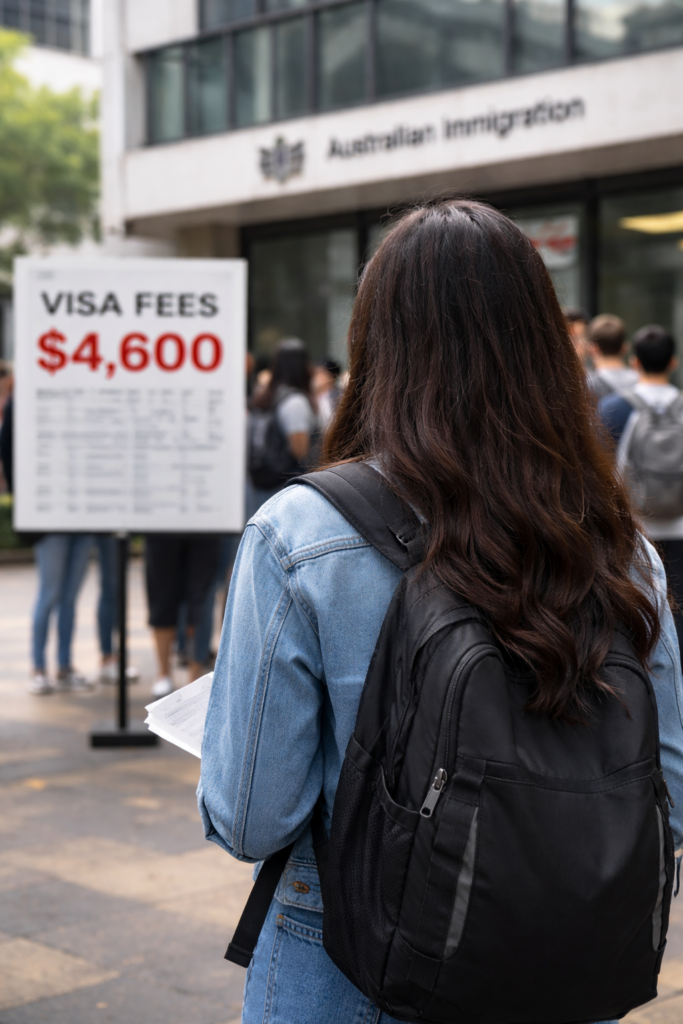
She said the pressure was affecting her mental health, and that she was considering taking work outside her chosen field simply to cover costs and remain lawful.
The fee hike lands heavily on Indian graduates, who make up one of Australia’s largest international student cohorts. The federal government’s India country brief said that as of August 2025, 137,703 Indian students were studying in Australia, about 17 per cent of the international student population, and that education is Australia’s largest services export to India.
International education overall remains a major export earner for Australia. ABS methodology notes education-related travel services exports reached $53.6 billion in 2024–25, capturing spending by onshore international students across tuition and living costs.
While the fee increase applies broadly, a separate and more controversial change has emerged: different applicants now face different charges based on their passports. Under the new settings, applicants holding passports from Timor-Leste and several Pacific nations, including Fiji, Papua New Guinea, Samoa, Vanuatu and Tonga, continue to pay the previous $2,300 charge.
A Home Affairs spokesperson told the ABC the exemption reflected Australia’s “special ties” with the Pacific and supported Canberra’s wider push to deepen engagement through education, workforce development and skills exchange. Similar discounts for Pacific nations were also introduced in 2025 for Student and Student Guardian visas.
But advocates warn tiered pricing could create a precedent for future discrimination — especially amid heated national debate over migration levels. Jamal Hakim, chair of racial justice group Democracy in Colour, said treating people differently based on passport raised “serious questions about fairness” and risked pricing out some communities.
University of Sydney immigration law specialist Mary Crock said Australia’s visa system already contains multiple forms of discrimination, from age-limited working holiday visas to qualification recognition, and that passport-based differentiation is “quite common”, particularly as trade arrangements quietly shape migration settings.
Education sector leaders have also criticised the way the change was implemented. International Education Association of Australia chief executive Phil Honeywood described the jump as inequitable for students nearing the end of their study visas, warning Australia was developing a reputation for pulling “the welcome mat” away.
He also argued rising visa charges risk deterring future students, noting Australia’s student visa fee is among the world’s highest.
The National Union of Students launched a petition calling for the fee rise to be reversed, with president Felix Hughes saying sudden “goalpost” shifts undermined confidence and made it harder for graduates to plan.
Home Affairs maintains the increase is unlikely to deter applications, arguing the Temporary Graduate visa still offers generous post-study work rights. But when asked whether tiered pricing could expand beyond the Pacific carve-out, the department did not provide assurances, leaving open questions about how far passport-based pricing might extend.
Support our Journalism
No-nonsense journalism. No paywalls. Whether you’re in Australia, the UK, Canada, the USA, or India, you can support The Australia Today by taking a paid subscription via Patreon or donating via PayPal — and help keep honest, fearless journalism alive.
