

Ishmam Rayan Haq
Every year, millions of Bangladeshis face devastating floods that threaten livelihoods, food security and long-term development. While local adaptation efforts are important, large-scale mitigation through regional cooperation and upstream water management is also critical for reducing vulnerability.
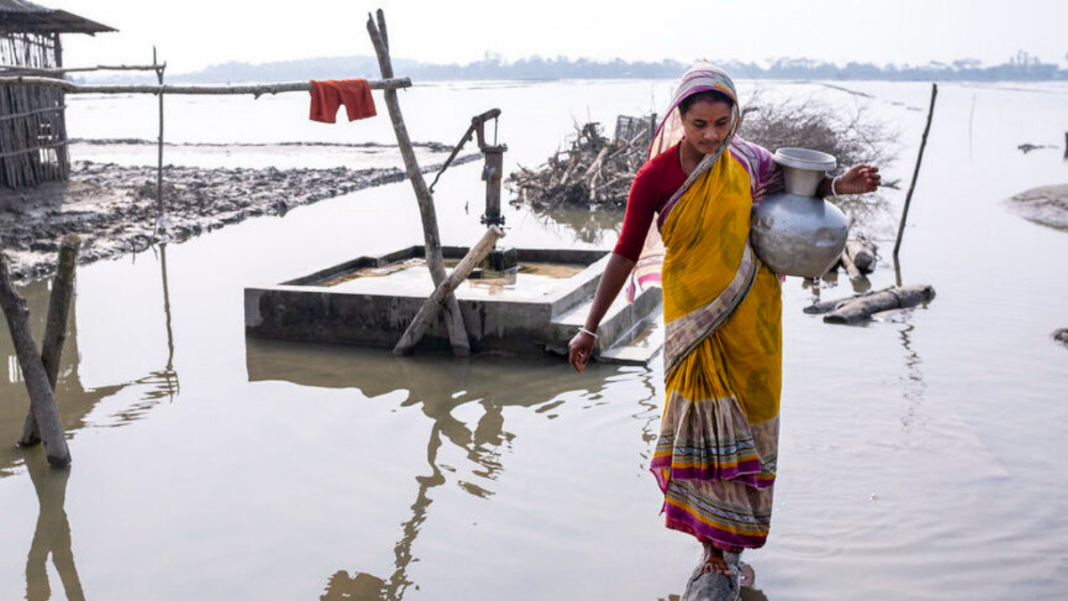
Bangladesh’s rivers are both a lifeline and a source of unrelenting hardship. Sudden changes in flow can disrupt irrigation and heavy monsoon rains often overwhelm peak river discharge, inundating vast cropland. For farmers relying on stable conditions for rice cultivation, these floods pose a persistent threat not only to household incomes but also to national food security.
The impact of floods goes beyond immediate losses. Repeated exposure traps communities in cycles of deprivation, particularly when institutional resources are stretched thin. Unanticipated weather shocks can erode savings, reduce access to productive assets, and force households to sell livestock or borrow at high interest rates. Because some areas are flooded more frequently than others, strategic investments in preparedness, infrastructure and adaptive capacity are essential for reducing long-term vulnerability.
Existing research helps explain these unequal experiences. A study by Dev Patel finds that prior flood exposure in Bangladesh is linked to improved individual efforts in damage mitigation, suggesting some adaptive learning over time. Yet the same study establishes a causal link between flood exposure and a prolonged decline in economic activity, with adverse effects persisting for more than half a decade. A 2022 study further ranked Bangladesh fourth among the ten countries where the largest numbers of people face both poverty and significant flood risk simultaneously. A recent cross-country study reinforces these findings, showing that floods significantly hinder economic activity, with local experience and adaptation helping low-income countries cope, while large projects like dams often do less to reduce losses than in richer countries.
Building on this evidence, I mapped flood exposure and its links to long-term deprivation using remote sensing (Figure 1). Satellite flood maps from the Global Flood Database for 2010-2018 were combined with sub-district (upazila) level deprivation data from NASA’s Gridded Relative Deprivation Index (GRDI). The GRDI maps multidimensional deprivation worldwide at a 1 kilometre resolution, combining satellite and sociodemographic inputs across six components — from built-up area ratios and child dependency to night lights and subnational human development. This approach elucidates spatial patterns that are otherwise difficult to capture through traditional surveys alone, which are often infrequent or geographically coarse.
Figure 1: Flood exposure and its links to long-term deprivation in Bangladesh, by sub-district

Source: NASA, The Global Flood Database.
The results are clear. Satellite data show that the northeast wetlands, major river channels and the southern coast are the most exposed to flooding in Bangladesh. Identifying these hotspots is critical for targeting resources, including flood shelters, early warning systems and crop insurance schemes. Interestingly, some upazilas maintain lower deprivation levels despite frequent flooding, illustrating how local adaptation and community-led initiatives can reduce vulnerability even under severe stress. These examples offer valuable lessons for designing policies that are responsive to local conditions.
The map highlights areas where flood exposure and relative deprivation overlap, revealing regions that are particularly vulnerable. This spatial perspective underscores the importance of a multidimensional lens, which captures hardships that income measures alone might miss. By considering living conditions, child dependency, health and education together, we can better understand the true impact of repeated floods. For example, households with young children may be disproportionately affected by flood-induced school closures or disruptions to healthcare. Recurrent environmental shocks compound these vulnerabilities, slowing recovery and limiting long-term development prospects.
With the withdrawal of the Demographic and Health Survey program following USAID’s aid cuts, there is a growing need for data in the absence of timely, nationally consistent updates. In this context, hybrid measures that integrate historical survey data with satellite observations offer a pragmatic, interim solution. While satellite-based indicators alone cannot accurately capture absolute poverty, their integration with survey-calibrated socioeconomic components allows policymakers to monitor relative deprivation and emerging spatial disparities when conventional data sources are unavailable. With the Bangladesh Bureau of Statistics and the United Nations now adopting remote-sensing approaches to overcome data constraints, more granular and timely evidence can support informed policymaking.
Flood exposure mapping provides policymakers with actionable insights. By identifying the most flood-prone and deprived areas, resources can be allocated more equitably and efficiently. Regions with high exposure but lower deprivation may serve as models for community-driven mitigation — through local flood committees, elevated storage facilities or emergency networks. At the same time, investments in flood-resilient infrastructure, guided by spatial data, can maximise impact, particularly in low-income regions where conventional engineering approaches are often costly or impractical.
As climate risks intensify, these insights can inform both local and national strategies to mitigate flood-driven poverty and deprivation. By complementing household surveys with satellite data, policymakers can monitor spatial disparities more frequently and respond more effectively to emerging risks. This integrated approach can help target interventions for communities that need them most, reducing the likelihood of chronic poverty cycles caused by repeated floods.
This article appeared first on Devpolicy Blog (devpolicy.org), from the Development Policy Centre at The Australian National University.
Contributing Author: Ishmam Rayan Haq is a Research Assistant at the Bangladesh Institute of Development Studies.
Support our Journalism
No-nonsense journalism. No paywalls. Whether you’re in Australia, the UK, Canada, the USA, or India, you can support The Australia Today by taking a paid subscription via Patreon or donating via PayPal — and help keep honest, fearless journalism alive.
