


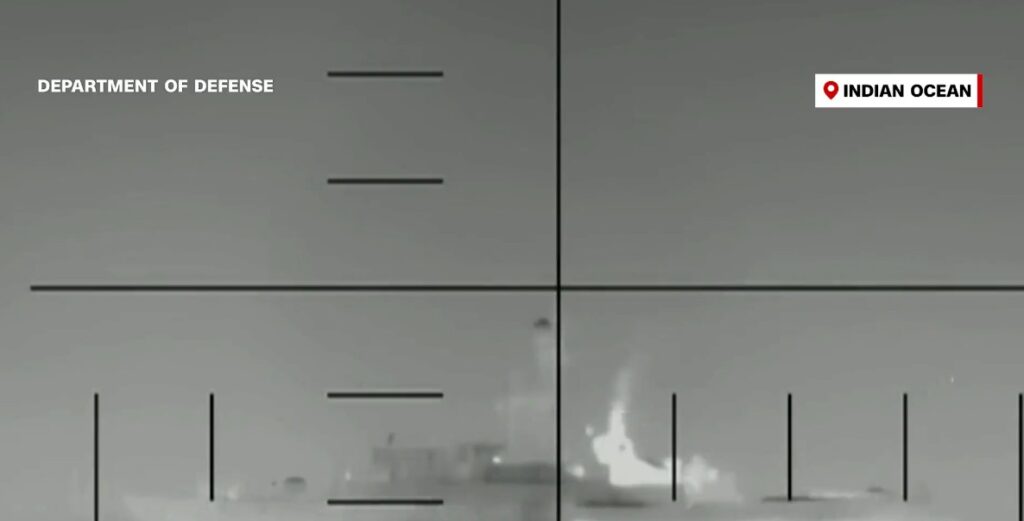
Prime Minister Anthony Albanese has confirmed that three Australian submariners were on board a United States submarine involved in the sinking of an Iranian vessel, as the government seeks to clarify Australia’s role in the escalating Middle East conflict.
Speaking to Kieran Gilbert on Sky News Australia, Albanese said the Australian Defence Force personnel were embedded with the US Navy under long-standing training arrangements but did not participate in any offensive action against Iran.
Albanese said it was unusual to publicly confirm such deployments, but the decision was made due to heightened public interest following meetings of the government’s National Security Committee.
“There were three Australian personnel on board that vessel.”
The Prime Minister added that embedded Australian personnel operate under Australian law and policy when serving alongside allied forces. He stressed that none of the Australians took part in combat operations against Iran.
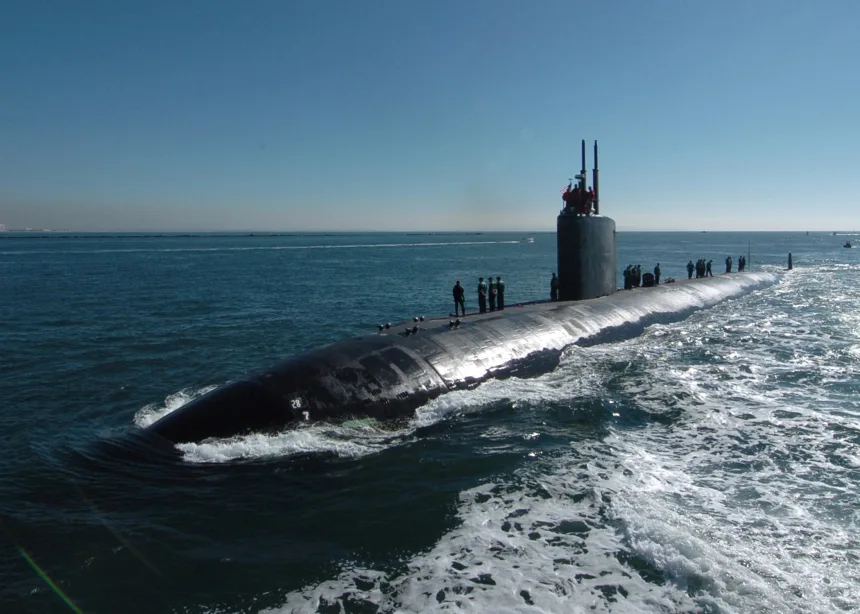
The presence of Australian submariners on US vessels forms part of training and integration programs linked to the AUKUS security pact, which will see Australia acquire nuclear-powered submarines from the United States and the United Kingdom. Albanese said the arrangements allow Australian sailors, engineers and technicians to gain experience across allied platforms, including nuclear-powered submarines.
The confirmation comes as tensions remain high following military strikes involving the United States and Israel against Iranian targets. Albanese reiterated his government’s strong criticism of Iran’s actions, accusing the regime of long-standing support for militant groups and repression at home.
He argued Iran posed multiple threats, citing its treatment of its own citizens, its alleged pursuit of nuclear weapons and its backing of regional proxy organisations including Hezbollah, Hamas and the Houthi movement.
The Prime Minister also pointed to past incidents on Australian soil linked to Iran’s Islamic Revolutionary Guard Corps, saying these had prompted the government to expel Iran’s ambassador and close Australia’s embassy in Tehran – an extraordinary diplomatic step not taken since the Second World War.
While critics, including the Australian Greens, have questioned the legality of recent strikes on Iran, Albanese said legal responsibility rested with the countries conducting the attacks.
“Our task is to be clear about Australia’s interests and the interests of global peace, security and prosperity.”
The government is also monitoring the potential economic fallout from the conflict, warning that prolonged instability could affect global supply chains and inflation. Albanese said Australia entered the crisis in a relatively strong economic position, pointing to low unemployment and stronger fuel reserves, but acknowledged the country would not be immune from global disruptions.
Another immediate priority is assisting Australians in the Middle East to return home safely. Albanese said the government hoped commercial flights would continue to operate from the region but had also put contingency plans in place if the security situation deteriorated.
The conflict has already caused disruptions at major Gulf airports, including in Dubai and Doha, making evacuation planning difficult as conditions change rapidly.
Beyond the immediate crisis, Albanese said Australia would continue strengthening ties with other middle powers, including Canada, Japan and South Korea, while maintaining traditional alliances with the United States and the United Kingdom. He said negotiations on a long-awaited free trade agreement with the European Union were also nearing completion.
Domestically, Albanese criticised the opposition’s performance during the first week of Liberal leadership under Angus Taylor, arguing the Coalition had failed to focus on major economic and international issues facing the country.
Support our Journalism
No-nonsense journalism. No paywalls. Whether you’re in Australia, the UK, Canada, the USA, or India, you can support The Australia Today by taking a paid subscription via Patreon or donating via PayPal — and help keep honest, fearless journalism alive.
