

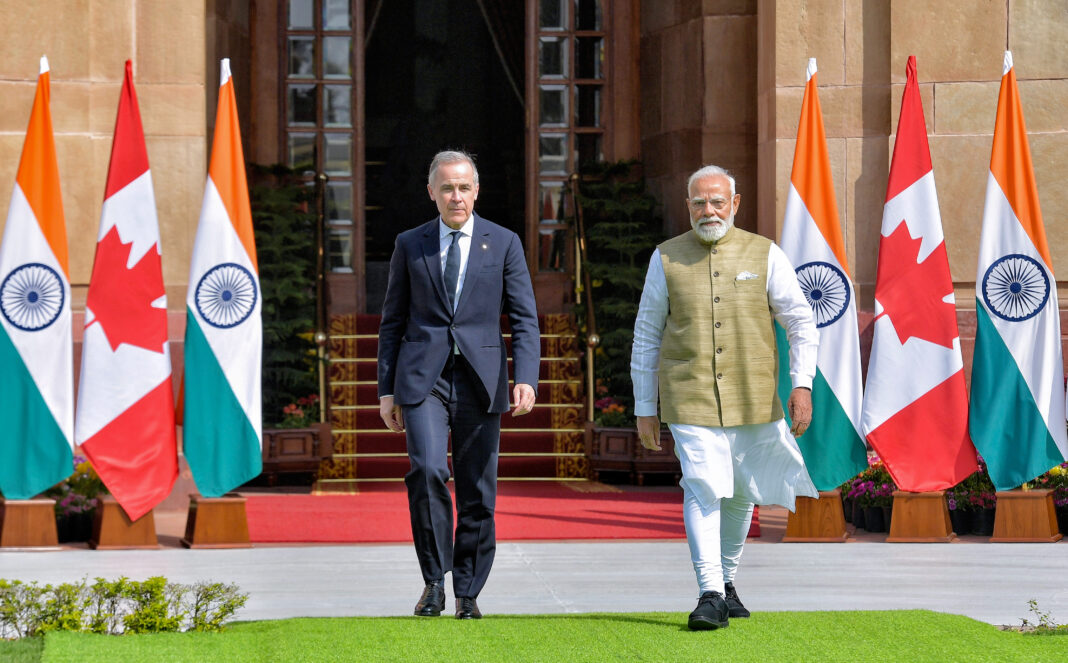
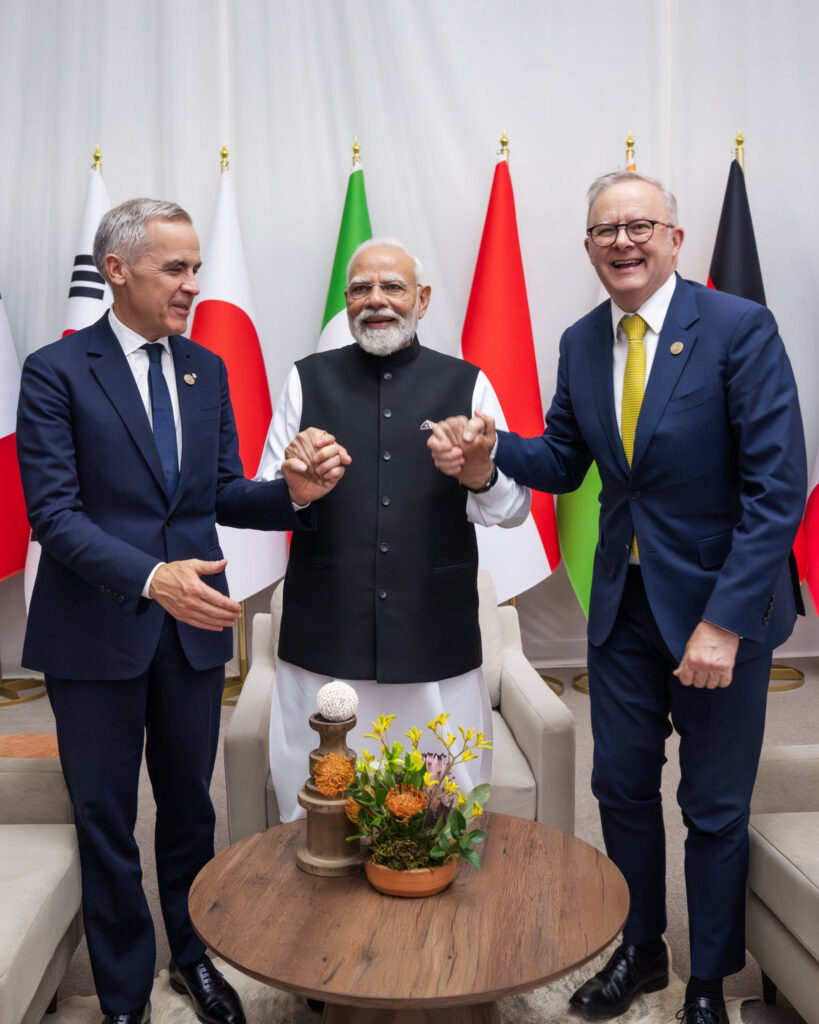
Canadian Prime Minister Mark Carney has departed India for Australia after a visit that produced a long-term uranium supply agreement, new cooperation on critical minerals and a renewed push to conclude a Comprehensive Economic Partnership Agreement (CEPA) by the end of 2026, steps both governments framed as a reset after the diplomatic rupture of 2023.
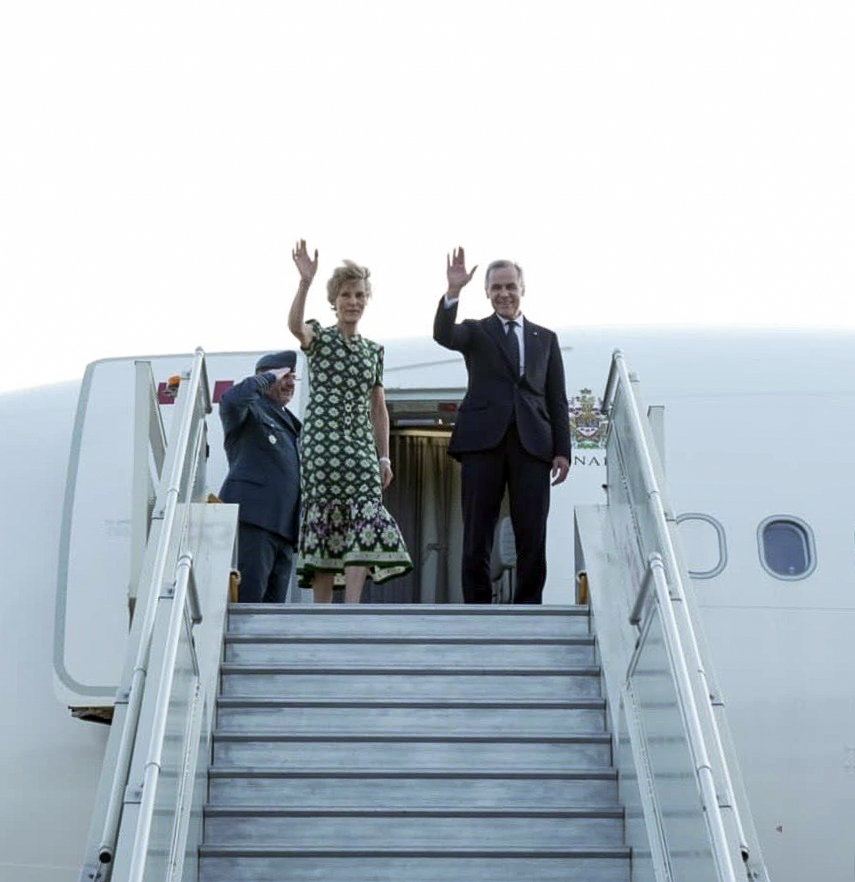
Carney was farewelled at the airport by India’s Minister of State for Commerce and Industry and for Electronics and Information Technology, Jitin Prasada. India’s Ministry of External Affairs said in a post on X that the visit had delivered “tangible outcomes” and put the relationship on a firmer footing with a forward agenda for India–Canada ties.
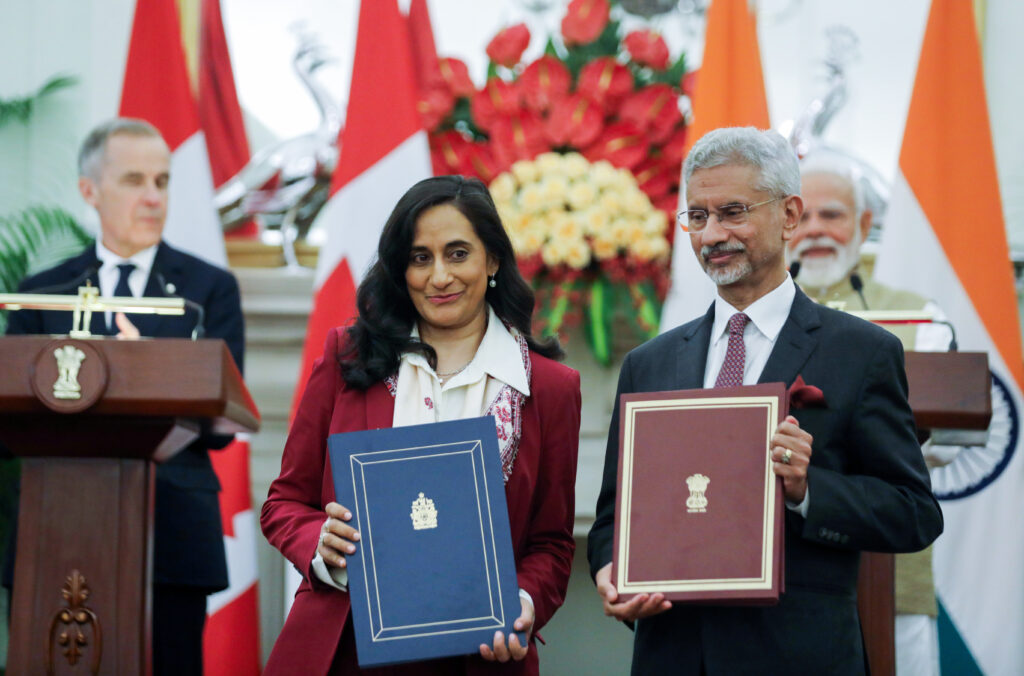
At the centre of the visit was a $2.6 billion long-term uranium supply arrangement intended to support India’s civil nuclear energy programme. Prime Minister Narendra Modi said the agreement would underpin nuclear cooperation and that the two countries would also work together on small modular reactors and advanced reactors. Carney said both countries viewed terrorism, extremism and radicalisation as shared challenges requiring close cooperation, describing them as threats not only to India and Canada but to global stability.
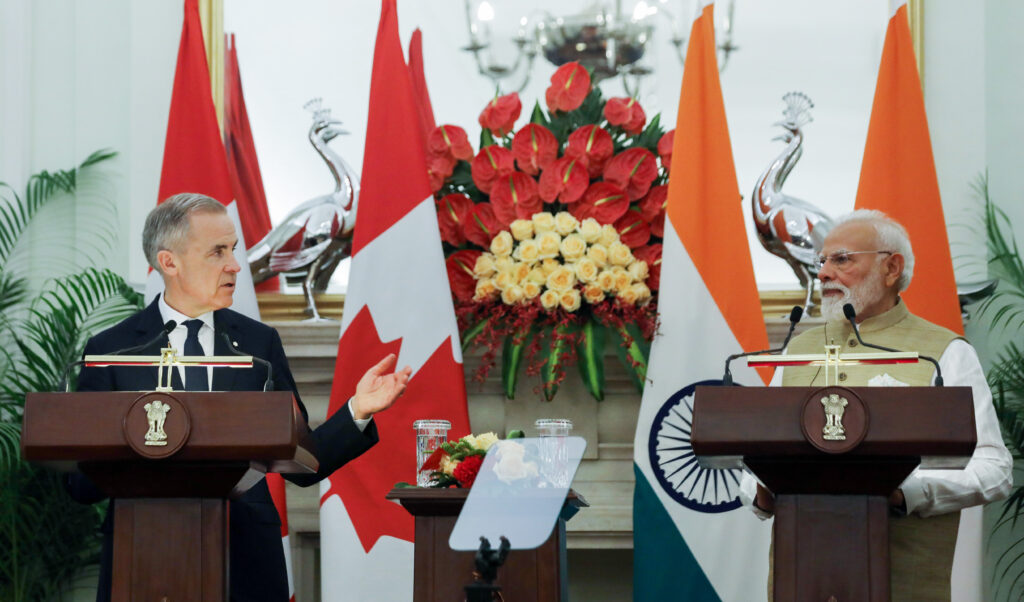
The Middle East conflict also featured in the leaders’ remarks. Modi said he was deeply concerned about the situation and reiterated India’s position that disputes should be resolved through dialogue and diplomacy, while flagging the safety of Indian citizens in the region as a priority amid an increasingly volatile security environment.
The visit’s economic agenda was built around a significant expansion target, with both sides committing to lift annual bilateral trade to $50 billion by 2030. Modi said the two countries had agreed to move quickly to finalise CEPA, describing the unlocking of economic potential as a priority. Indian officials later said the two sides had agreed on the terms of reference for negotiations and would move into detailed talks, with a broad deadline to conclude the agreement by the end of 2026.
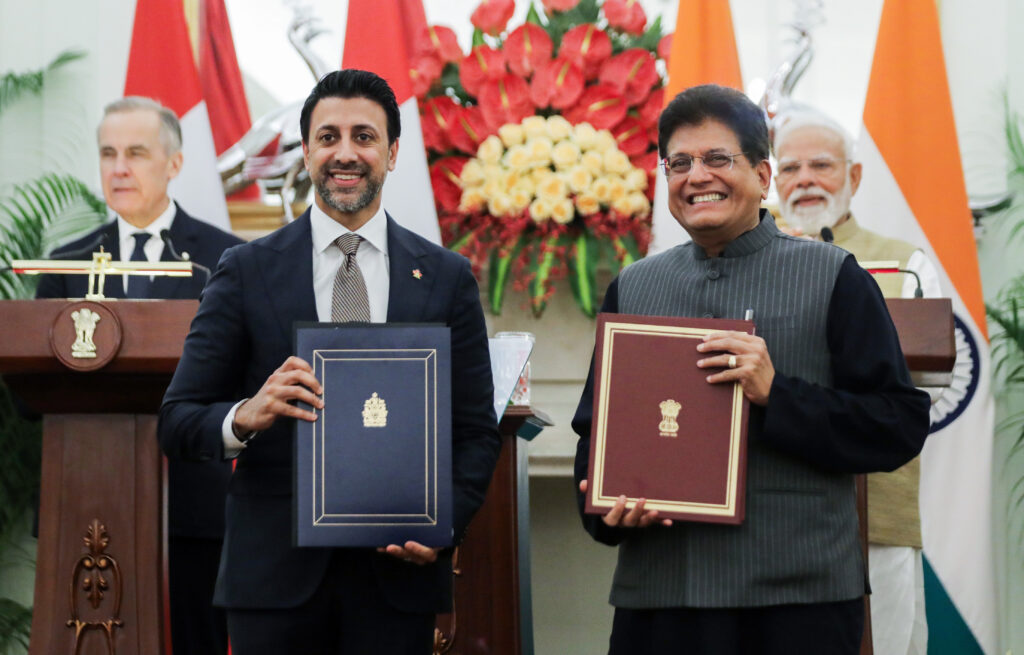
The move marks a shift away from a previously discussed “early progress” arrangement towards a full-scale deal covering trade in goods and services and other mutually agreed policy areas. Official figures cited in the material provided put bilateral trade at $8.66 billion in FY 2024–25, with India exporting $4.22 billion and importing $4.44 billion. Major Indian exports include pharmaceuticals, iron and steel, seafood, cotton garments, electronics and chemicals, while imports include pulses, coal, fertilisers and crude petroleum.
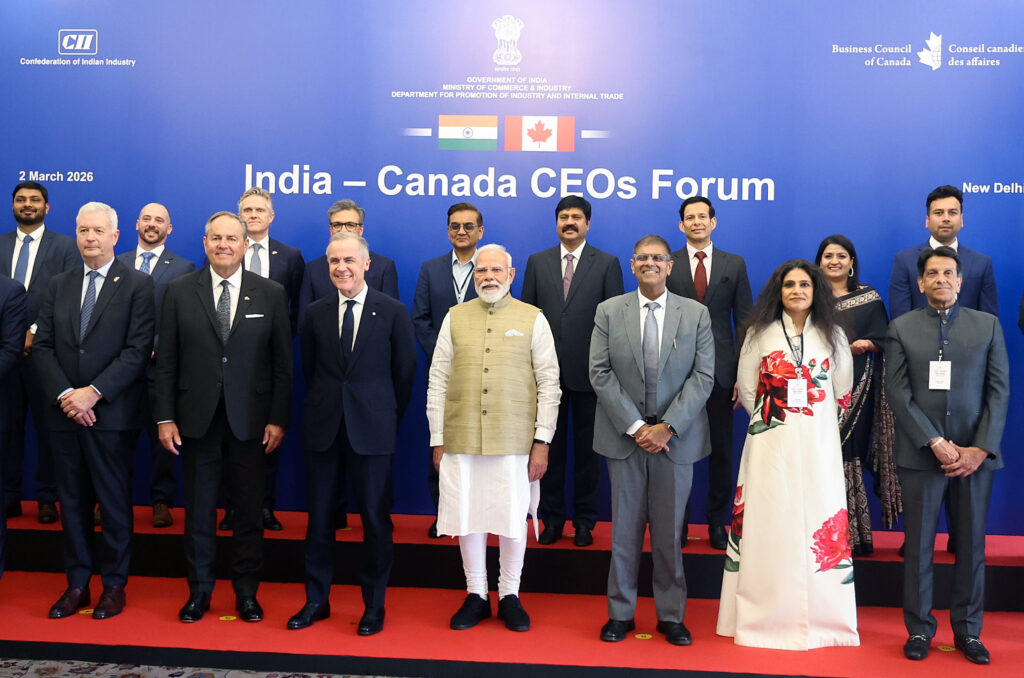
Officials also pointed to major investment links already in place, with Canadian pension funds said to have invested about $100 billion in India. Modi cited that figure as a marker of confidence in India’s growth trajectory, while Indian officials described India as accounting for about 30 per cent of Canadian pension fund investments across the Asia-Pacific region. During the visit, a reconstituted India–Canada CEO Forum met in New Delhi on March 2, and a new “economic and financial dialogue” was launched to support continued investment engagement and capital flows.
In addition to uranium, critical minerals emerged as a second pillar of the reset. A memorandum of understanding was announced covering cooperation in areas such as development, processing and supply chain resilience for minerals essential to clean energy, electric vehicles and advanced manufacturing. Both sides also discussed collaboration in wind, solar and hydrogen, and officials described a growing focus on next-generation sectors such as clean technology, fintech, cybersecurity, regenerative medicine, water infrastructure, advanced manufacturing and digital innovation.
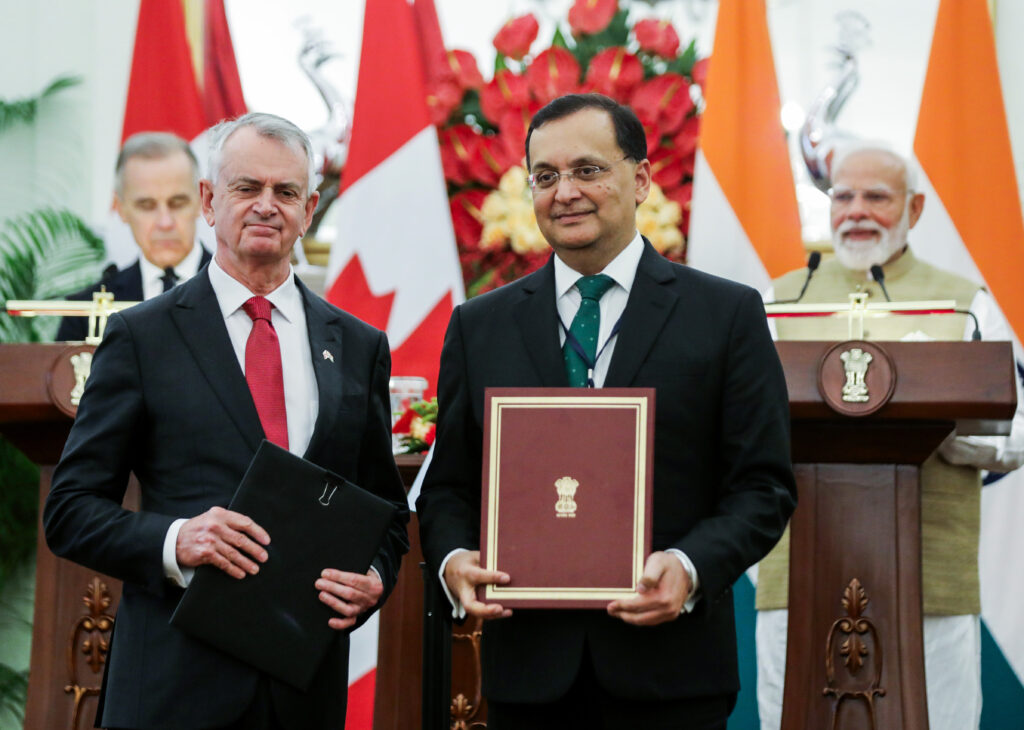
Defence cooperation was also expanded, with plans to establish an “India–Canada defence dialogue” aimed at maritime domain awareness and increased exchanges. Indian officials said sensitive security issues would be channelled into structured mechanisms, including a Joint Working Group on Counter-Terrorism, in an effort to keep economic engagement insulated from political shocks.
Education and research featured prominently in the visit’s messaging, with Modi pointing to Canadian universities opening campuses in India as part of deepening ties. Carney said Canadian institutions were launching new talent partnerships, including 13 new agreements in areas such as research and artificial intelligence centres of excellence. Separate announcements referenced a new AI Centre of Excellence in India linked to McGill, disclosed during a mission led by Universities Canada, and broader university-to-university agreements involving research, dual degrees, student exchanges and “two-plus-two” pathways.
Indian officials said the visit began in Mumbai with a business-oriented programme designed to catalyse investment and innovation linkages, before moving to formal talks in New Delhi. The trip was described as Carney’s first official visit to India since taking office and the first bilateral visit by a Canadian prime minister in eight years.
The agreements have already sparked political debate inside India. Opposition Congress MP Jairam Ramesh credited the new energy and nuclear cooperation to the 2008 Indo–US civil nuclear agreement pursued by then Prime Minister Manmohan Singh, arguing it ended India’s nuclear isolation and paved the way for subsequent arrangements, including Canada’s Nuclear Cooperation Agreement with India in 2010.
Ramesh also referenced the longer history of India–Canada nuclear ties, noting Canada’s role in supporting India’s heavy water reactor programme in earlier decades. That relationship froze after India’s 1974 nuclear test, which Canada said involved material linked to the Canadian-supplied CIRUS reactor, ending cooperation for years. The current agreement, he argued, represents an evolution from older large-reactor partnerships towards next-generation technology, including small modular reactors.
The uranium supply arrangement was described in the material provided as involving Canadian producer Cameco supplying nearly 22 million pounds of uranium concentrate over the next decade, supporting fuel security for India’s existing fleet of pressurised heavy water reactors.
The reset follows the low point of 2023, when relations deteriorated sharply. Indian officials said ties are now “way better” than during that period, with India’s High Commissioner Dinesh K. Patnaik and Canada’s High Commissioner Christopher Cooter having returned to their posts. Both sides have agreed to progressively restore diplomatic staffing levels towards those that existed before the 2023 downturn.
With Carney now travelling on to Australia, the visit leaves India and Canada with a stated timetable to conclude CEPA negotiations by the end of 2026, a trade target of $50 billion by 2030, and a package of energy, minerals, defence and education initiatives that both governments say are intended to move the relationship beyond episodic transactions and into deeper economic and strategic integration.
Support our Journalism
No-nonsense journalism. No paywalls. Whether you’re in Australia, the UK, Canada, the USA, or India, you can support The Australia Today by taking a paid subscription via Patreon or donating via PayPal — and help keep honest, fearless journalism alive.
