

The complexities and contradictions of implementing anti-corruption initiatives in a Pacific Island context were on full display in Suva this week.
Fiji’s principal anti-corruption body, the Fiji Independent Commission Against Corruption (FICAC), laid charges against Fijian and British national Charlie Charters, alleging two counts of aiding and abetting a whistleblower and the unlawful publication of official Commission information on Facebook between 2 November and 14 December 2025.
Notably, this development follows FICAC’s January 2025 recommendation to a parliamentary standing committee that a Whistleblower Protection Act be established, emphasising the need to shield informants, including civil servants, from retaliation.
Former journalist Charters was remanded in custody over the weekend before appearing in court on Monday (Feb 23), where he was granted bail. According to media reports, he said he declined an offer that would have required him to reveal the identity of a whistleblower in exchange for being able to proceed with a planned flight to Sydney.
Charters had previously reported on alleged improper appointments and malpractice within FICAC, which are accusations that remain contested.
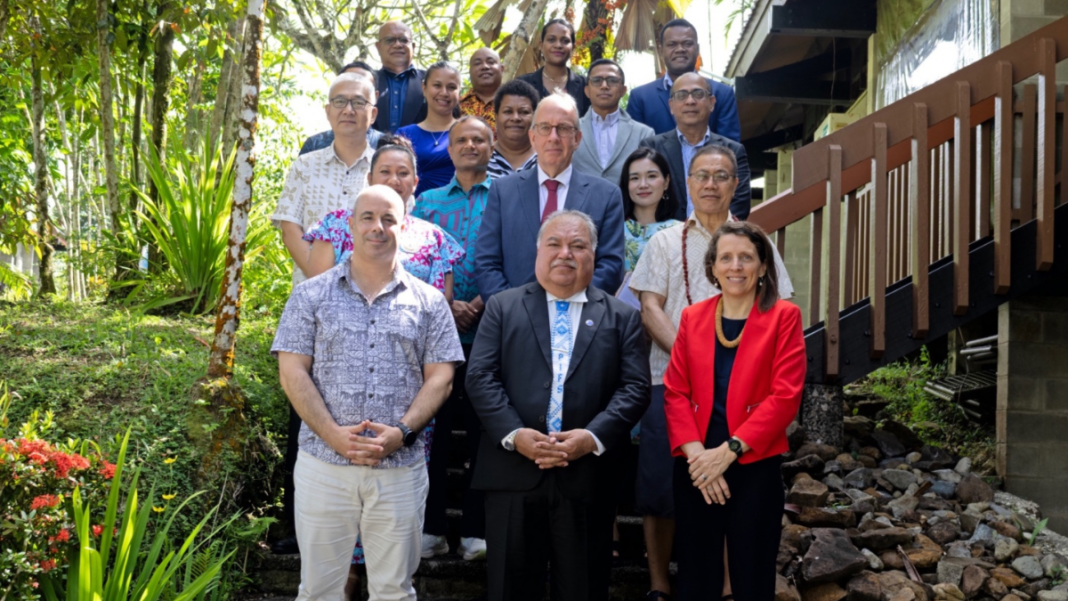
The Charters’ case coincides with two significant anti-corruption milestones this month: a sixth anniversary event for the Teieniwa Vision in Suva and the release of Transparency International’s 2025 Corruption Perceptions Index (CPI).
The CPI assesses 182 countries and territories and is widely regarded as a key global measure of perceived public sector corruption. And the Teieniwa Vision, adopted by Pacific leaders in 2020, explicitly supports whistleblowers, the right to information and the role of independent civil society and responsible media in anti-corruption efforts.
The charges against Charters have prompted discussion about the persistent gap in the Pacific between anti-corruption commitments and their practical delivery.
Taken together, the CPI report and the Teieniwa Vision anniversary call for reflection on the state of corruption in the Pacific and the effectiveness of current anti-corruption efforts.
At the anniversary event in Suva, co-hosted by the Pacific Islands Forum (PIF) and the United Nations Office on Drugs and Crime (UNODC), Kiribati President Taneti Maamau, in a message delivered on his behalf, recalled that the Vision arose from a “profound realisation” that corruption was “a rising tide threatening the very foundations of our sovereign nations”.
Such warnings by Maamau and others are arguably more urgent today than ever before. In addition to historic, pre-existing challenges, the Pacific now faces the growing danger of transnational crime networks and drug cartels, which thrive in regions with weak institutions and enforcement gaps.
This concern was raised during the high-level panel discussion marking the anniversary. The PIF Policy Adviser for Regional Security, Neumi Vakadewabuka, identified governance weaknesses as a key factor driving the expanding presence of organised and transnational crime syndicates in the region.
He noted recent regional surveys indicating that the integrity of immigration and customs systems, law enforcement agencies and broader governance structures across the Pacific is being significantly tested by these syndicates.
Vakadewabuka’s observations are reinforced by a series of major drug seizures across the region. Last month, Tahitian authorities intercepted a vessel carrying 96 bales of cocaine. On the same day, Fijian police seized more than 100 bags of suspected cocaine in Tavua, in the Western Division.

The head of the UNODC Pacific office, Marie Pegie Cauchois, agreed on the major threats posed by organised crime. “The UNODC continues to highlight that corruption creates the openings organised crime needs, while integrity is what closes those doors,” said Cauchois, also a panellist at the discussion.
“The strengthening of transparent institutions, border governance and oversight frameworks is therefore central to safeguarding the region.”
Against this backdrop of rising organised crime, the latest CPI findings take on a grimmer significance. The report notes that corruption remains a “serious threat in every part of the world” and that any signs of progress are “limited”.
However, data indicate that corruption is especially pervasive in developing regions such as the Pacific, where, as the Teieniwa Vision underscores, the impact is felt most acutely among vulnerable groups.
The CPI scores countries on a scale of 0 (highly corrupt) to 100 (very clean). The lowest-scoring Pacific Island country was Papua New Guinea at 26 points — an alarming 19 points below the Asia-Pacific average. Vanuatu scored 47, Solomon Islands 44 and Fiji 55, indicating little movement in recent years.
While the Teieniwa Vision’s anti-corruption strategy reflects the right intent — stronger practices, adoption of UN frameworks and adherence to the rule of law — the challenge lies in sustained commitment and implementation.
Despite the Vision’s support for the right to information and protection for genuine whistleblowers, hardly any Pacific Island countries have enacted such legislation. These implementation gaps reinforce the CPI’s call for Pacific leaders to move beyond declarations and give priority to meaningful anti-corruption action.
There is also a strong moral obligation to take action. Corruption disproportionately harms vulnerable populations, including women, persons with disabilities, youth and the elderly, as the Teieniwa Vision clearly recognises.
One in four people in the Pacific lives in poverty, including one in six children under five experiencing severe child food poverty, leaving them vulnerable to wasting and life-threatening malnutrition.
In Fiji, poverty and social breakdown also frame Fiji’s HIV epidemic, which is being attributed to spiralling drug use. A 10-year-old is reported as the youngest person living with HIV and a nine-year-old is the youngest reported drug user.
The onus to act, as the Teieniwa Vision emphasises, rests largely with leadership, particularly cabinets, parliamentarians and public servants. This was a key theme in the address by PIF Secretary General Baron Waqa at the commemoration event.
Waqa called for ethical leadership to foster a culture in which corruption cannot take root, stressing that this is central to achieving the 2050 Strategy for the Blue Pacific Continent.
In this regard, Cauchois noted that regional leaders’ willingness to acknowledge corruption and commit to reform represents a significant step forward. During the panel discussion, she highlighted that Kiribati, Tonga, Fiji, Nauru and Palau are among the countries that have strengthened governance, transparency and accountability systems in recent years.
Corruption is a massive and complex problem that is difficult to eradicate. But anti-corruption efforts are worth the investment, given that the world’s most prosperous and progressive countries are also among the least corrupt. This includes the Pacific’s larger neighbours, Australia and New Zealand, which consistently rank highly in the CPI and other integrity measures.
If they can do it, why can’t the Pacific?
That question is critical. Indicators suggest that corruption in Fiji might be reaching a tipping point. Just this week, the Fiji Military Force warned that without strengthening institutional integrity, the country risks becoming a semi-narcostate within the next three to five years. The message is unambiguous: we must drown corruption before we can dream of an ocean of peace and prosperity, let alone portray ourselves as a model to the world.
This article is drawn from the writer’s presentation at the high-level panel discussion marking the sixth anniversary of the Teieniwa Vision. The views expressed are solely his own.
This article appeared first on Devpolicy Blog (devpolicy.org), from the Development Policy Centre at The Australian National University.
Contributing Author: Shailendra B. Singh is Associate Professor of Pacific Journalism at The University of the South Pacific, based in Suva, Fiji, and a member of the advisory board of the Pacific Journalism Review.
Support our Journalism
No-nonsense journalism. No paywalls. Whether you’re in Australia, the UK, Canada, the USA, or India, you can support The Australia Today by taking a paid subscription via Patreon or donating via PayPal — and help keep honest, fearless journalism alive.
