

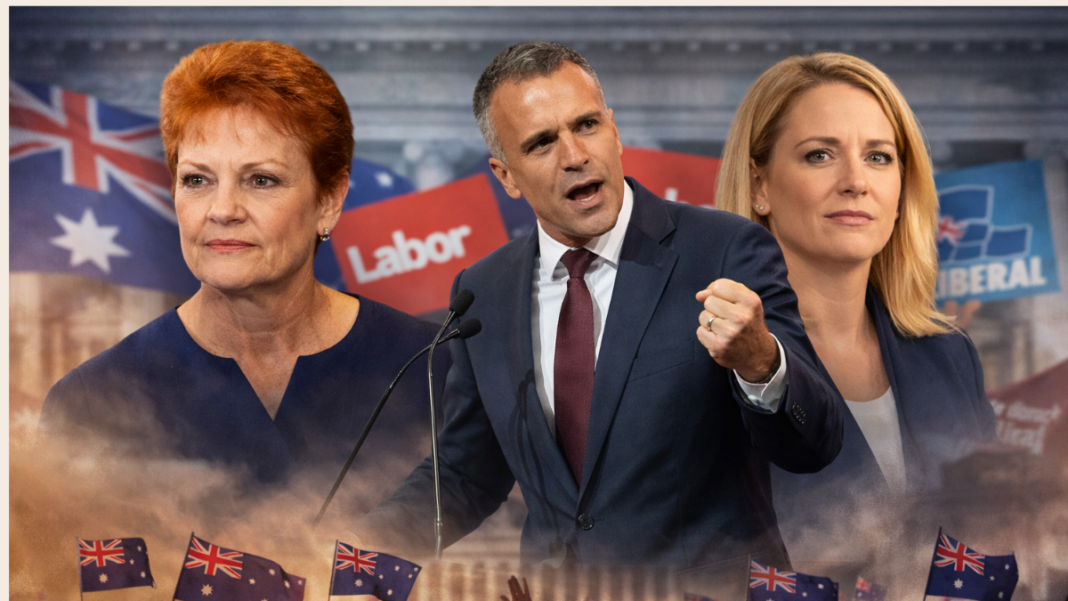
South Australia’s upcoming state election is shaping up to be more competitive than early expectations suggested, with preference negotiations and a surge in support for One Nation complicating Labor’s path to a straightforward victory.
The SA Liberal Party has indicated it may direct preferences to One Nation ahead of Labor and the Greens in certain seats, arguing its priority is to maximise the number of “centre-right” representatives elected to parliament. The signal, delivered via a public statement from party officials, stops short of confirming a formal deal but leaves open the possibility of tactical cooperation through how-to-vote recommendations.
The move comes amid heightened political tension after One Nation claimed Premier Peter Malinauskas had suggested both major parties would place the minor party last on preference cards. Liberal officials rejected that assertion, saying no such agreement existed and that discussions around preferences were part of the normal election process.
The potential reshuffle of preferences has intensified scrutiny on what had initially appeared to be a relatively stable electoral landscape for Labor. While the government remains ahead in primary vote polling, recent surveys indicate a significant rise in support for One Nation, with the minor party polling strongly enough to overtake the Liberals in some measures of primary support.
If those numbers translate on election day, it could dramatically alter the distribution of preferences in marginal seats. In South Australia’s preferential voting system, minor party flows can be decisive — particularly in tight contests where neither major party secures a clear majority on first preferences.
One Nation has announced plans to contest all 47 lower house seats, positioning itself as a statewide challenger rather than a fringe player. That strategy, combined with its current polling momentum, has unsettled traditional two-party dynamics.
Liberal leader Ashton Hurn has declined to rule out preference arrangements with any party, describing discussions as standard during election campaigns. Labor, meanwhile, has reiterated it will not enter into any preference deal with One Nation.
The evolving landscape has also sparked speculation within conservative ranks after images surfaced of federal Liberal senator Alex Antic meeting publicly with prominent One Nation figures. While no formal political shift has been confirmed, the optics have added to perceptions of ideological realignment within parts of the right.
Political analysts suggest the key question is not whether Labor remains competitive — it does — but whether a consolidated conservative preference strategy could narrow the gap in enough seats to deny Labor an easy majority.
With polling volatility, rising minor party support and preference negotiations now central to the contest, the March election is increasingly being viewed as a test of how resilient South Australia’s two-party dominance remains.
Rather than a foregone conclusion, the result may hinge on how effectively preferences flow in key electorates — and whether One Nation’s surge reshapes the balance of power in the state.
Support our Journalism
No-nonsense journalism. No paywalls. Whether you’re in Australia, the UK, Canada, the USA, or India, you can support The Australia Today by taking a paid subscription via Patreon or donating via PayPal — and help keep honest, fearless journalism alive.
