

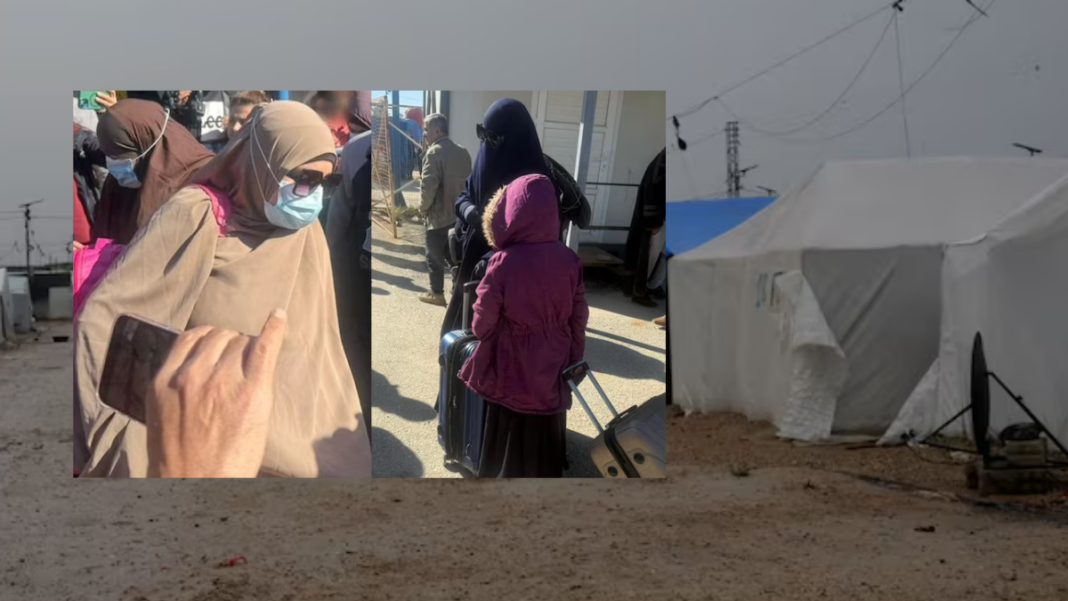
A group of Australian women linked to Islamic State fighters and their children have been ordered back to detention in Syria after attempting to leave the Al Roj camp for Damascus, despite being issued Australian passports, reigniting fierce political debate and national security concerns over their potential return.
The group, confirmed to include 11 families with 34 women and children, had departed the Al Roj detention camp in north-eastern Syria under Kurdish escort and were en route to Damascus, where they planned to finalise arrangements to travel back to Australia.
However, Syrian authorities intercepted the convoy before it reached the capital and forced them to return to the camp, halting what could have been one of the most controversial returns of former ISIS-linked individuals to Australia.
The women, widely described as “ISIS brides,” travelled to Syria and Iraq during the height of the Islamic State’s brutal reign, often marrying or accompanying fighters associated with the terrorist group. Their children, many born in conflict zones, have spent their entire lives in detention camps following ISIS’s collapse in 2019.
Passports issued despite extremist links
The incident has triggered alarm after it emerged that Australian passports had already been issued to the group, raising questions about how individuals associated with a designated terrorist organisation could legally re-enter Australia.
It remains unclear whether the passports had been physically collected or were awaiting pickup in Damascus. Kurdish authorities had reportedly released the group into the custody of relatives who travelled to Syria to facilitate their departure, before Syrian officials intervened and sent them back to detention for unspecified “technical reasons.”
Under Australian law, citizens cannot be denied entry into the country, even if they have previously been associated with extremist organisations. However, the issuing of passports and the prospect of return have intensified scrutiny of the Albanese government’s handling of ISIS-linked Australians.
Government allows return but refuses to assist
The Albanese government has maintained its policy of allowing ISIS-linked Australians to return by private means but has refused to organise repatriation flights.
Environment Minister Murray Watt confirmed during Senate estimates hearings that the government would continue its approach of permitting returns but would not directly facilitate their extraction from Syrian detention camps.
This policy has been criticised as inconsistent — allowing individuals to return while avoiding direct responsibility for managing the process.
Government officials have repeatedly stated that any returning individuals could face investigation, surveillance or prosecution if evidence exists linking them to terrorist activity.
Opposition warns of national security risks
Opposition figures have strongly condemned the government’s handling of the situation, warning that allowing former ISIS affiliates to return poses serious national security risks.
Shadow Home Affairs spokesperson Senator Jonathon Duniam described the situation as deeply concerning, arguing the government had failed to provide adequate transparency and safeguards.
Critics within the Coalition have warned that individuals radicalised in ISIS-controlled territory may still pose ideological or security threats, even years after the group’s territorial defeat.
Security analysts have also pointed out that ISIS camps have been described as incubators for ongoing extremist ideology, raising fears about the long-term risks posed by returnees.
Political and public backlash grows
The issue has become increasingly politically charged, particularly following previous cases where ISIS-linked Australian women returned home.
In September, two Australian women and four children linked to ISIS fighters returned after travelling via Lebanon. While authorities conducted identity and security checks, their return triggered widespread public concern and criticism.
Opposition politicians have argued that the government’s current hands-off approach risks creating gaps in security oversight and accountability.
Some have also questioned whether Australia is equipped to monitor and manage individuals who may have been exposed to extremist ideology for years.
Camps remain breeding grounds for extremist networks
Detention camps such as Al Roj and Al Hol, run by Kurdish authorities, hold thousands of women and children connected to ISIS fighters from around the world.
Security agencies and international observers have warned that the camps remain volatile environments where extremist ideology continues to circulate, particularly among hardened ISIS supporters.
Reports have documented cases of radicalisation, indoctrination of children, and ongoing extremist activity within the camps.
For many governments, including Australia, the challenge lies in balancing legal obligations to citizens with the need to protect national security.
Uncertain future as political pressure intensifies
The group remains detained at Al Roj camp, with no confirmed timeline for when or whether they will be able to leave Syria.
The episode has intensified political pressure on the Albanese government to clarify its position and explain how it plans to manage the return of Australians linked to one of the world’s most dangerous terrorist organisations.
With passports already issued and legal barriers preventing the government from blocking their return outright, the question is no longer whether these former ISIS-linked Australians can come home — but when, and under what level of scrutiny and control.
Support our Journalism
No-nonsense journalism. No paywalls. Whether you’re in Australia, the UK, Canada, the USA, or India, you can support The Australia Today by taking a paid subscription via Patreon or donating via PayPal — and help keep honest, fearless journalism alive.
