

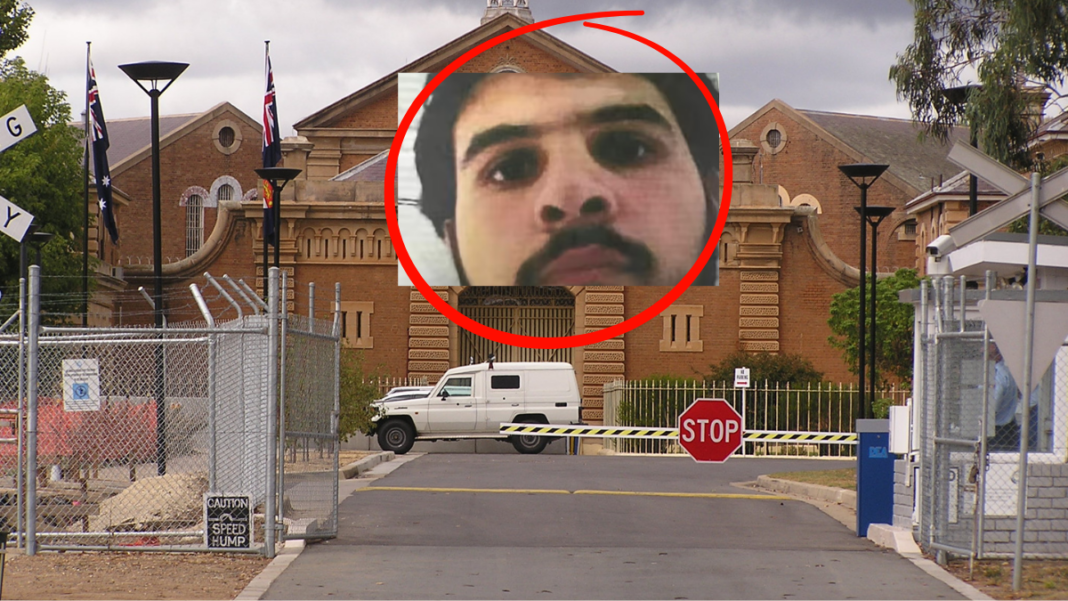
The man accused of carrying out one of Australia’s deadliest mass shootings has spoken publicly for the first time since his arrest, appearing via video link in a Sydney court as suppression orders protecting survivors and victims were extended.
Naveed Akram, 24, appeared before the Downing Centre Local Court in Sydney on Monday, facing 59 charges, including 15 counts of murder and one count of committing a terrorist act over the alleged attack at a Chanukah celebration at Bondi Beach on December 14, 2025.
The attack, which occurred during the “Chanukah by the Sea” event at Archer Park, left 15 people dead and dozens more injured in what authorities have described as a mass-casualty terrorist incident targeting members of the Jewish community.
Accused speaks briefly from supermax prison
Akram appeared via audiovisual link from the High Risk Management Correctional Centre in Goulburn, Australia’s most secure prison facility. He was dressed in a green prison-issued jumper, with closely shaved hair and a short beard, and remained largely silent throughout proceedings.
Deputy Chief Magistrate Sharon Freund asked Akram whether he understood discussions relating to the extension of suppression orders protecting the identities of victims and survivors.
“Yeah,” Akram replied briefly.
The suppression orders, first imposed shortly before Christmas, were extended to allow survivors and victims’ families to choose whether and when to publicly identify themselves, reflecting ongoing trauma and sensitivity surrounding the case.
Australia’s deadliest mass shooting in nearly three decades
Police allege Akram and his father, Sajid Akram, 50, carried out a coordinated terrorist attack at the beachside celebration, which marked the Jewish Festival of Lights.
According to court documents, the pair allegedly parked near a footbridge along Campbell Parade before throwing improvised explosive devices, including pipe bombs filled with steel ball bearings, into the crowd. None of the devices detonated.
Investigators allege the attackers then opened fire, shooting 55 people. Fifteen victims died, including a 10-year-old girl, Holocaust survivors and a retired police officer.
Sajid Akram was shot and killed by police at the scene during the emergency response.
Authorities say the incident represents Australia’s deadliest mass shooting since the Port Arthur massacre in Tasmania in 1996, which led to sweeping national gun law reforms.
Alleged extremist motivations under investigation
Police allege evidence recovered from Naveed Akram’s phone included videos showing him and his father standing in front of an Islamic State flag, making statements expressing extremist ideology and criticising “Zionists”.
Investigators also claim two hand-painted ISIS flags were found inside the pair’s vehicle, along with another explosive device in the boot.
Court documents further allege the pair undertook firearms training in regional New South Wales in the weeks leading up to the attack.
Authorities say counter-terrorism investigators continue to analyse digital evidence, including communications, videos and online activity, to determine the extent of planning and motivation.
Legal process still in early stages
Akram’s solicitor, Ben Archbold of Legal Aid NSW, told the media it was too early to indicate what plea his client would enter, confirming he had not yet received the full brief of evidence.
Mr Archbold described conditions at the Goulburn supermax facility as “very onerous” and said his client was “doing as well as can be expected” given the circumstances.
He declined to comment on whether Akram had participated in police interviews, stating that the legal process was ongoing.
Community impact and national response
The Bondi Beach attack sent shockwaves across Australia and internationally, triggering widespread condemnation and heightened security measures around religious institutions, public gatherings and major events.
Community leaders and government officials described the attack as an act of terror aimed at intimidating and targeting Australians based on religion.
Police and intelligence agencies continue to investigate potential links, support networks and any broader extremist connections.
Akram remains in custody and is expected to return to court later this year as the case progresses toward committal proceedings.
If convicted, he faces the possibility of life imprisonment.
Support our Journalism
No-nonsense journalism. No paywalls. Whether you’re in Australia, the UK, Canada, the USA, or India, you can support The Australia Today by taking a paid subscription via Patreon or donating via PayPal — and help keep honest, fearless journalism alive.
