
Amarjeet Verma
Pew Research’s January 2026 survey on President Donald Trump’s declining popularity is not just another data drop in America’s endless polling culture. It is a diagnostic report on a deeper political fatigue, one that extends beyond Trump himself and speaks to the limits of disruption as a governing style, both in the U.S. and worldwide.
On paper, the headline numbers are stark. Trump’s approval rating has slipped to 37%. Only 27% of Americans now support all or most of his policies, down sharply from the last year. Interestingly, this erosion is not driven by Democrats- whose opposition was always baked in- but by Republicans themselves. Confidence among his own base has softened across leadership, ethics, democratic values and even basic fitness to govern. That is the real story. When your core believers start doubting the sermon, something structural is going wrong.
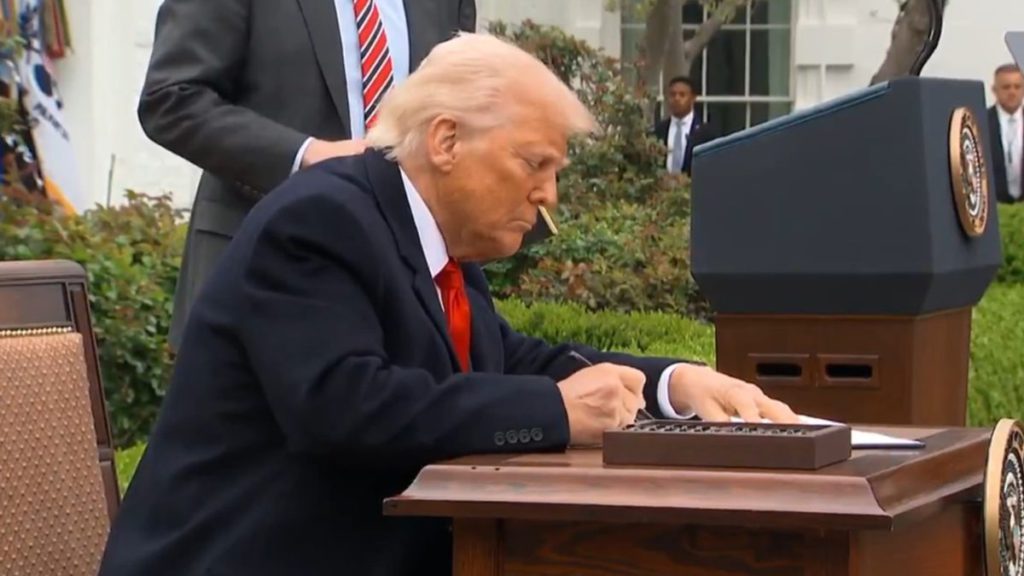
Trump’s political strength has always rested on disruption. In his first term, chaos was new, even entertaining to supporters who saw it as a wrecking ball against entrenched elites. In his second term, the same chaos reads less like rebellion and more like repetition. Pew’s finding that half of Americans believe Trump’s actions have been “worse than expected” points to a simple truth: shock value has a short shelf life.
Globally, we have seen this pattern before. From UK’s Boris Johnson to Brazil’s Jair Bolsonaro, populist leaders often peak early on the promise of radical change, then decline when disruption fails to translate into institutional competence. Governing is boring by design- systematic, incremental and sluggish. Trump’s style resists that reality, and voters, including Republicans, appear increasingly aware of the cost.
The most damaging data point in the Pew report’s finding is ethical confidence – only 21% of Americans believe Trump acts ethically in office, with a steep decline even among Republicans. This matters more than partisan theatrics. Democracies don’t collapse because people disagree; they weaken when trust in institutions erodes.
In a global context, this is a red flag. The U.S. has long projected itself as a benchmark democracy, imperfect but norm-driven. When large segments of its own population doubt their president’s commitment to democratic values, America’s moral authority abroad shrinks. Allies recalibrate. Adversaries exploit. The decline in confidence that Trump “respects democratic values” is not just a domestic concern- it’s a geopolitical signal.
Another revealing trend is the drop-in support for Trump’s policies, again driven entirely by Republicans. This suggests less ideological conversion and more disappointment with outcomes. Executive orders, aggressive tariffs, symbolic hardlines—these generate headlines but not always durable results.
Globally, voters are becoming more transactional. They ask: Is my life better? Is inflation under control? Is the system stable? Trump’s policy messaging often prioritizes dominance and spectacle over coherence. Pew’s numbers imply that even supporters are beginning to separate rhetoric from results. In political terms, that’s deadly.
Perhaps the most underappreciated finding is that a majority of Republicans now say GOP members of Congress are not obligated to support Trump if they disagree with him. This is subtle but seismic. Trumpism thrived on enforced loyalty, fall in line or get primaried. Pew suggests that this spell is weakening.
In comparative politics, this moment matters. When ruling parties begin reclaiming internal dissent, it often signals a transition phase: either reform from within or fragmentation. We have seen this in parties across Europe facing populist takeovers.
In broader context, Trump’s popularity decline fits a broader global pattern. The post-pandemic world is unstable, vulnerable and institutionally fragile. Voter’s tolerance is declining for the leaders who govern through conflict alone. They want stability with reform, not disruption without direction.
Trump’s second-term challenge is that he is running yesterday’s playbook in a changed world. The Pew data captures that mismatch. Younger voters globally are less forgiving of leaders who appear out of sync with contemporary realities.
What Pew doesn’t say, but implies
Pew, to its credit, doesn’t speculate. But the numbers imply something clear: Trump’s problem is not just opposition- it’s diminishing belief. Power in modern democracies is sustained less by fear or loyalty and more by credibility. Once credibility slips, even strong personalities struggle to recover.
Trump remains a formidable political figure. A 73% approval rating among Republicans is nothing to dismiss. But the trend lines matter more than the snapshot. And the trend lines suggest fatigue, skepticism and a slow return to institutional thinking.
At last, Pew’s report is less about Trump’s fall and more about democracy’s immune response. Voters, even the partisan ones, eventually demand the real results, restraint and respect for norms. When disruption stops delivering, the numbers always catch up.
Contributing Author: Amarjeet Verma is a policy researcher, columnist, and aspiring author. He addresses contemporary issues spanning international relations, public policy, and politics.
Disclaimer: The opinions expressed within this article are the author’s personal opinions. The Australia Today is not responsible for the accuracy, completeness, suitability, or validity of any information in this article. The information, facts, or opinions appearing in the article do not reflect the views of The Australia Today, and The Australia Today News does not assume any responsibility or liability for the same.
Support our Journalism
No-nonsense journalism. No paywalls. Whether you’re in Australia, the UK, Canada, the USA, or India, you can support The Australia Today by taking a paid subscription via Patreon or donating via PayPal — and help keep honest, fearless journalism alive.
