

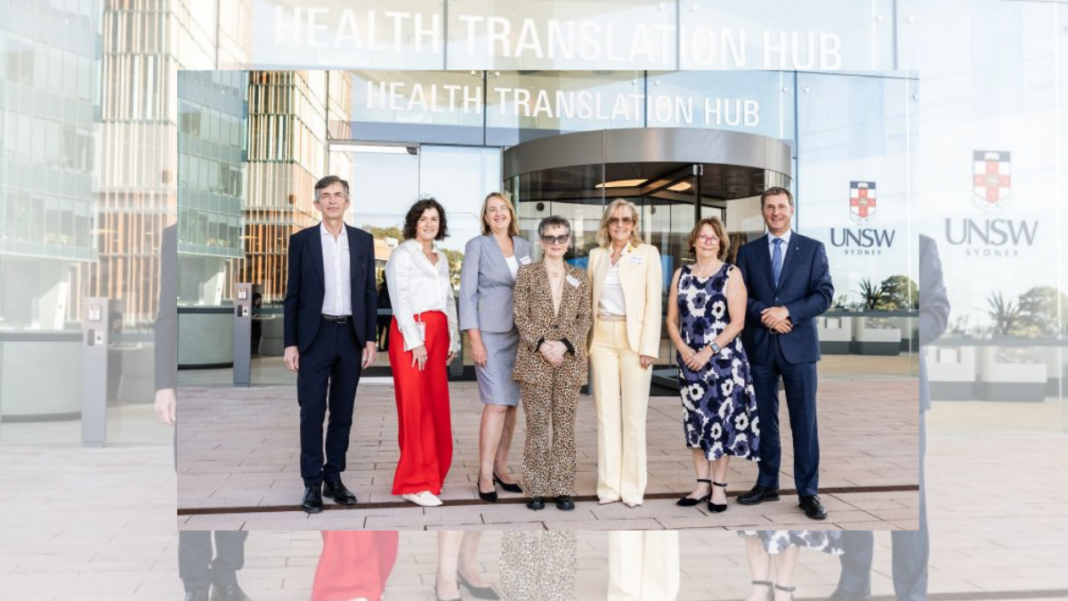
Australia has launched a pioneering research hub dedicated entirely to life after cancer, with the Australian Research Centre for Cancer Survivorship (ARCCS) officially opening through a $40 million partnership between UNSW Sydney and Cancer Council NSW.
The Centre — the first of its kind globally — reflects a growing shift in cancer care as survival rates rise. With more than 1.6 million Australians now living with or beyond a cancer diagnosis, attention is increasingly turning to what happens after treatment ends. While advances in prevention, early detection and therapies have transformed outcomes, many survivors continue to face lasting physical, psychological, social and financial challenges linked to their cancer experience.
ARCCS Director Professor Bogda Koczwara AM said the Centre was founded on the recognition that survivorship often comes at a cost. Thanks to improved diagnosis and treatment, cancer is no longer “the death sentence it once was” for many people, she said, but too often survivors are left to manage the long-term consequences alone. The Centre’s mission, she added, is to ensure every survivor receives personalised, ongoing support so they can adapt, recover and ultimately flourish.
Bringing together academic expertise and community connection, the Centre will lead research aimed at reshaping health systems so surviving cancer also means living well. Its work will inform clinical practice, services and public policy across Australia, with a strong focus on equity and access, particularly for people in regional and rural communities.
Rather than viewing cancer in isolation, the Centre will examine survivorship in the context of a person’s broader health, life circumstances and complex needs. Professor Koczwara said this person-centred approach was critical to addressing the physical, emotional and financial pressures that can follow treatment, stressing that “we must create a world where every cancer survivor is supported through the delivery of personalised care”.
A key pillar of the Centre’s work will be collaboration with survivors, carers, primary healthcare providers and industry to design, test and implement new models of survivorship care that can be embedded across the health system.
UNSW Professor Phoebe Phillips AM, herself a cancer survivor and carer for her late husband, Associate Professor Joshua McCaroll, said the launch marked a necessary reset in how cancer care is delivered. Too often, she said, the system prioritises efficiency over humanity, with patients pushed through treatment pathways focused solely on eliminating disease. A simple question — “How do you feel today?” — can make a profound difference, yet is frequently overlooked.
UNSW Vice-Chancellor and President Professor Attila Brungs described the Centre, housed within the UNSW Health Translation Hub, as a major milestone for cancer research and care in Australia. He said ARCCS represented a globally unique model that elevated the voices and needs of survivors, translating research into evidence-based solutions that improve quality of life long after treatment ends.
Cancer Council NSW CEO Professor Sarah Hosking said the partnership reflected both the extraordinary progress made in cancer survival and a clear commitment to addressing what comes next. With more people than ever living beyond a cancer diagnosis, she said there was a distinct need for research tailored to those navigating life after cancer. The Centre’s focus on helping people not just survive but thrive, she added, would drive better support, better care and ultimately better outcomes for survivors.
As Australia’s survivor population continues to grow, the Australian Research Centre for Cancer Survivorship is expected to play a central role in redefining what it means to live beyond cancer — placing quality of life, dignity and long-term wellbeing at the heart of cancer care.
Support our Journalism
No-nonsense journalism. No paywalls. Whether you’re in Australia, the UK, Canada, the USA, or India, you can support The Australia Today by taking a paid subscription via Patreon or donating via PayPal — and help keep honest, fearless journalism alive.
