

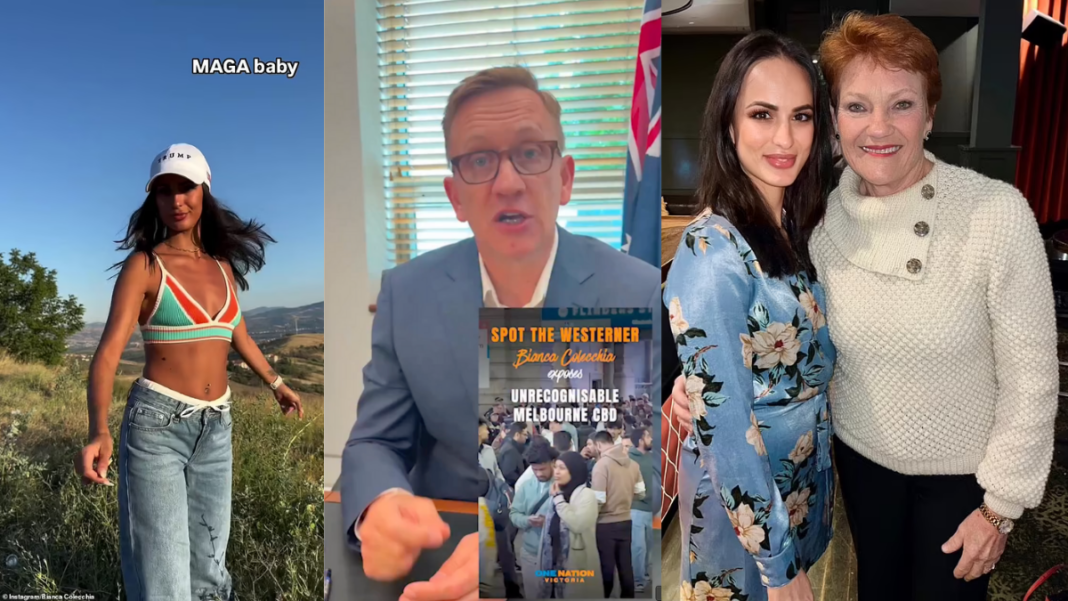
A New Year’s Eve video filmed in Melbourne’s CBD has ignited a fresh national debate over race, identity and the politics of division, prompting the federal Minister for Multicultural Affairs Julian Hill to accuse Pauline Hanson and her party of deliberately targeting multicultural communities for political gain.
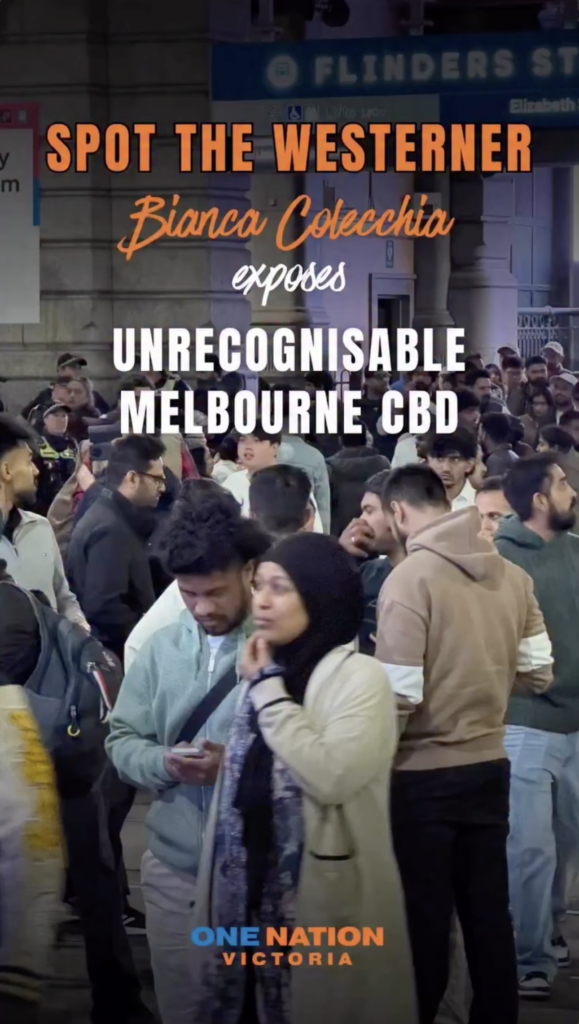
The controversy centres on Bianca Colecchia, the Victorian state secretary of One Nation, who shared footage of crowds outside Flinders Street Station on New Year’s Eve and invited viewers to play what she called a game of “spot the Westerner”.
Panning across revellers gathered in Melbourne’s city centre, Colecchia declared that the crowd “doesn’t look like a Western nation at all” and blamed multiculturalism for what she described as the erosion of Australia’s cultural identity and social cohesion.
“Multiculturalism is a failed concept,” she said in the video.
“When you start seeing demographic change and clusters of groups of people that are supposed to be a minority, and all of a sudden, we are the minority, it is a problem.”
The remarks, which were widely shared online, immediately drew condemnation for framing visible diversity as a threat and for singling out people in public spaces based on appearance. Critics also pointed to the setting: New Year’s Eve in central Melbourne, one of Australia’s largest tourist events, which attracts hundreds of thousands of visitors, including international holidaymakers.
‘Blatant racism dressed up as commentary’
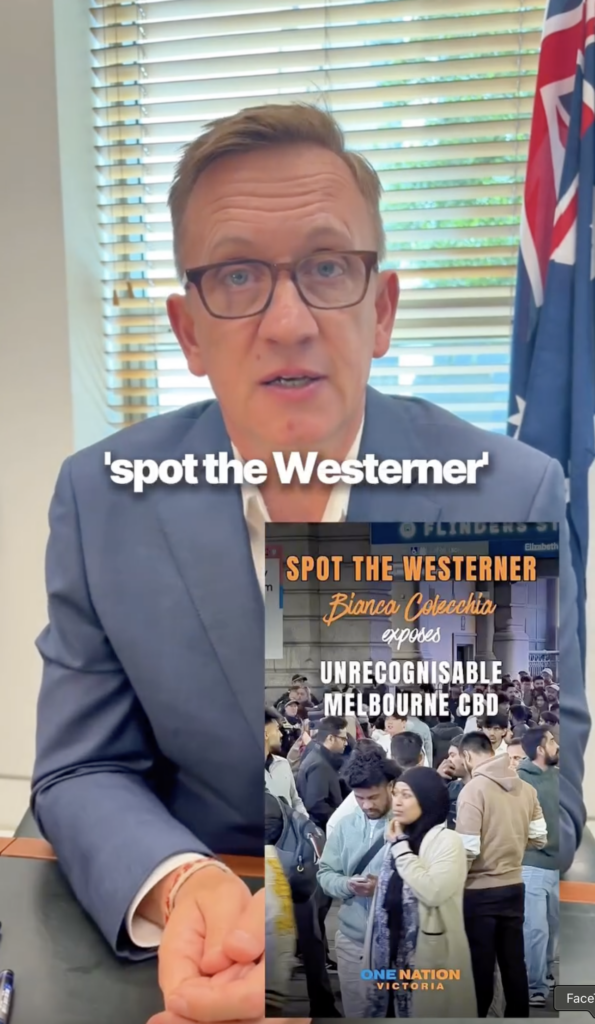
In a strongly worded video response, Minister Julian Hill accused One Nation of engaging in “blatant racism” and warned against normalising the rhetoric of the populist right.
“Pauline Hanson doesn’t give a damn about you,” Hill said.
“Yet again, Pauline Hanson’s One Nation is caught out in blatant racism. This time, a paid official of her party is posting videos inviting people to play ‘spot the Westerner’.”
Hill highlighted the irony at the centre of the controversy: Colecchia herself migrated to Australia from Italy in 2016 and has previously spoken proudly about the opportunities the country afforded her.
“We’ll put aside the irony that this paid official only arrived in Australia herself a few years ago and speaks with a thick Italian accent,” Hill said.
“Who cares? My own family came from Italy during the Second World War. We welcomed them, just as we’ve welcomed people from all parts of the world who want to contribute, sign up to our democratic values and respect their fellow Australians.”
Hill went further, arguing that the rhetoric of this kind has real-world consequences.
“The truth is that millions of Australians — including many in my community in south-east Melbourne — have been feeling unwelcome or unsafe simply because of the colour of their skin or their ethnic heritage, even if they’ve been here for generations,” he said.
Hypocrisy and selective outrage
Online reaction to Colecchia’s video was sharply divided. While some commenters echoed her claims that Melbourne no longer “felt like home”, many others called out what they described as hypocrisy and racialised double standards.
“Brown migrant with an accent complaining about other brown migrants with accents?” one commenter wrote. Others noted that Australia’s First Nations peoples could, with greater historical legitimacy, ask who truly “belongs” in public spaces.
Australia’s demographic reality further undercut the claims. According to the Australian Bureau of Statistics, around one-third of Australians were born overseas or have at least one parent born overseas, a figure that reflects decades of post-war migration that has shaped the modern nation.
Melbourne, in particular, has long marketed itself as one of the world’s most multicultural cities, with diversity underpinning its economic, cultural and educational life.
One Nation’s familiar playbook
For critics, the episode fits a long-established pattern within One Nation: using immigration and cultural anxiety as political weapons, even as party figures themselves benefit from Australia’s migration system.
Hill accused Hanson of duplicity, arguing that One Nation amplifies division in public while aligning with mainstream conservative parties in parliament.
“Pauline Hanson is a hypocrite,” he said.
“She says one thing on social media and in the community, but when she turns up to work — when she turns up to vote — she votes with the Liberals.”
The Minister also warned that instability within the major conservative parties risked creating space for more extreme rhetoric to gain traction.
“We cannot let the collapse and chaos within the Liberal and National parties normalise the kind of racism we’re seeing from the populist right,” Hill said.
A broader political reckoning
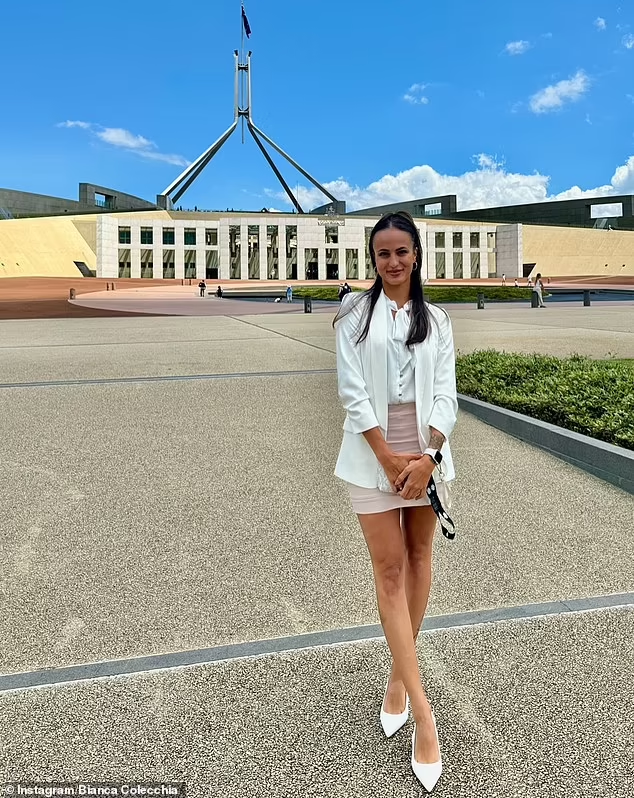
Colecchia, a former model and admirer of Donald Trump and Italian Prime Minister Giorgia Meloni, has previously framed her politics as defending “heritage” and “national identity”. Yet her own biography, published by One Nation, celebrates Australia as a country that allowed her to rebuild her life — a contradiction not lost on critics.
The controversy arrives at a moment of heightened scrutiny of political language, social cohesion and the responsibilities of public figures in an era of polarisation. It also underscores a deeper fault line in Australian politics: whether diversity is treated as a national strength or recast as a threat.
For Hill, the stakes are clear.
“This country works because people of different backgrounds live together with mutual respect,” he said.
“When politicians try to turn neighbours against each other for clicks or votes, they’re not defending Australia — they’re undermining it.”
As the video continues to circulate, the episode has become less about one New Year’s Eve post and more about the direction of political debate itself — and whether Australia will push back against racialised fear-mongering or allow it to creep further into the mainstream.
Support our Journalism
No-nonsense journalism. No paywalls. Whether you’re in Australia, the UK, Canada, the USA, or India, you can support The Australia Today by taking a paid subscription via Patreon or donating via PayPal — and help keep honest, fearless journalism alive.
