

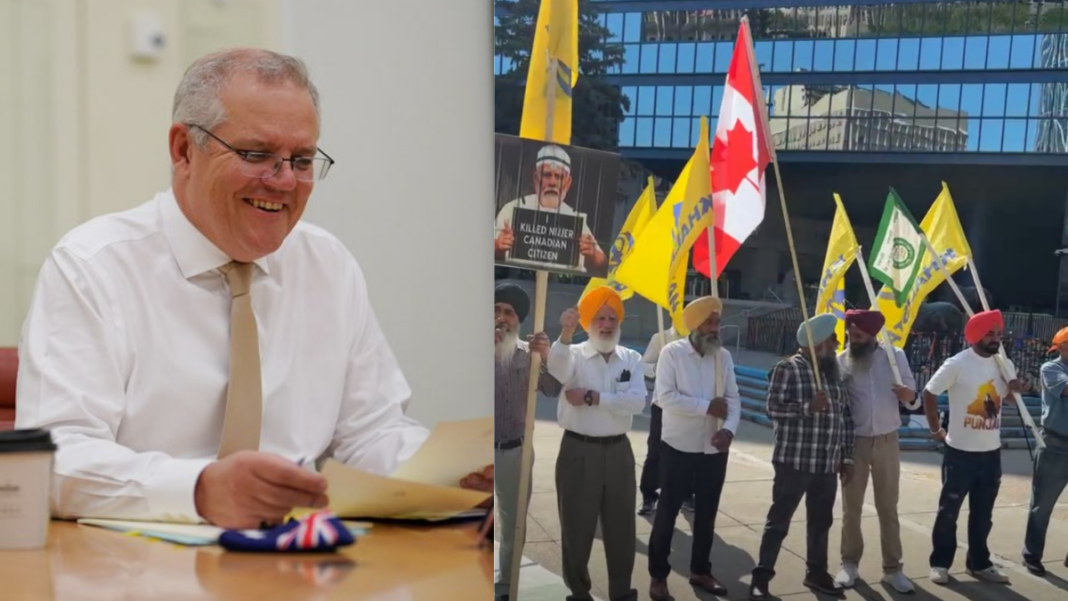
A warning from a former Canadian premier and renewed remarks by Australia’s former Prime Minister have converged this week to revive a difficult but increasingly urgent debate: whether Western democracies are confronting extremism consistently — or only when it suits domestic politics.
Ujjal Dosanjh, a former Canadian minister of health and the onetime attorney-general and premier of British Columbia, urged Australia to avoid what he described as Canada’s long-standing failure to deal honestly with extremist ideologies. In a post on X, Dosanjh said both Canada and Australia needed to pay close attention to Islamism and extremist Khalistani movements, warning that history had already shown the cost of complacency.
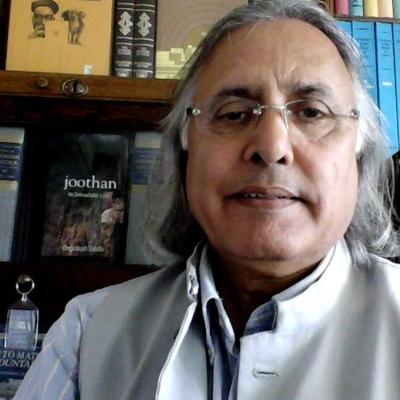
Dosanjh pointed directly to the 1985 bombing of Air India Flight 182, also known as the Kanishka bombing — the deadliest act of aviation terrorism before the September 11 attacks. The Boeing 747 exploded off the coast of Ireland after a bomb planted by Khalistani extremists detonated mid-air, killing all 329 people on board, most of them Canadian citizens. It remains the single largest mass murder in Canadian history.
More than four decades on, Dosanjh argued, Khalistani extremism should not be dismissed as a relic of the past. He warned that networks sympathetic to the ideology continue to operate openly in Canada, often shielded by official rhetoric that frames separatist activism as protected political expression.
His remarks comes ata time when former prime minister Scott Morrison has reignited a national conversation about extremism and religious oversight. In a series of public comments and a lengthy Facebook post, Morrison called on Islamic leaders to strengthen self-regulation mechanisms to prevent radicalisation, saying such steps were necessary to protect both Muslim Australians and the broader community.
Morrison rejected claims that his comments blamed Islam for terrorism, describing those accusations as a “straw man”. He said expectations placed on Islamic leadership were no different from those applied to other faiths, and warned that calls for unity were hollow if they avoided confronting how radicalisation takes root in Australia.
Speaking at an antisemitism conference in Israel earlier this week, Morrison said religious leaders needed stronger structures to help “keep the wolves from their flock”. Treating extremism as taboo, he argued, only allowed dangerous ideologies to flourish unchecked.
While acknowledging that extremism exists across the political spectrum — including on the far right and far left — Morrison maintained that Islamist extremism required “explicit and specific attention” because of its role in recent attacks and its global reach.
Dosanjh’s intervention adds a sharp international dimension to that debate. Critics say Canada’s repeated defence of Khalistan-related protests as free speech — even when some demonstrations are accused by India of glorifying violence or threatening diplomats — illustrates how selectively liberal democracies apply their principles. Indian Prime Minister Narendra Modi has raised these concerns directly with Canadian leaders, only to be met with assurances about freedom of expression and denials of official tolerance for violence.
Support our Journalism
No-nonsense journalism. No paywalls. Whether you’re in Australia, the UK, Canada, the USA, or India, you can support The Australia Today by taking a paid subscription via Patreon or donating via PayPal — and help keep honest, fearless journalism alive.
