
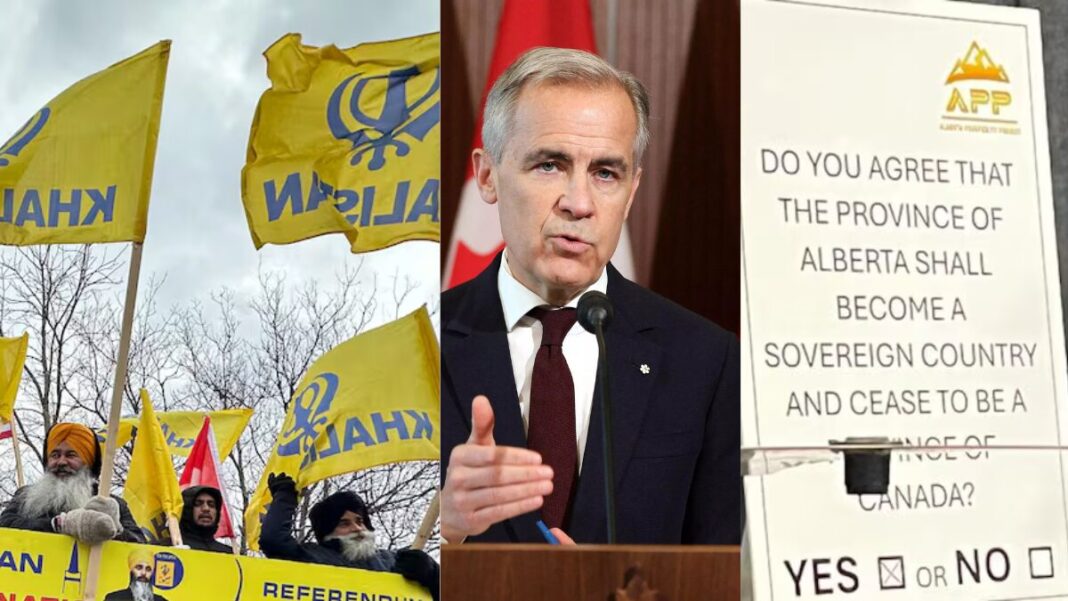
Canada’s long-standing double standard on separatism has been thrust into the open, after senior leaders condemned outreach by Alberta independence activists to Washington while Ottawa continues to defend far more militant separatist activity on its own soil as free expression.
The contradiction emerged this week after reports that leaders of the Alberta Prosperity Project met several times with US State Department officials, seeking discussions on Alberta’s future should a referendum on separation ever succeed. The revelations sparked outrage among some provincial leaders, with British Columbia Premier David Eby branding the meetings “treason”.
“To go to a foreign country and ask for assistance in breaking up Canada — there’s an old-fashioned word for that, and that word is treason,” Eby said ahead of a first ministers’ meeting.
Yet Prime Minister Mark Carney and Alberta Premier Danielle Smith stopped short of endorsing that characterisation, limiting their response to calls for Washington to respect Canadian sovereignty. Carney said he had told US President Donald Trump to do exactly that, before shifting focus back to trade and infrastructure cooperation.
The fierce language directed at Alberta separatists has sharpened scrutiny of Ottawa’s tolerance — and at times defence — of Khalistan activism in Canada, including protests New Delhi has accused of glorifying violence and threatening Indian diplomats. For years, Canadian governments have framed such activity as protected political expression, even as India has repeatedly warned it crosses into extremism.
That contrast has not gone unnoticed internationally. Indian Prime Minister Narendra Modi has directly raised concerns with Canadian leaders, citing demonstrations that promote secessionism and, in some cases, celebrate the assassination of former Indian prime minister Indira Gandhi. Ottawa has responded by stressing freedom of speech, while insisting violence is not condoned.
The Alberta case, however, has triggered markedly different rhetoric at home. Ontario Premier Doug Ford called the reported US meetings “unacceptable” and “unethical”, warning that any separatist government — whether in Alberta or Quebec — would be a disaster for the country. New Brunswick Premier Susan Holt said she was confident Albertans would ultimately choose unity.
Smith defended her refusal to demonise the movement, arguing that about a million Albertans feel alienated after what she described as years of federal hostility towards the province’s resource sector. “I’m not going to marginalise a million of my fellow citizens when they have legitimate grievances,” she said.
Lawyer Jeff Rath, who attended the Washington meetings on behalf of the Alberta Prosperity Project, rejected suggestions of wrongdoing, saying the group was made up of private citizens with no authority to strike deals. US officials also downplayed the contacts, describing them as routine meetings with civil society and insisting no commitments were offered.
Canada’s Criminal Code defines treason narrowly, focusing on violence or assisting an enemy at war — a threshold legal experts say the Alberta meetings clearly do not meet. Still, the political reaction has exposed a deeper inconsistency.
While separatist advocacy linked to India is routinely defended in Canada as free speech, even when it strains diplomatic ties, domestic separatist flirtations with Washington have prompted accusations of betrayal. As premiers and the prime minister urge unity at home, critics say Ottawa is now facing the consequences of a principle it has long applied selectively: that separatism is acceptable — until it threatens Canada itself.
Support our Journalism
No-nonsense journalism. No paywalls. Whether you’re in Australia, the UK, Canada, the USA, or India, you can support The Australia Today by taking a paid subscription via Patreon or donating via PayPal — and help keep honest, fearless journalism alive.
