


Australia is grappling with more than 330,000 unfilled jobs across key industries, even as thousands of qualified permanent migrants remain underemployed, new Australian Bureau of Statistics (ABS) data reveals.
The shortages are most acute in health care and social assistance, professional, scientific and technical services, construction, and education, highlighting deep structural gaps across the economy.
- Health Care and Social Assistance: 59,600 vacancies
- Professional, Scientific and Technical Services: 33,600 vacancies
- Construction: 18,100 vacancies
- Education and Training vacancies: 13,600 vacancies
Violet Roumeliotis, spokesperson for Activate Australia’s Skills and CEO of campaign convener SSI, said in a statement that the figures reflect chronic workforce shortages that have persisted for years. “These aren’t short-term blips—they’re structural gaps that are holding back productivity and economic growth,” Ms Roumeliotis said.
“Hospitals are short-staffed, businesses are cutting hours, and essential services are slowing down.”
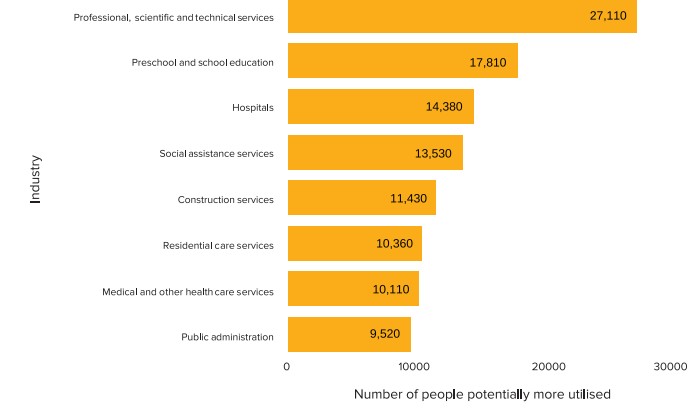
She argued that many of these shortages could be eased if overseas skills recognition was faster, fairer, and more affordable, allowing qualified migrants to work at their full potential. “Our complex skills recognition system is slowing down the workforce Australians rely on every day,” she said. “Everyone loses when skilled professionals are held back from contributing fully to our country.”
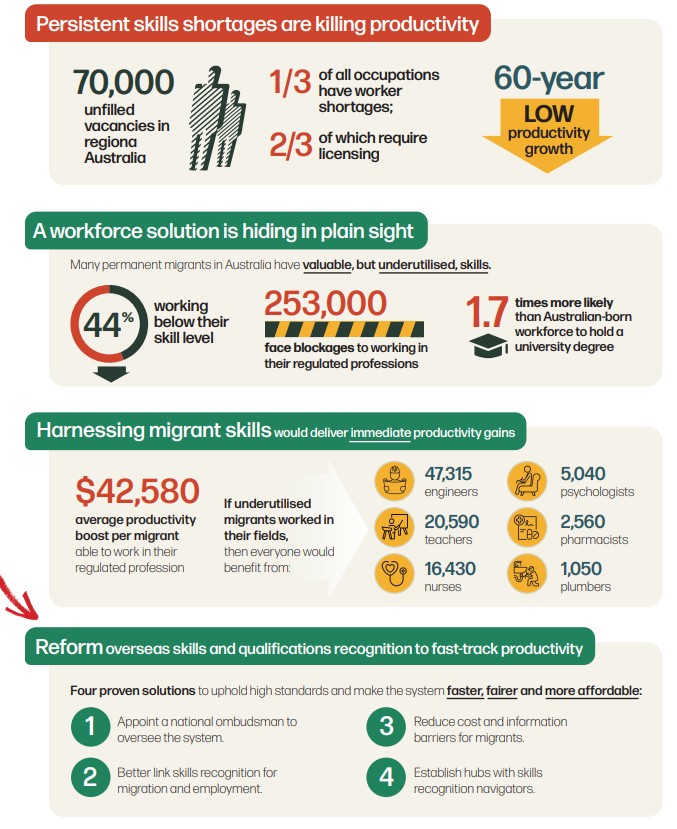
Analysis from last year’s Productivity Fast Track report suggests that enabling qualified migrants to work in their professions could fill tens of thousands of vacancies, including roles in accounting, engineering, teaching, nursing, aged care, and psychology.
- 50,080 accountants
- 47,315 engineers
- 20,590 teachers
- 16,430 nurses
- 8,710 aged care workers
- 5,040 psychologists
“This is common sense,” Ms Roumeliotis said. “On one hand, we have chronic skills shortages; on the other, qualified workers are already here. Reforming skills recognition while maintaining high standards is essential for our economy and for better services.”
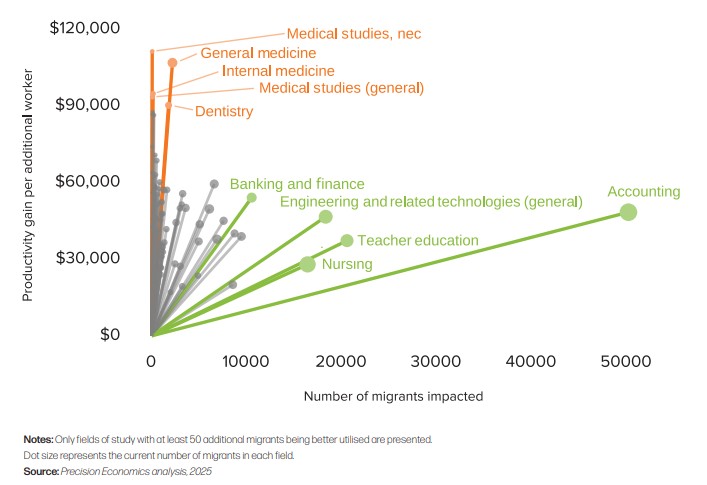
The Activate Australia’s Skills campaign, backed by more than 130 organisations, is calling for practical reforms, including a national governance system for overseas skills recognition with independent oversight, a more integrated approach linking recognition with employment licensing, financial support and guidance for skilled migrants, and the creation of Migrant Employment Pathway Hubs to help qualified individuals return to work in their professions.
Support our Journalism
No-nonsense journalism. No paywalls. Whether you’re in Australia, the UK, Canada, the USA, or India, you can support The Australia Today by taking a paid subscription via Patreon or donating via PayPal — and help keep honest, fearless journalism alive.
