

By Stephen Howes and Rubayat Chowdhury
The Pacific has a reputation for slow economic growth. An Asian Development Bank report written at the turn of the century began by noting that the Pacific Island countries (PICs) “continue to experience per capita rates of growth significantly below their trading partners and below other small countries elsewhere in the world”. In 2016, an International Monetary Fund (IMF) report talked about the PICs being “stuck on a low-growth path”. Just this year, the IMF repeated this claim, saying “PICs have been stuck in a low growth path even before the pandemic”.
It might come as a surprise then to learn that, between the Global Financial Crisis and the pandemic, the Pacific Islands region was the fastest-growing in the world. As in the first blog in this series on growth in the Pacific, our focus is on the 13 independent, small-island nations of the Pacific, namely the Cook Islands, the Federated States of Micronesia, Fiji, Kiribati, Nauru, Niue, Palau, the Republic of the Marshall Islands, Samoa, Solomon Islands, Tonga, Tuvalu and Vanuatu.
The rapid growth of the PICs in the 2010s has gone unnoticed because, typically, when analysts measure economic growth, whether in the Pacific or elsewhere, they look not at income but at output.
A country’s output is best measured by Gross Domestic Product (GDP) and its income by Gross National Disposable Income (GNDI). As we explained in our first blog, for most countries, GDP and GNDI are very similar, but for the Pacific, they are very different. Everyone agrees that when there is a divergence, income is a better metric of economic performance than output. So, for the Pacific, we should focus on GNDI.
The PICs’ annual average per-person income (GNDI) growth rate for 2010 to 2019 was 4.6%. South Asia had the next-highest average growth rate during this period (3.7%), followed by East Asia (3.3%). In terms of output (GDP), the PIC average growth rate was 2.5%, not bad by global standards but well below South and East Asia.https://datawrapper.dwcdn.net/VdRdb/1/
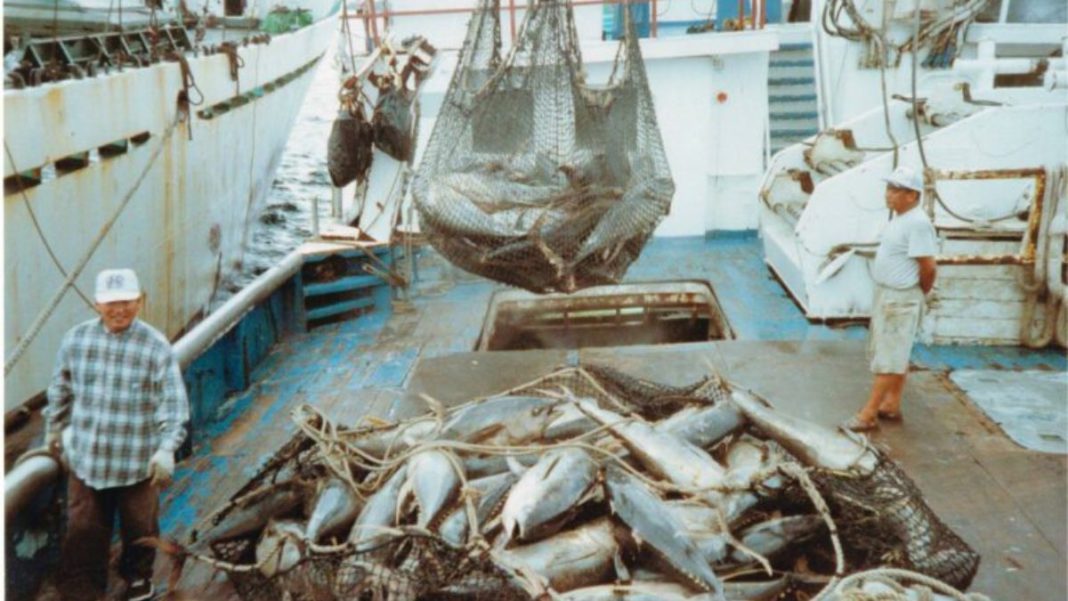
What explains this world-leading growth spurt? There are three main factors. First, there was a massive increase in the 2010s in fishing license revenue due to the introduction of the Vessel Day Scheme (VDS) under the Nauru Agreement. This effectively transformed the Pacific nations into a tuna cartel and, as a result, greatly increased the rents accruing to Pacific countries from tuna fishing vessels. The VDS was launched in 2010 and generated US$64 million in that year. VDS revenue increased rapidly to reach US$470 million in 2016.
Second, in later years, remittances grew rapidly in importance, increasing from 7% of GDP in 2016 to 13% in 2019 (and 19% in 2022).
Third, the choice of deflator also matters. To neutralise the impact of inflation on GDP, we use the GDP deflator, which tells us how much prices are increasing for the things we produce. To neutralise the impact of inflation on income, we use the Consumer Price Index (CPI), which tells us how much prices are increasing for the things we buy. For reasons that are not entirely clear, in the 2010s, inflation in the Pacific as measured by the CPI was lower than inflation as measured by the GDP deflator. This further boosted GNDI growth. However, even if we use the GDP deflator, per-person GNDI growth for the 2010-2019 period was 3.3% — still world leading, though not as high as the 4.6% figure arrived at by using CPI deflator.
The fastest growing PICs in the 2010s were Nauru, Tuvalu and Kiribati. All three had average GNDI growth rates about double their GDP growth rates.https://datawrapper.dwcdn.net/QP4SH/1/
This is an important story, again for three reasons.
First, it challenges the narrative that the Pacific is a perpetually slow-growing region. To be sure, the performance of the 2010s is unlikely to be repeated in the 2020s. The fishing license boom was a one-off. But slow growth is not a Pacific inevitability, and definitely not one for all Pacific countries at all times.
Second, fast growth in the 2010s went with the growing importance of net foreign income. The PIC average GNDI/GDP ratio increased from 135% in 2010 to 139% in 2019 (and 141% in 2022). The Pacific has become even more different from the rest of the world.
Third, the Pacific growth spurt underlines the importance of looking at income rather than output in the Pacific. While many have commented on the importance of the VDS scheme, no one has, until now, examined its impact on Pacific growth. When analysing Pacific economic performance, we need to put GNDI centre-stage.
This oped was first published on the Devpolicy Blog and is republished here with the kind permission of the editor(s). The Devpolicy Blog is based at the Development Policy Centre, Crawford School of Public Policy, College of Law, Governance and Policy, The Australian National University. Posts on the Devpolicy Blog are licensed under a Creative Commons Attribution-NonCommercial-ShareAlike 4.0 International License unless otherwise noted.
Note: This blog and series is based on the authors’ Development Policy Centre 2025 discussion paper GNDI and the uniqueness of the Pacific island economies. The paper provides details on the data sources used for the tables. Data on the Cook Islands is only available from 2011.
Disclosure: This research was supported by funding from the Australian Department of Foreign Affairs and Trade through the Pacific Research Program. The views expressed are those of the authors only.
Contributing Author(s): Stephen Howes is Director of the Development Policy Centre and Professor of Economics at the Crawford School of Public Policy at The Australian National University. Rubayat Chowdhury is a macroeconomist with experience working on monetary policy, growth, and economic development in emerging market economies. He is a Research Officer at the Development Policy Centre.
Support our Journalism
No-nonsense journalism. No paywalls. Whether you’re in Australia, the UK, Canada, the USA, or India, you can support The Australia Today by taking a paid subscription via Patreon or donating via PayPal — and help keep honest, fearless journalism alive.
