

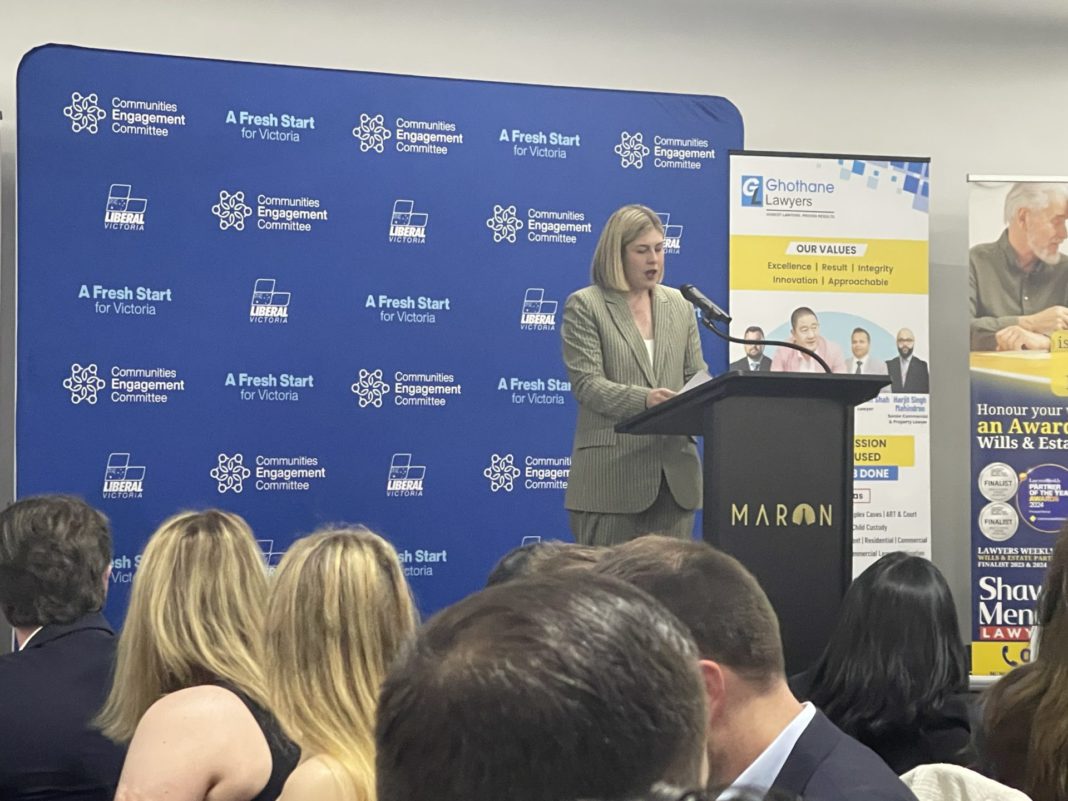
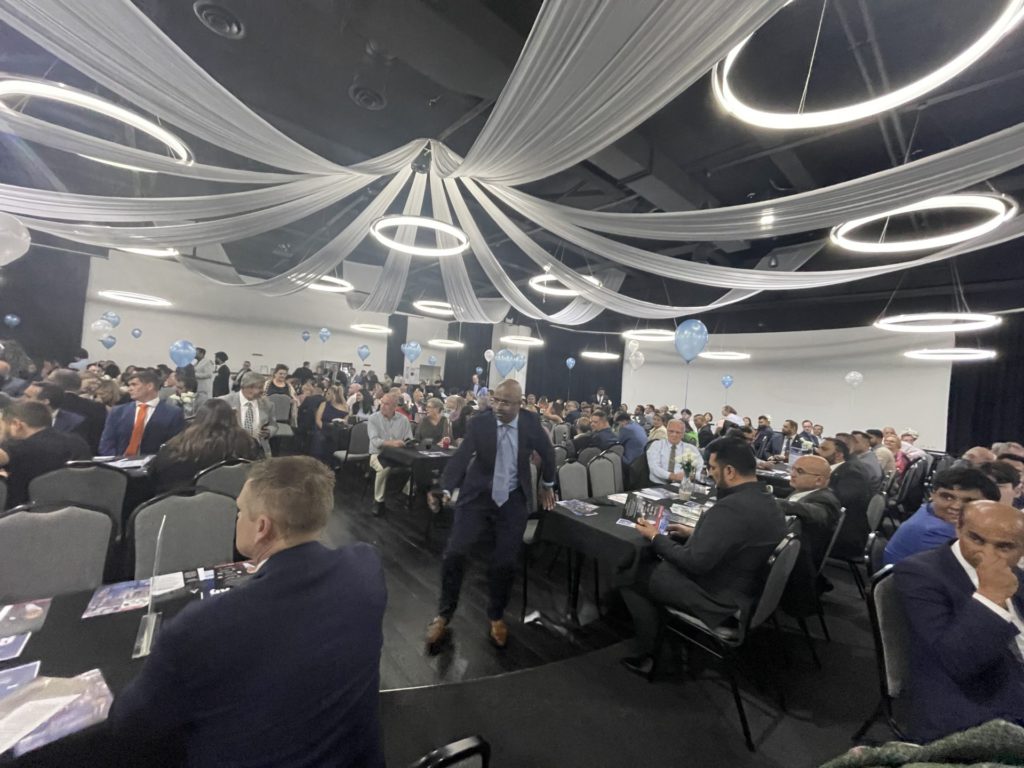
As I walked into the Maron Function Centre in Thornbury, a few curious eyes from multicultural Liberal members followed me to my seat. The unspoken question on some faces seemed obvious enough: why are you here? Within minutes, that hesitation softened into handshakes, smiles and hugs from familiar faces.
And the immediate realisation, if the Victorian Liberal Party wants to reset its image with multicultural communities, this is exactly the sort of room it needs to win over — and keep.
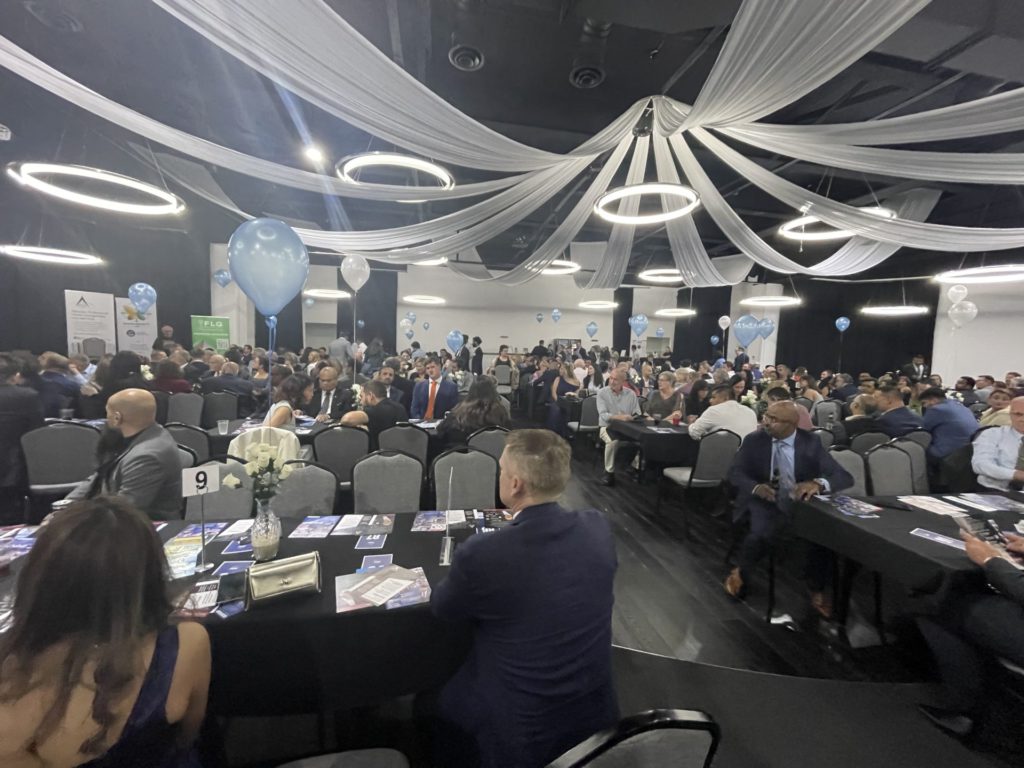
The Communities Engagement Committee’s multicultural dinner carried a clear tagline: “A fresh start for Victoria.” It comes at a crucial political moment. The party is in the middle of finalising lower house candidates in seats without sitting MPs, and several multicultural hopefuls made sure they were seen and heard. This was as much about internal signalling as external outreach.
New Victorian Liberal Leader Jess Wilson was the star attraction, even if only briefly. Because it was a parliamentary sitting day, she arrived tight on time and left just as quickly, heading back to Spring Street after her speech. But in her short window, she did what matters most in politics right now: she connected.
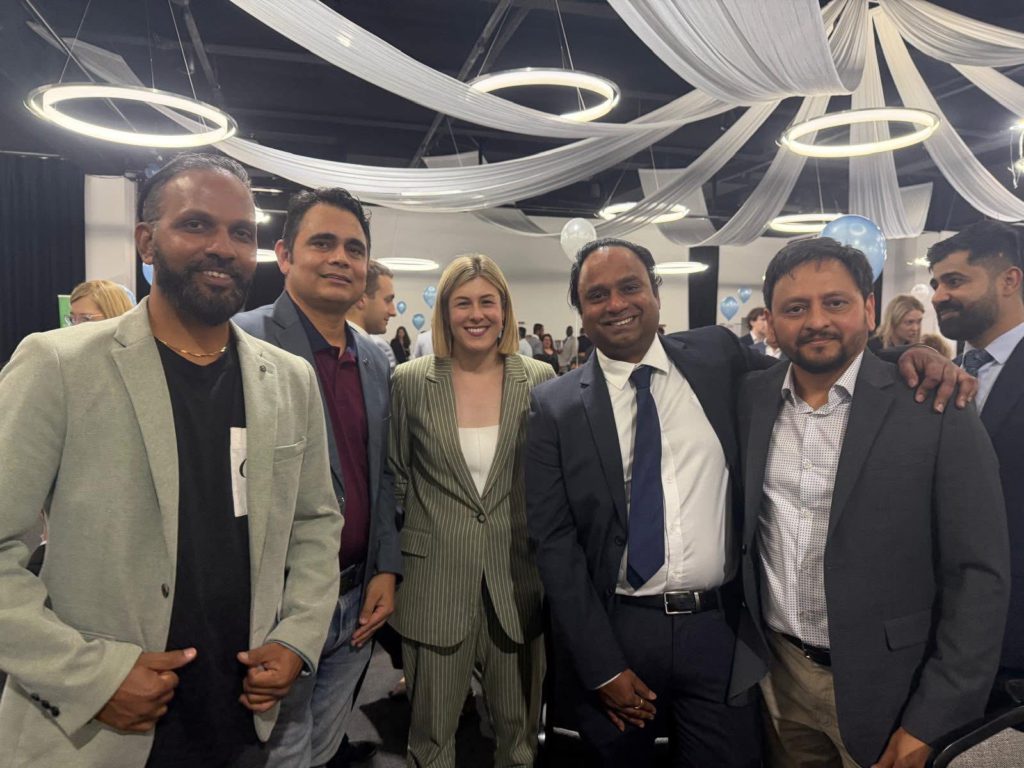
Wilson reminded the room that one of her first major outings as leader was an African Day event at Federation Square, where she joined the dancing and, by all accounts, stole more of the crowd’s attention than the Premier.
“If we want to earn the trust of every community, we can’t just turn up for the photo,” she told the room.
“We have to show up, listen and stay — not just in election years, but in the quiet years too.”
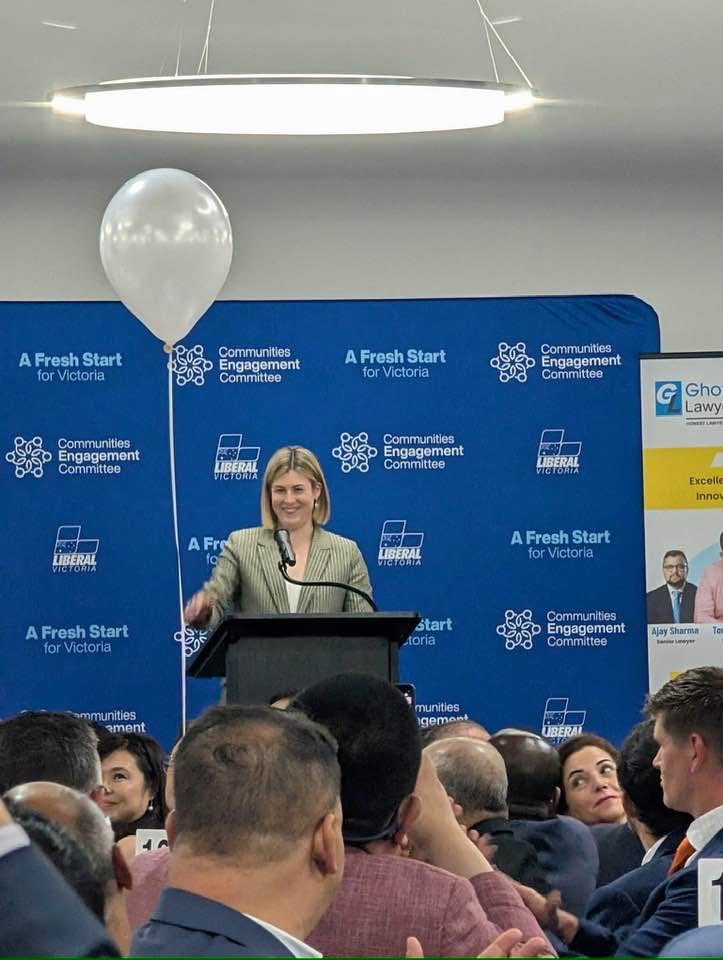
For many in the audience, her ease on stage and willingness to reference community events they actually attend felt like a small but welcome shift.
Shadow Multicultural Minister Evan Mulholland was meant to moderate the evening but, like Wilson, was delayed at Parliament. He slipped into the room just before the Leader finished, taking the microphone with his usual mix of humour and blunt honesty.
He couldn’t resist a nod to history.
“Not that long ago,” he joked, “Jess Wilson was a Young Liberal leader, and I worked under her leadership. Now she’s our parliamentary leader. That should tell everyone in this room that the party is changing and that no one should underestimate the next generation.”
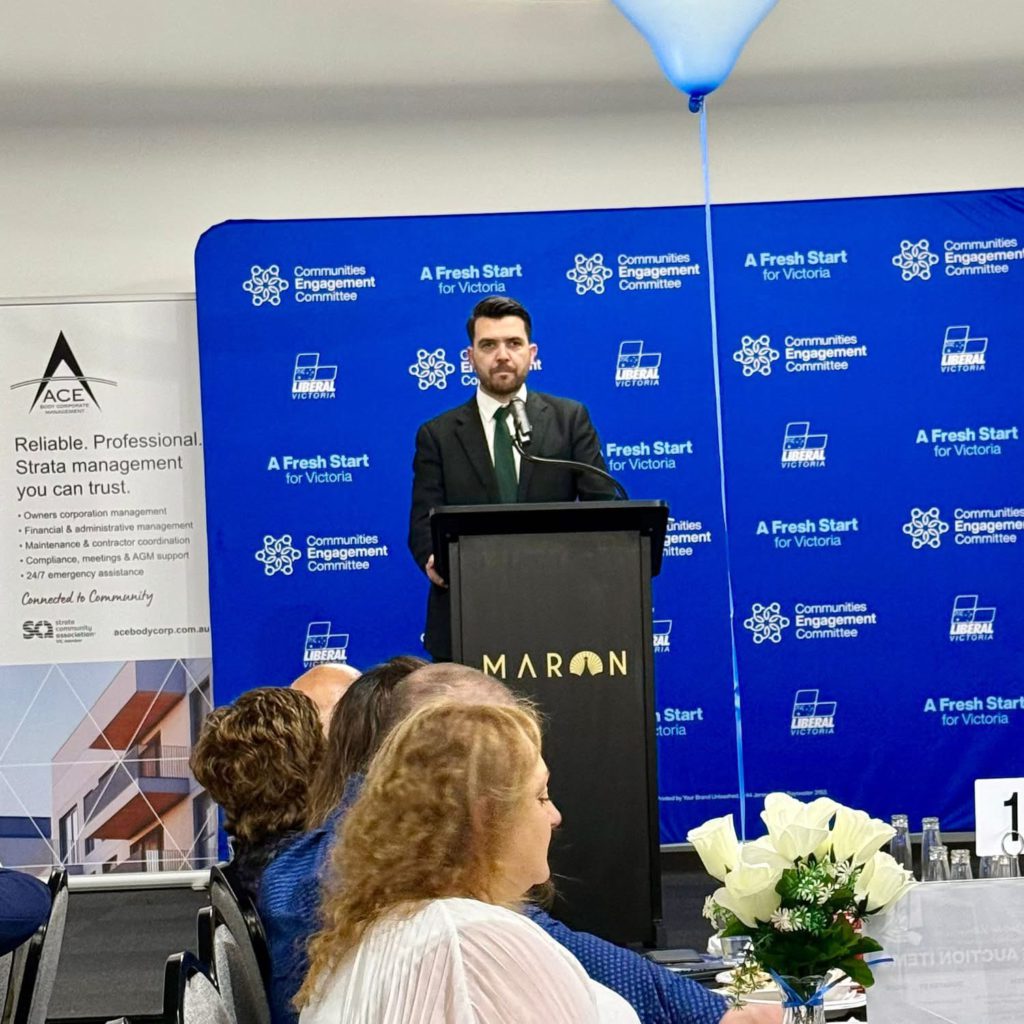
Mulholland’s message to the party faithful and would-be candidates was clear: this is not the time for spectators.
“This is the moment for us to work hard,” he said.
“Bring your ideas, bring your time and, yes, bring your donation bags. If we want a different Victoria, we have to build it together.”
As the event broke for dinner came a new issue.
For all the talk of renewal, the dinner itself fell short of the mark. With a “multicultural dinner” comes the complexity of different dietary needs and cultural expectations, and to be fair, organisers seemed to have thought about variety — there were options that reflected the diversity in the room. But what they didn’t plan for was quantity.
Plates were being cleared so quickly that it felt as if we’d all turned up having not eaten in days. Many guests were left wandering between tables looking for food that had already disappeared, and the mood in the room shifted from celebratory to quietly forlorn. For an event built around inclusion, it was hard to ignore that there simply wasn’t enough on offer for everyone who showed up.
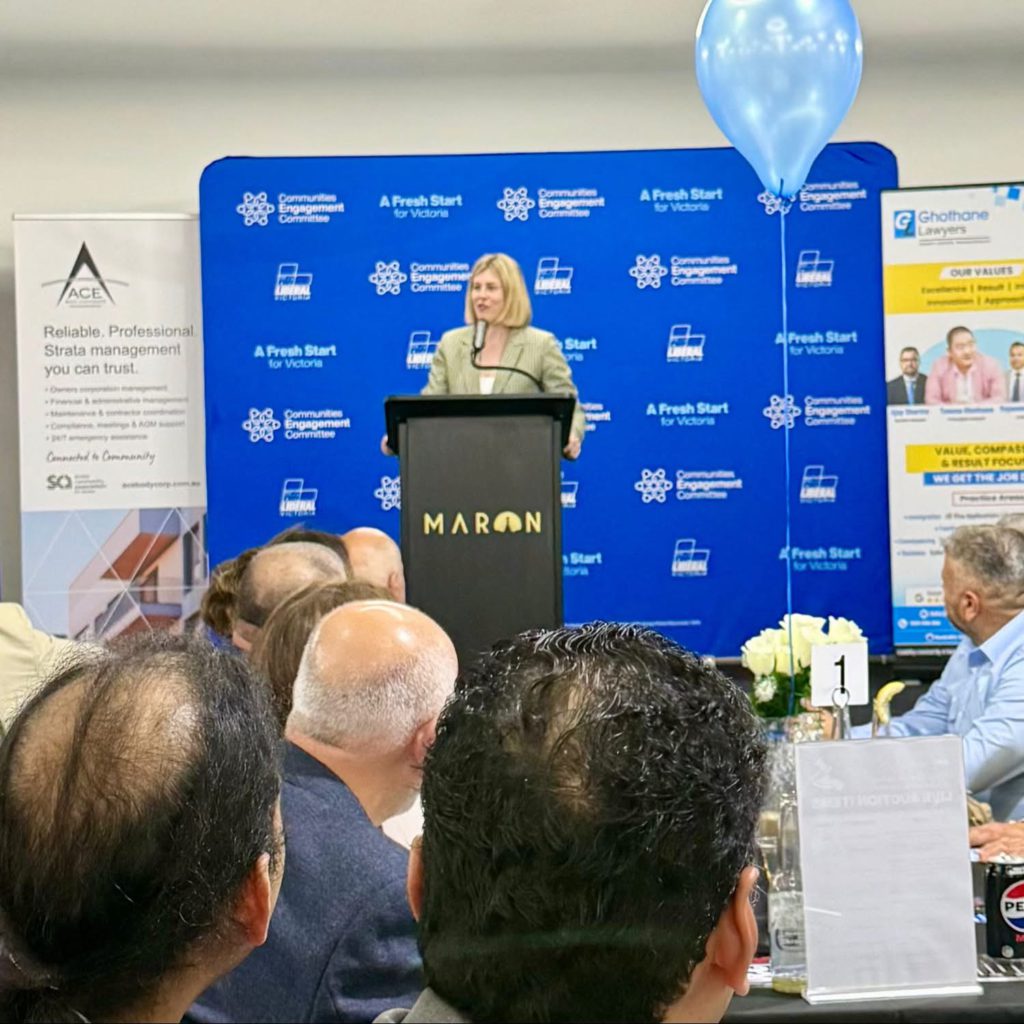
Then came the man who likes to say he brings sunshine whenever he lands in Melbourne. Senator Paul Scarr, the federal Shadow Minister for Multicultural Affairs, has become a familiar figure in community halls across the country. He knows how to read a room of migrants, business owners, faith leaders and local volunteers.
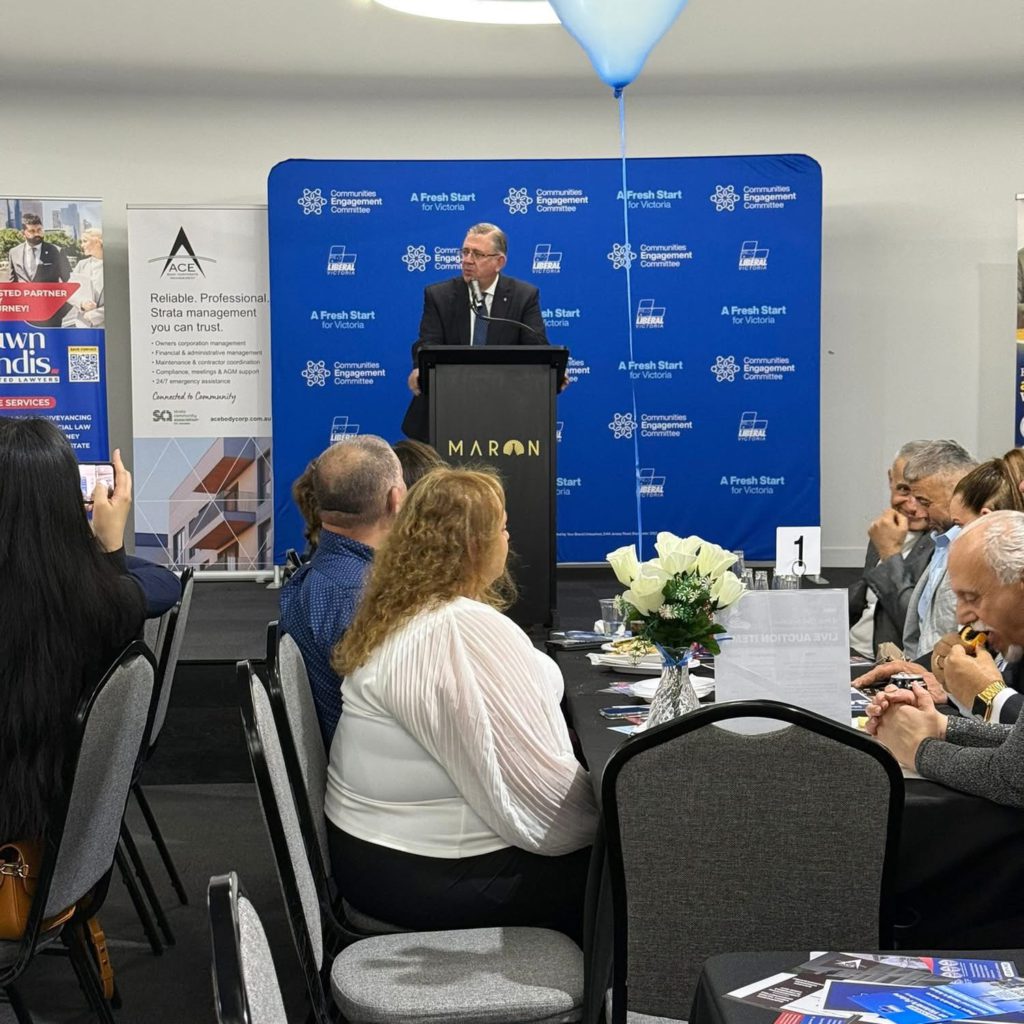
“Every time I come to Melbourne,” he said with a smile, “the sky seems a little brighter — and it’s not because of the weather. It’s because I see the future of Australia sitting in rooms like this.”
But Scarr’s speech wasn’t just warm words. He made a sharper argument about where the Liberal Party needs to stand.
“If we are serious about governing Australia and Victoria again,” he said,
“We must be the party that says to every migrant, every family building a life here: you belong at the centre of our story, not at the edges of it.”
One of the most quietly powerful moments of the evening came from a guest who had travelled the furthest: Northern Territory Minister for Multicultural Affairs, Linson Charls. An Indian Australian, former registered mental health nurse and now Liberal minister, his very presence on the program was deliberate.
“I came to this country as someone who looked different, sounded different and worked shifts that most people don’t see,” he told the crowd.
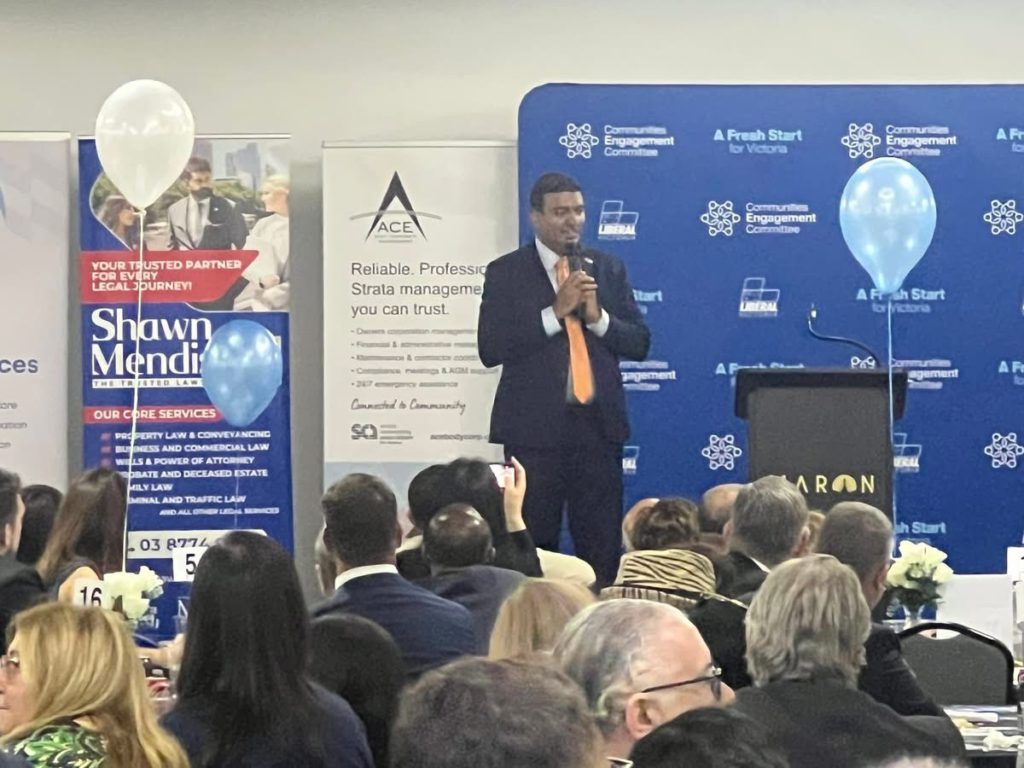
“I stood in hospital corridors at 3 am, speaking with patients in crisis. I never imagined I would one day stand in a parliament as a minister.”
Looking across the room, he added:
“If a kid from a migrant family, with an accent and a nursing badge, can become a minister in a Liberal government, then people who look like us do have a future in this party.
But we have to step forward — and the party has to open the door wider.”
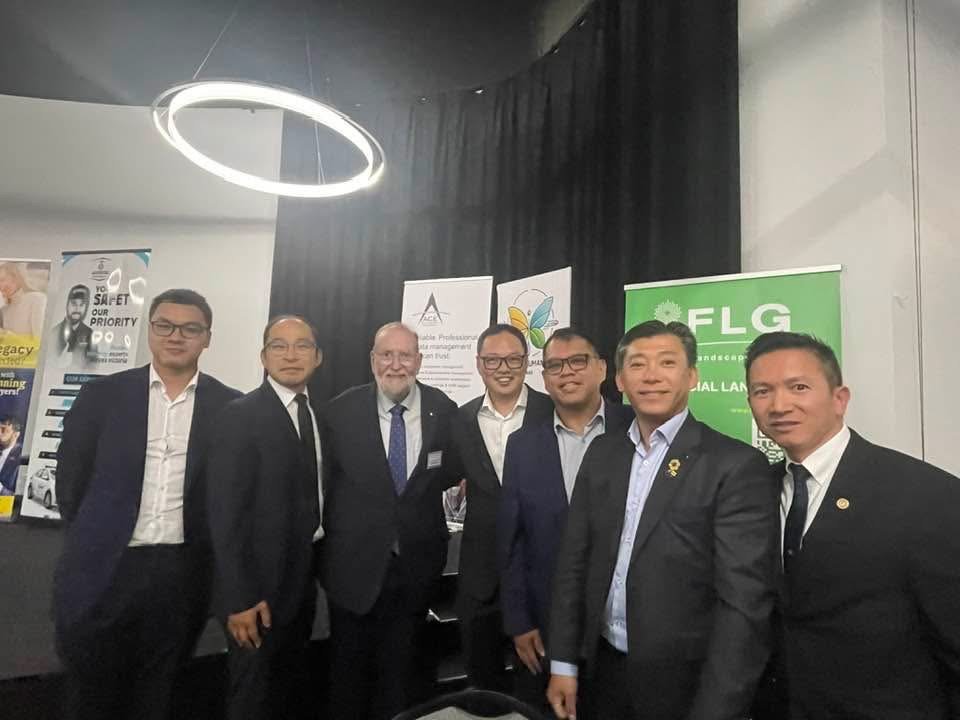
For many multicultural Liberals and community leaders in the audience, that was the line that landed hardest. It was both an invitation and a challenge.
Throughout the night, the conversations at the tables were as telling as the speeches from the podium. Aspiring candidates quietly worked the room, others tested the mood after the bruising years of leadership churn and electoral defeat. Some attendees spoke openly of a party that had long felt “too distant” from migrant communities.
“For the first time in a while, I feel like they’re actually listening,” one long-time community organiser said.
“But listening once isn’t enough — they’ll have to keep showing up.”
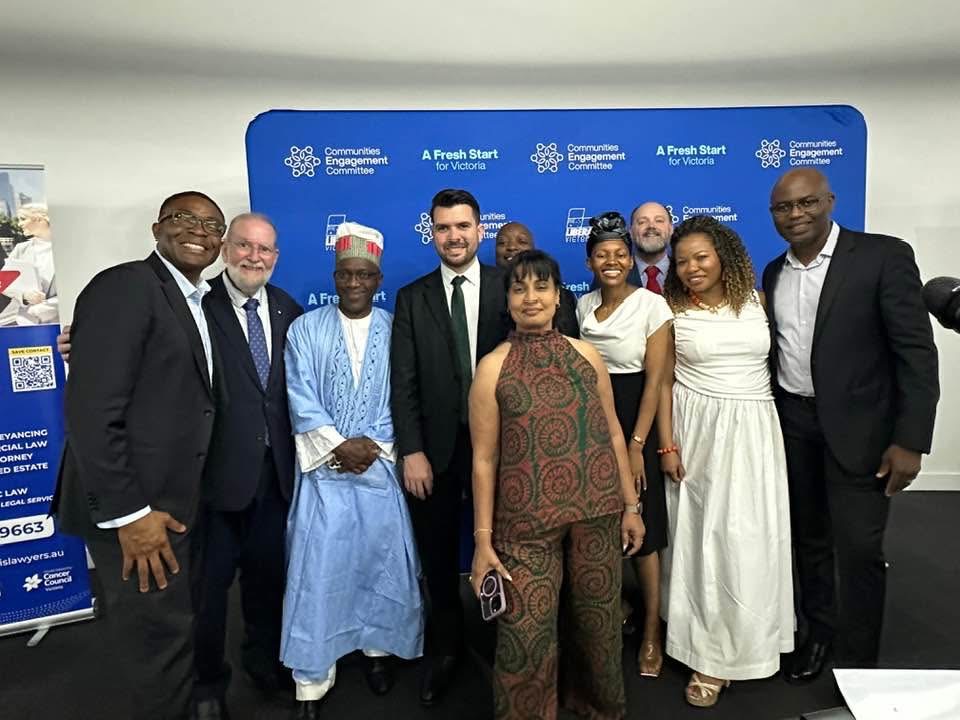
The evening closed with a vote of thanks from Melbourne’s Deputy Lord Mayor, Roshena Campbell, one of the most prominent multicultural Liberal voices in the state. She stitched together the themes of the night: renewal, responsibility and the ticking clock of an election now less than a year away.
“We don’t get many chances like this,” she told the gathering.
“If we say we want a Liberal Party that looks like modern Victoria, then we have to build it now — not in the final week of the campaign.”
She thanked the Communities Engagement Committee and urged everyone in the room not to see the dinner as a one-off event but as “the start of the work, not the end of it”.
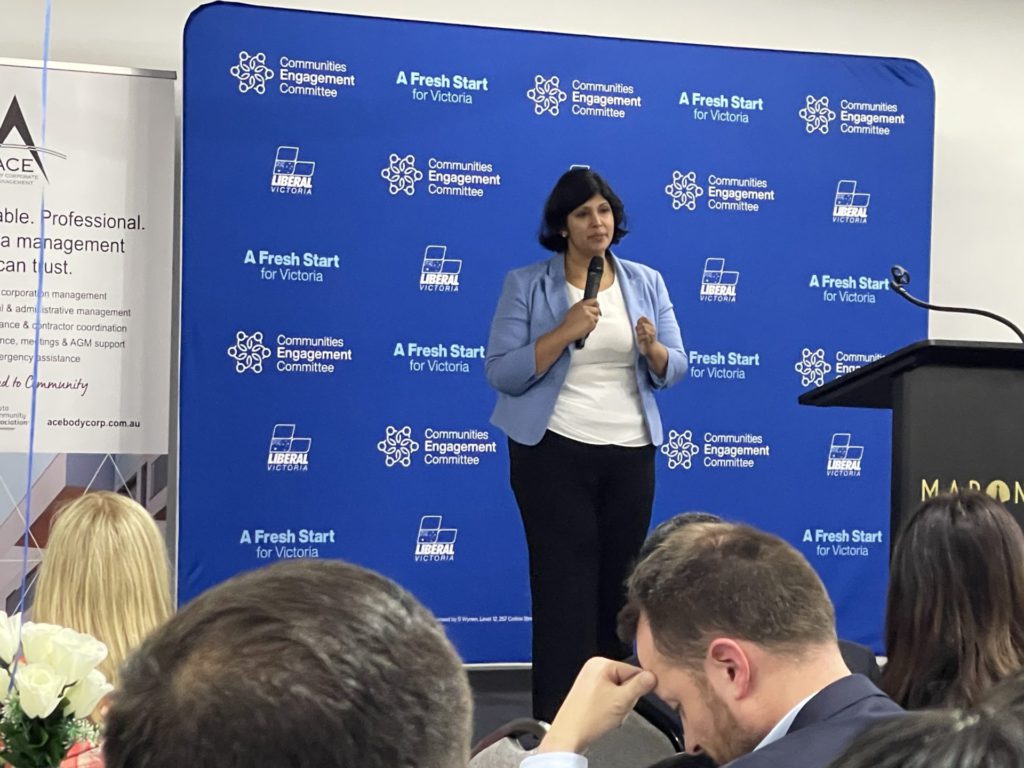
The question, of course, is whether “A fresh start for Victoria” will become more than a slogan on an invitation. The party still carries the baggage of being seen, fairly or not, as too “male, pale and stale” in parts of multicultural Melbourne. One dinner in Thornbury cannot erase that.
But it can signal intent. And on this night, intent was on display: a new leader who seems comfortable in multicultural spaces, a shadow minister who knows the numbers have to change, a federal senator making the case for a broader Liberal story, and an Indian Australian minister from the Territory reminding the room that the path into power is open — if both sides of the equation do their part.
Whether this gathering will be remembered as a turning point or just another polite party function will depend on what happens next: who is preselected, which communities are backed, and whether the party’s policy platform reflects the stories told in rooms like Maron Function Centre.

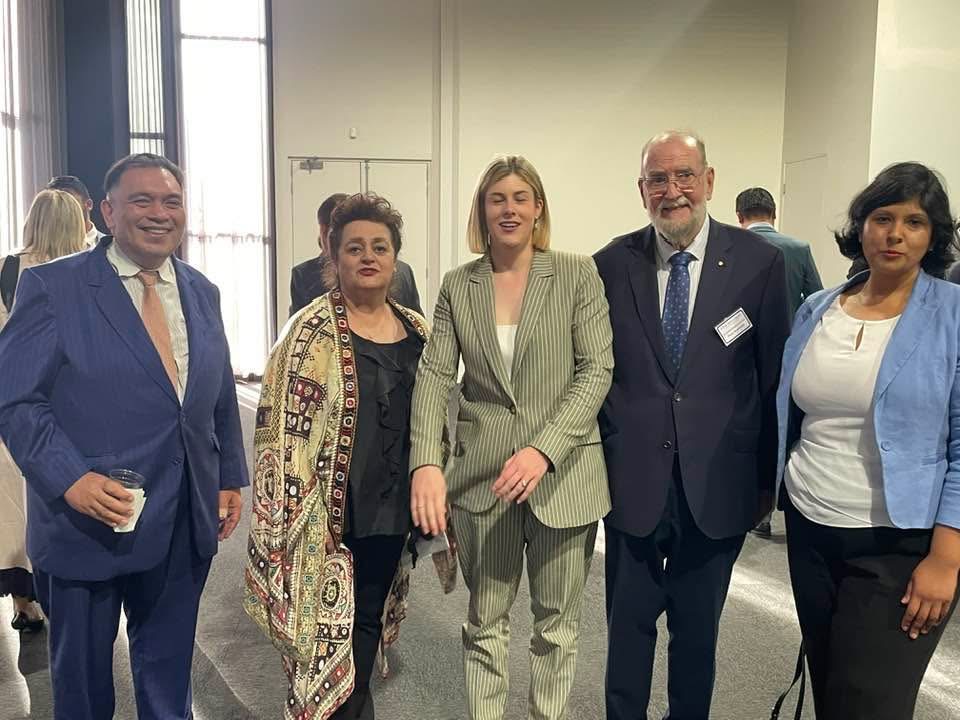
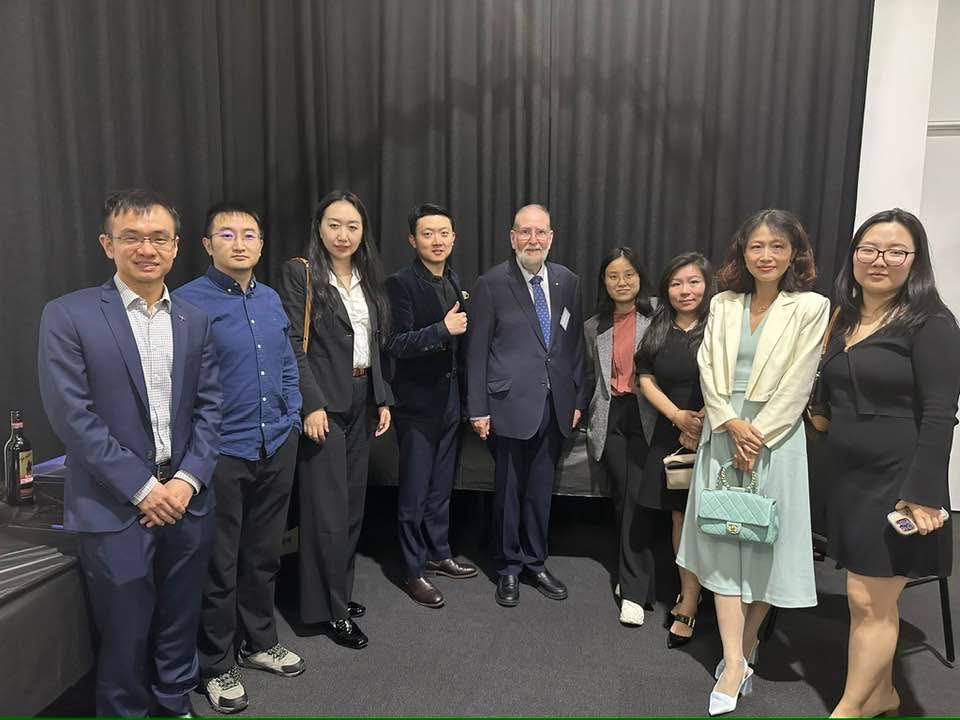
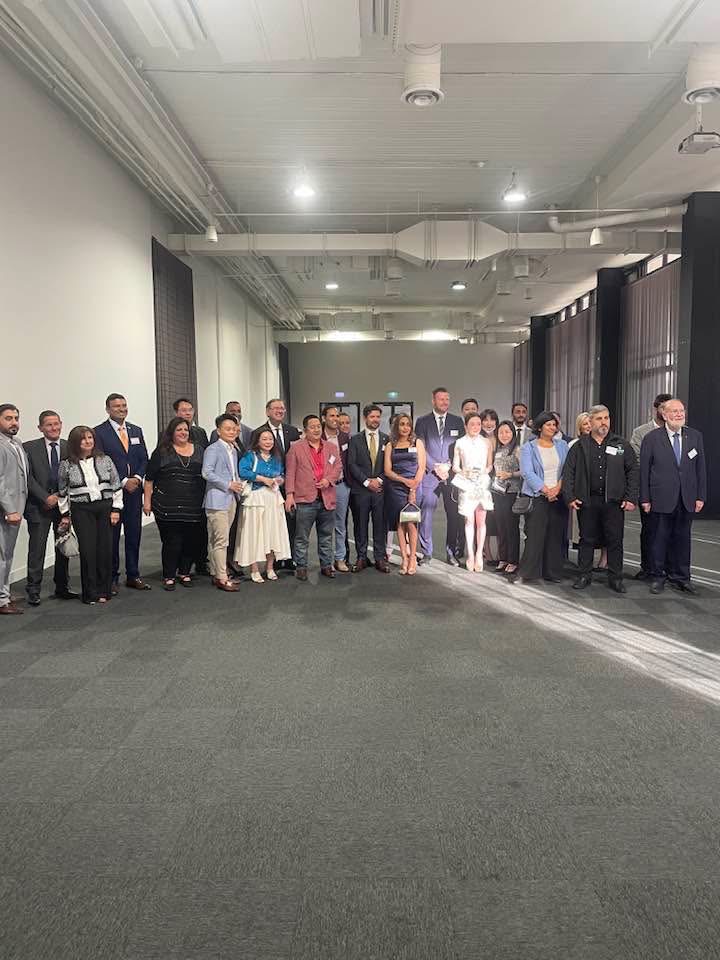
For now, though, the message from the stage and the floor was the same: if the Victorian Liberal Party wants to write a new chapter, multicultural Victoria will have to be co-author, not just a prop in the campaign photos.
Support our Journalism
No-nonsense journalism. No paywalls. Whether you’re in Australia, the UK, Canada, the USA, or India, you can support The Australia Today by taking a paid subscription via Patreon or donating via PayPal — and help keep honest, fearless journalism alive.
